
Choosing the right SmartPac small courier bag size depends on three critical factors: your item’s physical dimensions (including its maximum thickness), its total weight, and the amount of protective wrapping required. While these pre-paid packaging options offer a highly convenient way to ship items across Singapore, selecting the wrong size can lead to torn seams, failed adhesive seals, or delivery delays. To ensure a secure fit, you must measure your items three-dimensionally and compare those figures against the latest official internal dimensions rather than relying solely on external bag measurements.
Quick Guide to Selecting the Right SmartPac Size
When preparing a shipment, matching your item’s physical profile to the correct courier bag is essential for a smooth delivery process. The primary dimensions you must evaluate are length, width, and thickness. While length and width are straightforward to measure, thickness is frequently overlooked and can significantly alter how an item fits inside a flat bag.
Before purchasing your packaging, it is highly recommended to verify the current official specifications, weight limits, and postage terms directly on the national postal service website. Weight thresholds are strictly enforced, and exceeding them can result in your package being redirected or held for additional postage fees. Checking the official portal ensures you are working with the most up-to-date regulatory guidelines.
Products mentioned in this guide
![[SINGPOST] SMALL smartpac - A postage-paid packaging for local delivery. Trackable via the SingPost mobile app.](https://img.lazcdn.com/g/p/3360d819ebee92c4900de5d10f98c2e8.png_400x400q80.png_.webp)
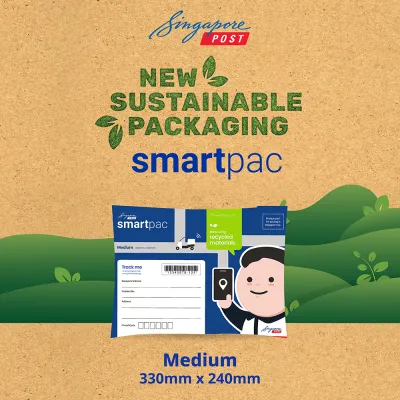
![*FREE SHIPPING* [CHOOSE OPTION] Singapore Post Smartpac Small Smartpac Medium Mini Lite 600g 1kg Singpost Smart pac Sing Post PolyM Poly M](https://img.lazcdn.com/g/p/ca35df7d5aaeef118422794879cc317a.jpg_400x400q80.jpg_.webp)
Prices are valid at publication and may change. Please refer to the product page for the latest price.
Additionally, always allow extra space for sealing, folding, and protecting your items. A bag that is packed to its absolute physical limit leaves no room for the adhesive flap to fold over naturally. This lack of clearance puts unnecessary tension on the seal, increasing the risk of the package bursting open during transit and handling.
Understanding SmartPac Small Size Variants
Navigating the available small-sized options requires understanding how different packaging formats cater to specific shipping needs. The conceptual difference between standard “small” and “extra small” (or similar compact) categories is based on official postal guidelines designed to optimize sorting and delivery. Standard small bags are typically designed for slightly thicker items like cosmetics, small electronics accessories, or compact books, whereas extra-small or pocket-sized variants are tailored for very flat, minimal items like jewelry, keychains, or single-card mailers.

Because postal services periodically update their product lineups, size charts, weight limits, and pricing, you should always consult the official postal portal for the latest details. Relying on third-party forums or outdated blogs can lead to purchasing packaging that no longer complies with current mailing standards.
It is also vital to understand how bag material thickness and seam allowances affect the actual usable internal space compared to external measurements. The seams of a courier bag are heat-sealed or stitched, which naturally consumes a few millimeters on each side. Furthermore, the thickness of the packaging material itself—whether it is a flexible plastic poly-mailer or a rigid paperboard envelope—plays a major role. Rigid paperboard offers excellent structural protection but has zero flexibility, meaning any item with significant thickness will require a much larger bag than a flat item of the same length and width.
To verify the water resistance and seal strength of a specific material combination, you can perform a simple observable trial: apply water droplets to a sample bag’s surface to check for absorption, and test the adhesive bond by sealing a sample and attempting to pull it apart after it has set.
How to Measure Your Items for a Secure Fit
To guarantee your items fit comfortably and safely within your chosen courier bag, you must employ systematic measuring techniques. For flat items, such as documents, brochures, or soft clothing, lay the item completely flat on a hard surface. Measure the maximum length and width from edge to edge. If you are shipping clothing, remember that folding the fabric can create bulk; measure the item after it has been folded and compressed to its final shipping state.
For bulky items, such as small electronics, cosmetics jars, or boxed goods, you must measure three dimensions: length, width, and maximum height. When these three-dimensional items are placed inside a flat, two-dimensional bag, they cause the bag’s sides to pull inward. This physical reaction is known as the “gusset” effect, which drastically reduces the usable width and length of the bag.
To account for the gusset effect, a practical rule of thumb is to subtract the thickness of your item from both the length and the width of the flat bag’s internal dimensions. For example, if a bag has a flat internal width of 20 centimeters and your item is 4 centimeters thick, the maximum usable width for that item is effectively reduced to approximately 16 centimeters.
Finally, calculate your required internal dimensions by adding a safety margin of at least 1 to 2 centimeters to all sides. This margin ensures that the item can slide into the bag easily without catching on the sides. It also leaves sufficient clearance at the top of the bag, allowing you to fold the adhesive flap over smoothly and apply the seal securely against a flat surface. When handling the adhesive strip, avoid prolonged skin contact with the exposed glue to prevent reducing its bonding strength, and ensure the sealing area is free of dust and moisture before pressing the flap down.
Common Sizing Mistakes to Avoid
One of the most frequent errors shippers make is ignoring item thickness and overestimating the usable flat area of the courier bag. It is easy to assume that because an item’s length and width are smaller than the bag’s dimensions, it will fit perfectly. However, a thick item will stretch the bag outward, pulling the edges inward and often preventing the bag from closing entirely.
Forcing items into undersized bags carries severe consequences. The high tension placed on the heat-sealed edges can cause seam tearing, exposing your contents to dust, dirt, and moisture during transit. It also compromises the bag’s water resistance, as water can easily seep through split seams or a partially exposed adhesive seal. Furthermore, if the adhesive flap is stretched too tightly, the seal may fail under the physical stress of automated sorting machines.
Another common error is mistaking external bag dimensions for internal usable space when planning your packaging. Manufacturers print external dimensions on the packaging for shipping and storage reference. The actual internal usable space is always smaller due to the seam welds, the bottom fold, and the area reserved for the adhesive strip. Always look for the specified internal dimensions, or perform a physical test with a sample bag before committing to a large volume of packaging.
Frequently Asked Questions (FAQ)
Can I use a small courier bag for fragile items?
Standard courier bags are designed primarily for flexibility, water resistance, and tear resistance, but they offer minimal crush or impact protection. If you are shipping fragile items, you should not rely on the bag alone to protect them. Instead, wrap the items securely in bubble wrap or place them inside a rigid cardboard box before inserting them into the courier bag. Always ensure that this additional protective packaging still fits within the bag’s physical dimensions and weight limits. For highly delicate or valuable goods, a dedicated rigid shipping box is always a safer alternative to a flexible courier bag.
What happens if my item slightly exceeds the bag dimensions?
If your item slightly exceeds the bag’s dimensions, you risk structural failure and delivery complications. Overstuffing causes the bag to bulge, which prevents the adhesive seal from bonding flatly and securely. During transit, these bulges can catch on automated postal sorting machines, leading to torn packaging, damaged goods, or the item being rejected entirely. If a package is rejected or deemed non-compliant due to overstuffing, the postal service may return it to the sender or apply additional handling surcharges.
Are SmartPac bags suitable for shipping items sold on online marketplaces?
Yes, these bags are widely used by e-commerce sellers in Singapore for shipping soft goods, apparel, cosmetics, and other non-fragile items sold on online marketplaces. They provide a cost-effective and convenient shipping method with built-in tracking. However, sellers must remain compliant with specific marketplace packaging guidelines. Ensure that shipping labels are printed clearly, placed flat on the bag without creases, and do not cover any pre-printed tracking barcodes or official postage markings on the bag itself.

Community discussion
Share your experience or ask a question. Comments are reviewed before publication.