
Choosing the right size of bubble wrap envelope is crucial for ensuring your items reach their destination safely while keeping shipping costs manageable. To find the perfect fit, you must measure your item’s length, width, and thickness, and then match those dimensions against the envelope’s internal usable space rather than its external footprint. In Singapore’s busy e-commerce landscape, selecting an incorrect size can lead to damaged goods, wasted materials, or unexpected postage surcharges from local couriers.
Understanding Bubble Wrap Envelope Dimensions: External vs. Internal Space
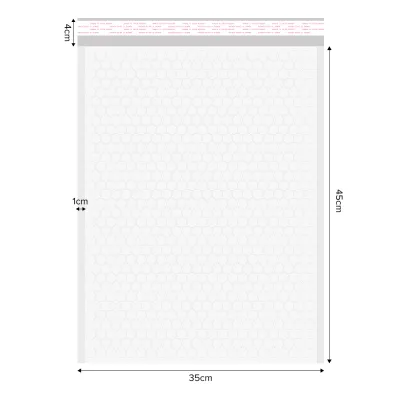
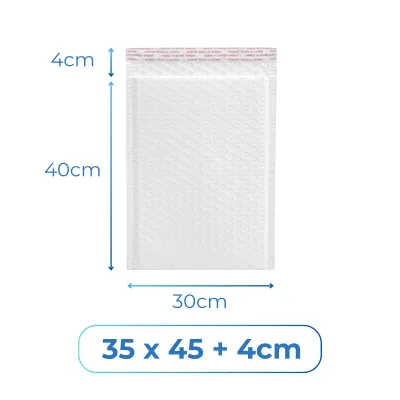
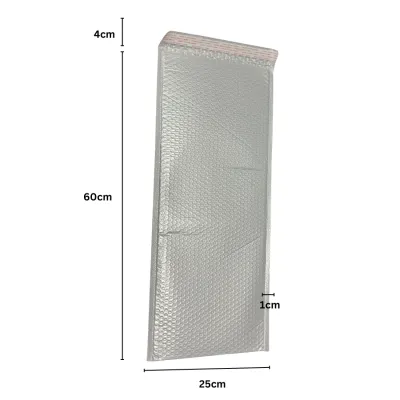
Many buyers make the mistake of purchasing envelopes based solely on the overall dimensions printed on the packaging or listed online. These listed measurements are almost always the external dimensions, which represent the absolute outer edges of the flat envelope. This footprint includes the side seams, the bottom fold, and the top adhesive flap, none of which can actually hold your item.
The internal usable space, conversely, is the actual pocket where your product sits. Because of the padded bubble lining and the manufactured seams, this space is always significantly smaller than the external footprint. If you try to fit an item that matches the external dimensions exactly, it will not fit inside the pocket.
Products mentioned in this guide
![[SG SELLER] Matte Bubble Mailer Poly Mailer Self-Seal Adhesive Padded Envelope Water Resistant Shipping Bags for Mailing](https://img.lazcdn.com/g/p/a61faf78eab8d6675425500915db76e8.png_400x400q80.png_.webp)
![[SG SELLER] Black Light Pink Lilac Pink Turquoise Bubble Envelope Bag Polymailer Bubble Wrap Envelope Wrap Bag](https://img.lazcdn.com/g/p/459a2341c3de79482ddaf9fb578ffe4c.jpg_400x400q80.jpg_.webp)
Prices are valid at publication and may change. Please refer to the product page for the latest price.
As a general industry rule of thumb, you must subtract 20 to 30 mm from the listed external width to account for the side seams. For the length, you should subtract 40 to 50 mm to account for the bottom fold and the space required to fold over the sealing flap securely.
When comparing packaging options online, always look for specifications explicitly labeled as “internal dimensions” or “usable space.” Reliable manufacturers will provide both measurements to help you avoid buying envelopes that are too tight for your inventory.
How Item Thickness and Fragility Change Your Size Requirements
A flat sheet of paper fits easily into an envelope of matching dimensions, but physical products are three-dimensional. When you insert an item with significant thickness—such as a book, a cosmetic jar, or a folded shirt—the envelope’s front and back walls are pulled outward. This expansion pulls the sides inward, which drastically reduces both the usable width and length of the flat envelope.

To visualize this, think of the item’s thickness as a tax on the envelope’s flat dimensions. The thicker your item, the wider and longer the flat envelope must be to accommodate it. A common mistake is ignoring this height factor, resulting in an envelope that cannot be sealed or one that puts excessive pressure on the seams.
Fragility also dictates your sizing decisions. Highly fragile items often require extra layers of protection, such as loose bubble wrap, foam sheets, or cardboard corner protectors. Sizing up by at least one standard envelope tier ensures you have enough room for these protective materials without compressing the built-in bubble lining.
When a bubble wrap envelope is stretched too tight, its protective capabilities are compromised. The tension can cause the individual air bubbles to pop under pressure, leaving your item vulnerable to drops. Furthermore, overstuffed envelopes are highly prone to bursting along the seams during sorting and transit.
Choosing the Right Bubble Wrap Envelope Size: Common Standards and Fits
Small Envelopes for Flat and Low-Profile Items
Small envelopes, typically categorized under industry sizes like #000, #00, or #0, are designed for compact, lightweight goods. These envelopes generally have internal widths ranging from 100 mm to 150 mm and are ideal for items with minimal thickness.
They are highly popular for shipping small jewelry boxes, USB flash drives, SD cards, keys, and single cosmetics like lipsticks or eyeshadow palettes. They also work well for flat paper items, such as certificates or thin paperback booklets, that require basic moisture and bend protection.
Because these smaller sizes have very little natural stretch, your items must be almost entirely flat. Attempting to force even a slightly bulky item into a #000 envelope will strain the seams and prevent the self-adhesive flap from closing properly.
Medium Envelopes for Standard Consumer Goods
Medium-sized envelopes, such as sizes #1, #2, #3, and #4, are the workhorses of the shipping industry. With internal widths spanning from 180 mm to 240 mm, they provide the versatility needed for standard retail products.
These sizes are perfect for shipping standard hardcover books, DVDs, video game cases, small electronics like power banks or wireless earbuds, and folded apparel such as t-shirts or lightweight activewear. They offer enough structural tolerance to handle items with moderate thickness without requiring you to step up to a bulky box.
For most everyday shipments, medium envelopes offer the ideal balance between material cost and protective cushioning. They keep the dimensional weight of your package low, which helps minimize shipping fees with local courier services in Singapore.
Large Envelopes for Bulky and Multi-Item Shipments
Large and extra-large envelopes, including sizes #5, #6, #7, and above, are reserved for bulky, oversized, or consolidated shipments. These envelopes feature internal widths of 260 mm to 350 mm or more, allowing them to hold substantial items.
Typical applications include shipping shoes (either wrapped in protective sheets or in small retail boxes), thick winter jackets, large academic textbooks, or multiple small items bundled together for a single customer. They are also excellent for flatter homeware items that require generous space for extra bubble wrapping.
When using these larger formats, it is critical to verify the weight capacity of the envelope. Heavier items place significant stress on the bottom folds and side seams, so you should ensure the adhesive seal and outer material are rated to handle the total weight of your items.
How to Measure Your Item and Calculate the Required Envelope Size
To avoid guesswork, you can use a simple mathematical approach to determine the exact envelope size required for your product. Follow these four steps to ensure a secure fit every time:
- Step 1: Measure your item's maximum Length, Width, and Height (thickness) using a ruler or measuring tape. Always measure at the widest and thickest points of the item, including any protruding parts or retail packaging.
- Step 2: Calculate the minimum required flat width of the envelope. You can do this by adding the item's width to its height, then adding an extra 15 mm to allow the item to slide in smoothly without friction.
- Step 3: Calculate the minimum required flat length of the envelope. Add the item's length to its height, then add an additional 45 mm to ensure there is enough space to fold the adhesive flap over the opening.
- Step 4: Take these two calculated minimums and compare them against the manufacturer's stated internal dimensions. Always choose the closest standard envelope size that is equal to or larger than your calculated minimums.
If you are shipping an irregularly shaped item, such as a triangular bottle or a plush toy, imagine the item inside a tight rectangular box. Measure the dimensions of that imaginary box to ensure the envelope can accommodate the widest points without tearing.
Secondary Specs to Check: Seal Types and Bubble Thickness
Beyond choosing the right physical dimensions, several secondary specifications will influence how well your packaging performs during transit.
- Seal Types: Most modern padded mailers feature self-seal adhesive strips, which are incredibly efficient for high-volume packing because you simply peel away a protective liner and press the flap down. Alternatively, some envelopes use gummed flaps that require moisture to seal. In Singapore's hot and humid tropical climate, self-seal adhesives can slowly degrade if stored in non-air-conditioned warehouses for long periods; always store your unused envelopes in a cool, dry place to maintain their stickiness. For safety, keep discarded self-adhesive backing liners away from young children to prevent accidental choking or sticking hazards.
- Bubble Layer Thickness: Standard bubble lining typically uses 3/16-inch (approx. 4.8 mm) bubbles, which offer excellent shock absorption for general handling. Thinner 1/8-inch (approx. 3.2 mm) bubbles are lighter and save space, making them ideal for preventing surface scratches on flat items, but they provide less impact resistance for fragile goods. Keep in mind that thicker bubbles reduce the internal usable space of the envelope even further.
- Outer Material: You must choose between kraft paper and poly (plastic) exteriors. Kraft paper envelopes offer a professional, eco-friendly presentation and are easy to write on, but they lack water resistance. Poly mailers are highly tear-resistant and waterproof, making them the superior choice for protecting contents against sudden tropical downpours during local deliveries.
To ensure quality before committing to a large bulk order, perform an easy water-droplet test on a sample envelope to verify its water resistance, and test the adhesive seal strength by pressing it closed and trying to pull it apart after 10 minutes.
Frequently Asked Questions (FAQ)
Can I ship heavy or highly fragile items like ceramics in a bubble envelope?
Bubble wrap envelopes are designed primarily for lightweight to medium-weight items with moderate durability. Heavy items, such as metal tools or dense hardware, can easily break through the seams or puncture the outer protective layer during sorting. Highly fragile items with rigid structures, such as ceramics, glassware, or delicate electronics, should never be shipped solely in an envelope. These items require the structural rigidity of a corrugated cardboard box along with loose void fill to prevent crushing and edge impacts.
Are bubble wrap envelopes waterproof for outdoor delivery?
Whether an envelope is waterproof depends entirely on its outer material. Poly bubble mailers are made from water-resistant plastic that easily repels rain, making them highly reliable if packages are left at doorsteps or exposed to wet weather during transit. Kraft paper bubble mailers, however, are not waterproof. They will absorb moisture quickly, which weakens the paper fibers and can lead to tearing or water damage to the contents inside. If you expect outdoor drop-offs, always opt for poly mailers.
Community discussion
Share your experience or ask a question. Comments are reviewed before publication.