
Choosing the right envelope size is a matter of matching the dimensions of your document to the standard sizing systems designed to hold them. When you select an envelope, the goal is to protect the contents, maintain a professional presentation, and avoid paying unnecessary postage surcharges. By understanding how standard paper sizes correspond to standard envelope formats, you can easily find the perfect fit without having to measure every single sheet of paper.
The most common envelope sizes follow the international ISO standard, which directly aligns with standard A-series paper sizes. Whether you are mailing a single-page business letter, a thick booklet, or a custom greeting card, there is a specific envelope designed to hold your item either completely flat or with a few simple folds.
Understanding the ISO Envelope Size System
The international standard for envelope sizes is the ISO C-series, which is designed to work hand-in-hand with the A-series paper system. This logical relationship ensures that you do not need to guess which envelope fits your document. The system operates on a simple mathematical progression where each size is perfectly proportioned to hold its corresponding paper size.
Products mentioned in this guide
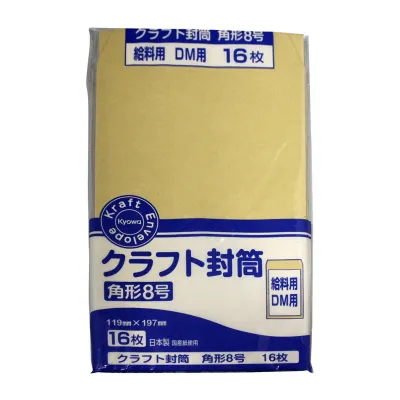
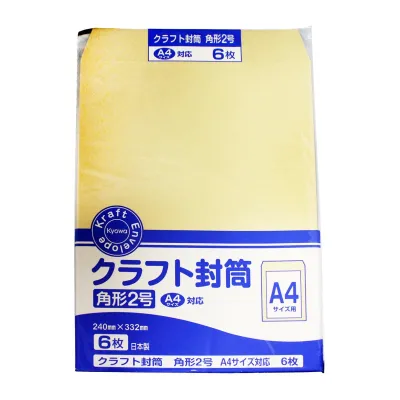
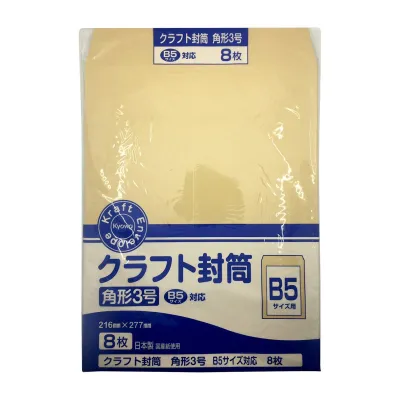
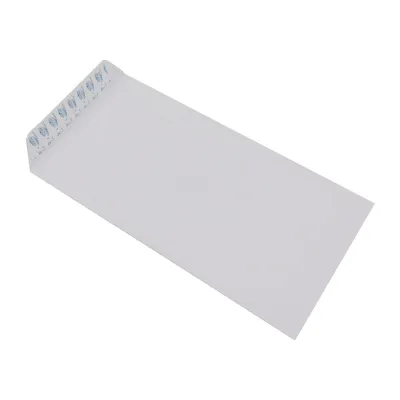
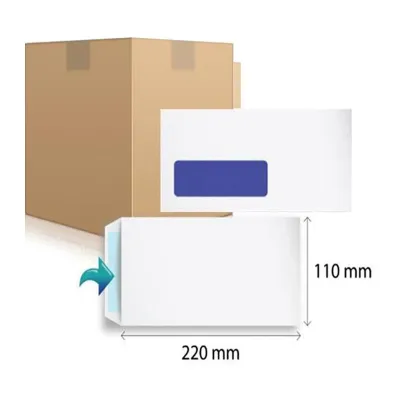
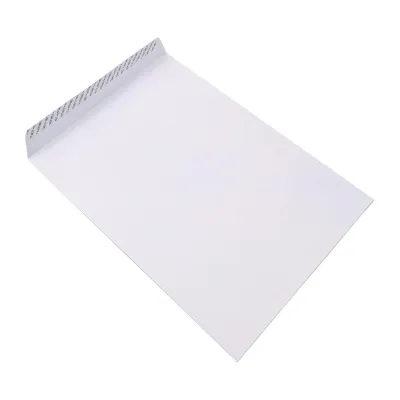
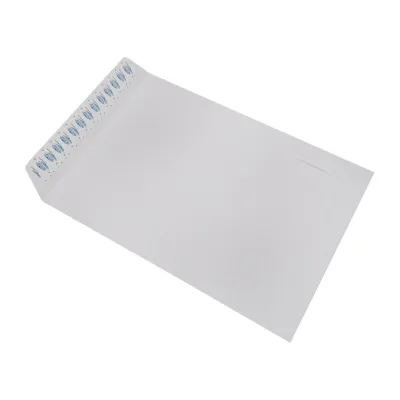
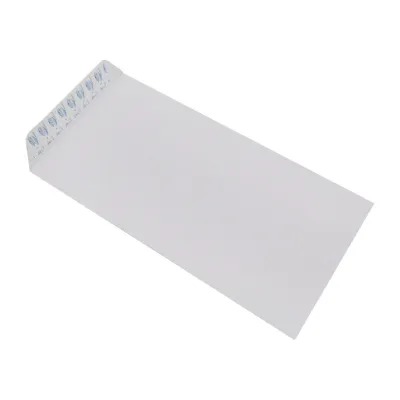
Prices are valid at publication and may change. Please refer to the product page for the latest price.
The fundamental principle of this system is the “fold rule.” A C-series envelope is slightly larger than the corresponding A-series paper sheet. This means a C4 envelope is designed to hold an unfolded A4 sheet of paper perfectly. If you fold that A4 sheet in half, it becomes an A5 size, which fits exactly into a C5 envelope. Folding it in half once more creates an A6 size, which fits into a C6 envelope. This predictable scaling makes selecting the right envelope highly intuitive.
Another widely used format is the DL envelope, which stands for “Dimension Lengthwise.” Unlike the C-series, the DL envelope does not correspond to a single unfolded paper size. Instead, it is specifically designed to hold an A4 sheet that has been folded horizontally into three equal parts. This is the standard format for corporate letters, invoices, and official statements, offering a sleek, professional appearance that fits easily into standard mailing systems.
Relying on these standard naming conventions is far more practical than trying to memorize exact millimeter dimensions. When shopping at local stationery stores or browsing online marketplaces, looking for the “C” or “DL” designation ensures compatibility. This systematic approach eliminates the risk of buying envelopes that are slightly too small, saving you time and reducing paper waste.
Matching Envelope Sizes to Common Documents
To choose the right envelope quickly, it helps to map the most common document types to their corresponding envelope sizes. Each format serves a distinct purpose depending on how you want the recipient to receive the document.

C4 envelopes are the preferred choice when you must keep your documents completely flat and unfolded. These are ideal for official certificates, legal contracts, high-quality brochures, and multi-page manuscripts. Using a C4 envelope ensures that important papers arrive without creases or fold marks, preserving their professional appearance.
C5 envelopes offer a versatile middle ground. They are designed to hold an A4 sheet folded in half, or an unfolded A5 document such as a small booklet, flyer, or invitation. This size is highly popular for standard business correspondence that does not require the pristine, unfolded presentation of a C4 envelope, helping to save on both envelope costs and potential postage fees.
C6 envelopes are smaller and are most commonly used for personal mail, greeting cards, and standard photographs. An A4 sheet folded into quarters (or an A5 sheet folded in half) fits comfortably inside a C6 envelope. Because of their compact size, they are highly efficient for mailing lightweight items, invitations, and small postcards.
DL envelopes remain the staple of daily business communication. If you are mailing standard letters, invoices, or marketing circulars printed on A4 paper, folding the sheet into thirds and placing it in a DL envelope is the most efficient method. It is the standard format for automated mail sorting systems, making it a reliable choice for high-volume corporate mailings.
Sizing Envelopes for Non-Standard or Bulky Items
When you need to mail items that do not conform to standard paper sizes—such as books, catalogs, handmade crafts, or thick stacks of documents—the standard C-series rules require some adjustment. Bulky items occupy three-dimensional space, which reduces the effective width and length of the envelope.
To select the correct envelope for a three-dimensional object, you must measure its length, width, and thickness accurately. A helpful rule of thumb is to add the thickness of the item to both its length and width measurements. For example, if you are mailing a book that is 150 mm wide, 210 mm long, and 15 mm thick, you should look for an envelope with internal dimensions of at least 165 mm by 225 mm.
Adding a practical clearance margin is essential for smooth insertion and removal. If the envelope is too tight, the recipient may tear the contents when opening it, or the seams of the envelope might burst during transit. Aim for a clearance margin of at least 5 mm to 10 mm beyond the combined dimensions of your item to ensure it slides in easily without resistance.
Additionally, consider how the envelope’s construction affects its usable internal space. Envelopes with heavy side seams or specific flap styles—such as pocket envelopes that open on the short edge versus wallet envelopes that open on the long edge—can restrict entry. Clasp envelopes and heavy-duty self-seal flaps also take up physical space near the opening, so verifying the actual opening width is crucial for bulky items.
Evaluating Envelope Weight, Material, and Mailing Limits
Selecting the right size is only the first step; you must also consider the material properties of the envelope to ensure your mail arrives safely and complies with postal regulations. The weight and durability of the paper play a significant role in protecting your contents.
Paper weight is measured in grams per square meter (GSM). Standard office envelopes typically range from 80 GSM to 100 GSM, which is suitable for everyday letters and lightweight documents. For heavier items, certificates, or documents with sharp edges, choosing a heavier paper weight of 110 GSM to 120 GSM, or even reinforced pocket envelopes, prevents tearing and punctures during sorting.
Privacy is another critical factor when sending confidential information. Many business envelopes feature an internal security tint—a printed pattern on the inside of the envelope—that makes the paper opaque. This prevents sensitive details, such as financial figures or personal identification numbers, from being read through the paper when held up to the light.
Finally, always verify the maximum weight and dimension thresholds set by your local postal service. In Singapore, mail services categorize items based on size, thickness, and weight. Exceeding the limits for standard mail can push your item into a higher postage tier, resulting in unexpected surcharges or delivery delays. Checking these guidelines before sending bulky or heavy envelopes ensures a smooth and cost-effective mailing process.
Frequently Asked Questions (FAQ)
Can I use a C5 envelope for an A4 document if I fold it?
Yes, you can use a C5 envelope for an A4 document by folding the sheet of paper exactly in half horizontally. This creates an A5-sized document, which fits perfectly into a C5 envelope. While this is highly practical and cost-effective for standard letters, you should avoid folding documents that require a pristine presentation, such as legal contracts, certificates, or formal business proposals, which should be sent unfolded in a C4 envelope.
What is the difference between C-series and commercial envelope sizes?
The C-series is an international standard (ISO 269) designed to match standard A-series paper sizes, making it the most common system used globally. Commercial envelope sizes, often used in North America or found on imported stationery, use different naming systems (such as Number 10 or Invitation sizes) that do not align directly with ISO paper standards. When purchasing envelopes, check the specifications to ensure they match your local paper standards to avoid sizing mismatches.

Community discussion
Share your experience or ask a question. Comments are reviewed before publication.