
Choosing the correct envelope size ensures your documents arrive in pristine condition without unnecessary folding or excessive postage fees. The international standard for envelope dimensions is the ISO 269 “C-series,” which directly corresponds to the standard ISO 216 “A-series” paper sizes we use daily in offices and homes. By understanding how these two systems align, you can instantly determine whether an unfolded A4 contract requires a C4 envelope, a half-folded document fits a C5, or a business letter is best suited for a DL envelope.
Understanding the ISO Envelope Size System
The international envelope sizing system relies on a mathematical relationship established by the International Organization for Standardization (ISO). Specifically, the ISO 269 standard defines the C-series envelopes, which are engineered to pair seamlessly with the ISO 216 paper standard, commonly known as the A-series. This systematic approach eliminates the guesswork when preparing documents for mailing or archiving.
The core design principle behind this system is proportional scaling. Every C-series envelope is engineered to be slightly larger than its corresponding A-series paper sheet. For instance, a C4 envelope is geometrically scaled to be larger than an A4 sheet of paper. This precise margin accommodates the physical thickness of the paper, allows room for multiple sheets, and ensures you can slide the document inside without catching or tearing the edges.
Products mentioned in this guide
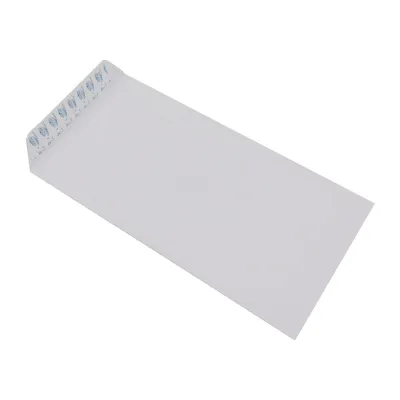
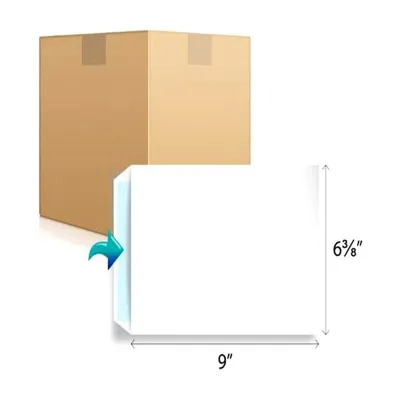
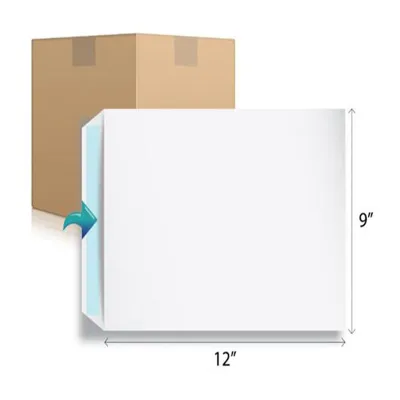
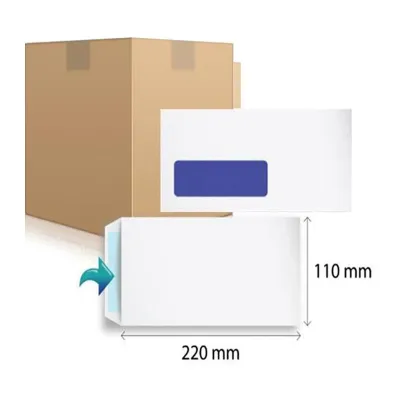
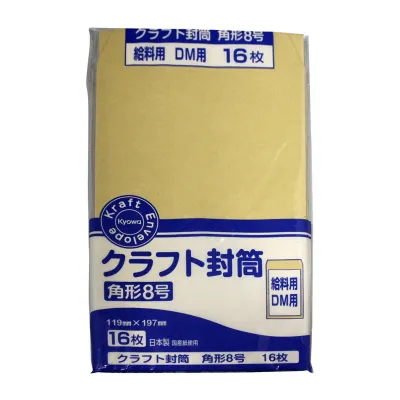
Prices are valid at publication and may change. Please refer to the product page for the latest price.
While A-series sizes are the standard for printing, writing, and drawing, C-series sizes are dedicated strictly to enclosing and protecting those documents. Another common standard is the DL (Dimension Long) envelope, which does not follow the classic C-series dimensions but is specifically designed to hold an A4 sheet folded into three equal horizontal panels. Understanding these relationships helps you maintain a professional presentation while optimizing your postage costs.
Standard Envelope Sizes and Document Matching Guide
Selecting the right envelope depends entirely on how you prepare your documents for mailing. This guide translates technical dimensions into practical, everyday choices for your home or office.

C4 Envelopes: Flat A4 Documents
A C4 envelope measures exactly 229 mm by 324 mm. This size is specifically designed to hold a standard A4 sheet of paper (210 mm by 297 mm) completely flat without any folding.
- Ideal Use Cases: This format is essential for sending legal contracts, official certificates, academic transcripts, and professional portfolios where creases or folds would compromise the document's validity or aesthetic appeal. It is also the standard choice for mailing catalogs, magazines, and thick multi-page reports that cannot be easily folded.
- Mailing Tip: Because C4 envelopes are larger and heavier, they often fall into higher postal rate categories. Use them selectively when document integrity is your top priority.
C5 Envelopes: A4 Folded in Half or Flat A5
A C5 envelope measures exactly 162 mm by 229 mm. This versatile size is designed to accommodate an A5 sheet of paper flat, or a standard A4 sheet folded exactly in half once along its shortest axis.
- Ideal Use Cases: C5 envelopes are highly popular for mailing multi-page business letters, greeting cards, small booklets, and promotional brochures. They strike an excellent balance between presentation and economy, as folding an A4 sheet once keeps the envelope compact while maintaining a clean, professional appearance.
- Mailing Tip: When mailing multiple pages in a C5 envelope, verify the total thickness. If the folded stack exceeds local postal limits, it may require additional postage even if the footprint remains within standard dimensions.
C6 Envelopes: A4 Folded in Quarters or Flat A6
A C6 envelope measures exactly 114 mm by 162 mm. This compact size is designed to hold an A6 card flat, or a standard A4 sheet folded twice—first in half, and then in half again to form quarters.
- Ideal Use Cases: Historically, C6 is the classic "standard letter" size for personal correspondence. It is the go-to choice for sending handwritten letters, RSVP cards, compact invitations, and small holiday greeting cards.
- Mailing Tip: Because of its small footprint, a C6 envelope is highly economical to mail. However, the double-fold requirement makes it less suitable for formal business communications, as multiple creases can look less professional and make the document harder to read upon opening.
DL Envelopes: A4 Folded in Thirds
A DL (Dimension Long) envelope measures exactly 110 mm by 220 mm. This size is specifically designed to hold a standard A4 sheet folded horizontally into three equal sections.
- Ideal Use Cases: DL is the absolute standard for automated, high-volume corporate mailings. It is the envelope you receive for utility bills, bank statements, insurance policies, and formal business correspondence.
- Mailing Tip: Many DL envelopes feature a transparent plastic window on the front. This allows the recipient's address, printed directly on the letter inside, to align perfectly with the window. This design eliminates the need to print separate address labels, saving significant time and reducing administrative errors in professional settings.
Key Specifications to Check Beyond Dimensions
While finding the correct physical dimensions is the first step, several secondary specifications influence how well your envelope performs. Paying attention to these details prevents torn mail, compromised privacy, and wasted postage.
- Paper Weight (GSM): The thickness and durability of an envelope are determined by its paper weight, measured in Grams per Square Metre (GSM). Standard office envelopes typically range from 80 GSM to 90 GSM, which is perfectly adequate for everyday correspondence. For important, confidential, or multi-page documents, upgrade to 100 GSM or 120+ GSM. Heavier paper feels more premium, resists tearing during transit, and provides better opacity.
- Seal Types: The closure mechanism affects both security and packing efficiency. Traditional gummed seals require moisture to activate the adhesive, making them highly cost-effective and ideal for automated mailing machines. Self-seal envelopes feature two adhesive strips that bond when pressed together, while peel-and-seal options have a protective strip covering a strong adhesive layer. Peel-and-seal envelopes offer the longest shelf life and are highly efficient for manual packing. For reusable packaging, clasp or button-and-string closures are excellent choices, though they are generally not recommended for standard postal sorting machines.
- Window vs. Non-Window: Envelopes with transparent windows are designed for efficiency, ensuring the address printed on the document matches the recipient perfectly. However, for formal invitations, personal letters, or highly sensitive documents, a solid, non-window envelope is preferred. Non-window envelopes offer a cleaner look and prevent any internal text from accidentally shifting into view.
- Opacity and Security Tinting: If you are mailing sensitive information like payroll slips, medical records, or financial statements, check the interior of the envelope. Many professional envelopes feature a dark, patterned security tint printed on the inside. This design increases the opacity of the paper, preventing unauthorized reading of the contents when the envelope is held up to a bright light.
Mailing Considerations and Postal Limits
In Singapore, mailing costs and delivery efficiency are heavily influenced by the physical characteristics of your envelope. SingPost categorizes mail based on dimensions, weight, and thickness. Failing to check these limits before dropping your mail in the postbox can result in returned letters or unexpected surcharges.
Standard mail categories are strictly defined. For instance, to qualify for standard basic postage rates, your envelope must not only meet the dimensional limits of standard sizes like DL, C5, or C6, but it must also remain under a specific thickness threshold (typically 2 mm for standard letters) and weight limit (usually up to 20g or 40g depending on the tier). If you pack a C5 envelope with multiple heavy sheets of paper or insert a bulky item, it will exceed the thickness limit. This automatically reclassifies your mail as a large letter or a package, which carries a higher postage rate.
To ensure smooth delivery and avoid damage:
- Use Board-Backed Envelopes: For certificates, photos, or documents that must not bend, choose rigid, cardboard-backed envelopes. These are typically marked with "Please Do Not Bend" and protect the contents from sorting machine rollers.
- Avoid Bulky Padding for Paper: Refrain from using padded bubble envelopes for standard paper documents. The added bulk of bubble wrap often pushes the envelope past the standard thickness limit, triggering parcel rates unnecessarily.
- Verify Adhesive Strength: If you are using older envelopes, test the adhesive on a single envelope first. Humidity in tropical climates like Singapore can degrade self-seal adhesives over time, potentially causing envelopes to pop open during automated sorting. If the seal feels weak, reinforce it with clear packing tape or opt for a fresh batch of peel-and-seal envelopes.
Frequently Asked Questions (FAQ)
This section addresses common questions about envelope compatibility and standards.
Can I put an unfolded A4 paper in a DL envelope?
No, an unfolded A4 sheet of paper will not fit inside a DL envelope. A standard A4 sheet measures 210 mm by 297 mm, whereas a DL envelope measures only 110 mm by 220 mm. To use a DL envelope, you must fold your A4 document horizontally into three equal parts. If your document must remain completely flat without any creases, you must use a C4 envelope instead.
What is the difference between C-series and B-series envelopes?
The C-series and B-series envelopes serve entirely different purposes. C-series envelopes are designed specifically to hold standard A-series paper sheets (for example, a C4 envelope holds an A4 sheet, and a C5 envelope holds an A5 sheet). In contrast, B-series envelopes are larger and are designed to hold C-series envelopes themselves, or to accommodate thicker, bulkier items like books, catalogs, and folders. For standard office correspondence and document mailing, you should stick to C-series envelopes.
Community discussion
Share your experience or ask a question. Comments are reviewed before publication.