
Selecting the correct envelope for documents depends entirely on how you intend to present, protect, or fold your paper. For standard A4 sheets, certificates, and business reports, the three most common envelope sizes are C4, C5, and DL. Choosing the right fit ensures your documents arrive undamaged, look professional, and comply with standard postal guidelines.
Understanding Standard Envelope Sizes for A4 Paper
The international standard for envelope sizes is the ISO 269 C-series, which is designed to pair with standard A-series paper sizes. Because an envelope must be slightly larger than the paper it holds, each C-series envelope is sized to fit its corresponding A-series sheet comfortably without folding.
A C4 envelope measures approximately 229 mm by 324 mm. This size is designed to hold a flat, unfolded sheet of A4 paper, which measures 210 mm by 297 mm. Using a C4 envelope ensures that documents like certificates, contracts, and multi-page reports can be inserted smoothly without bending the edges.
Products mentioned in this guide
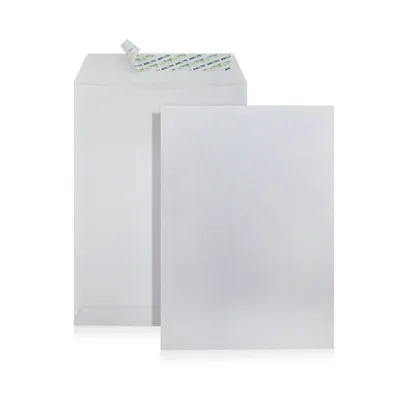
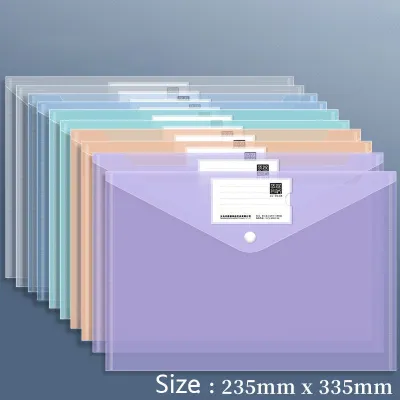
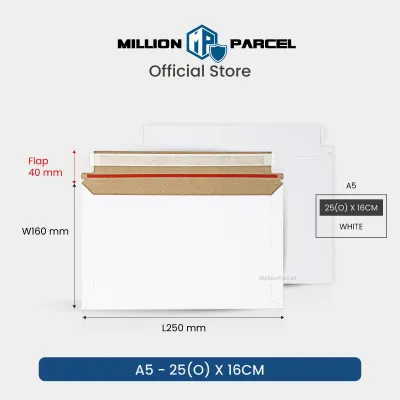
Prices are valid at publication and may change. Please refer to the product page for the latest price.
A C5 envelope measures approximately 162 mm by 229 mm. This size is designed to accommodate an A4 sheet folded exactly in half once along its longest side, which reduces the paper to A5 dimensions (148 mm by 210 mm). It is a highly versatile option for multi-page letters, brochures, and standard correspondence where a single fold is acceptable.
A DL envelope, which stands for “Dimension Lengthwise,” measures approximately 110 mm by 220 mm. This format does not belong to the C-series but is specifically designed to hold an A4 sheet folded into three equal horizontal sections (99 mm by 210 mm). DL envelopes are the standard choice for everyday business letters, invoices, and statements.
Matching Envelope Sizes to Document Types
Matching your document type to the correct envelope size preserves the professional appearance of your correspondence and protects the contents from wear during transit. Different documents require different levels of protection against folding and creasing.

For certificates, diplomas, legal contracts, and official photographs, maintaining a flat, pristine condition is essential. A C4 envelope is the standard choice for these items. Folding a certificate can permanently damage the paper fibers and ruin embossed seals or signatures, making flat storage in a C4 envelope necessary.
Standard reports, manuscripts, and multi-page documents present a choice between C4 and C5 envelopes. If a report contains only a few pages, folding them in half to fit a C5 envelope is a practical and compact solution. However, as the page count increases, the thickness of the folded stack makes a C5 envelope tight and difficult to seal. For thicker documents, keeping the pages flat in a C4 envelope is more appropriate.
Everyday business correspondence, invoices, and single-page letters are best suited for DL envelopes. Because these documents are typically printed on standard paper weights and do not contain sensitive physical elements like seals, folding them into thirds is efficient and cost-effective.
When dealing with exceptionally thick documents, such as bound catalogs, annual reports, or manuscripts exceeding fifty pages, standard flat envelopes may tear at the seams. In these cases, look for expandable gusset envelopes. These envelopes feature pleated sides that expand to accommodate the depth of thick documents, preventing the paper from bursting through the seams.
Key Specifications to Check Before Buying
Beyond selecting the correct dimensions, several physical specifications influence how well an envelope protects your documents and how easily it can be processed.
Paper weight, measured in grams per square metre (gsm), determines the thickness and durability of the envelope. Standard mailing envelopes typically range from 80 gsm to 100 gsm, which is suitable for everyday letters. For important documents, certificates, or heavy reports, choosing a heavier paper weight, such as 110 gsm or 120 gsm, provides better tear resistance and a more premium feel. Additionally, heavier paper offers higher opacity, ensuring that sensitive information cannot be read through the envelope under bright light. If you plan to write addresses by hand using fountain pens or gel pens, test a sample envelope first to verify that the paper resists ink feathering and drying delays.
The closure type affects both security and packing efficiency. Gummed envelopes require moisture to activate the adhesive and are ideal for high-volume automated mailing machines. Self-seal envelopes feature a pressure-sensitive adhesive strip that seals instantly when pressed, while peel-and-seal envelopes include a protective paper strip over the adhesive, offering a longer shelf life. Clasp envelopes feature a reusable metal clasp, making them suitable for internal office routing or documents that need to be opened and closed repeatedly.
Window envelopes feature a transparent plastic panel that allows the recipient’s address, printed directly on the enclosed document, to show through. This eliminates the need to print separate address labels, making them highly efficient for bulk business mailings. Non-window envelopes provide a solid, uniform front, which is preferred for formal invitations, confidential documents, and personal correspondence where privacy is paramount.
Always verify the internal dimensions listed on the packaging before purchasing. While external dimensions are standard, the internal usable space can be slightly smaller due to the thickness of the seams and the sealing flap. If your document is close to the maximum size limit or contains multiple pages, choosing an envelope with a slightly larger tolerance prevents tight squeezing and tearing. In Singapore, postal services categorize mail by size and weight. Standard mail rates apply to specific dimensions and thicknesses, so verifying that your filled envelope fits within these limits can help manage mailing costs.
Frequently Asked Questions (FAQ)
Can I use a C5 envelope for an unfolded A4 certificate?
No, you cannot fit an unfolded A4 certificate into a C5 envelope. A C5 envelope is physically smaller than an unfolded sheet of A4 paper. Attempting to force an unfolded A4 sheet into a C5 envelope will cause the document to bend, crease, or tear. To keep a certificate flat and undamaged, you must use a C4 envelope.
How do I measure a custom or non-standard document for an envelope?
To find the right envelope for a non-standard document, measure the exact width, height, and thickness of the item. Once you have these measurements, add a margin of at least 5 mm to 10 mm to both the width and height. This extra space ensures that the document can be inserted and removed easily without catching on the seams or tearing the envelope. For thick items, you may need to add even more margin or opt for a gusseted envelope to accommodate the depth.

Community discussion
Share your experience or ask a question. Comments are reviewed before publication.