
Starting your first needlework project can feel overwhelming when confronted with rows of colorful skeins at a local craft shop or online marketplace. Choosing the right thread is the most critical decision you will make before making your first stitch, as the thread type directly dictates your fabric choice, needle size, and overall stitching experience. For decades, DMC has been the global standard for embroidery and cross-stitch threads, offering a vast catalog of materials, thicknesses, and finishes. Understanding which specific thread types are beginner-friendly and how they behave on different fabrics will save you from common frustrations like excessive tangling, fraying, or uneven coverage. By focusing on a few core thread varieties, you can build a reliable starter kit that ensures your first project is both enjoyable and visually successful.
Understanding the Main DMC Thread Types for Beginners
To navigate the needlework aisle successfully, you must first understand the structural differences between the two primary categories of DMC threads: stranded cotton and pearl cotton. These two types represent different manufacturing methods and are designed for distinct stitching techniques.
Stranded cotton, often referred to simply as embroidery floss, is the most widely used thread for cross-stitch and surface embroidery. Each standard skein of DMC stranded cotton consists of an 8-meter length of thread made up of six individual, loosely twisted plies. The defining characteristic of stranded cotton is its divisibility. You do not stitch with all six strands at once for most projects; instead, you gently separate the thread to use one, two, or three strands depending on the fabric count and desired thickness. This flexibility allows you to control the weight of your lines and the density of your stitches with a single skein of thread.
Products mentioned in this guide
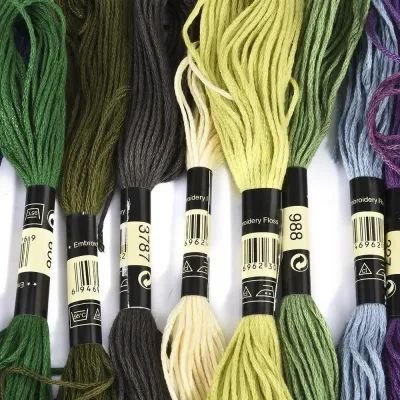
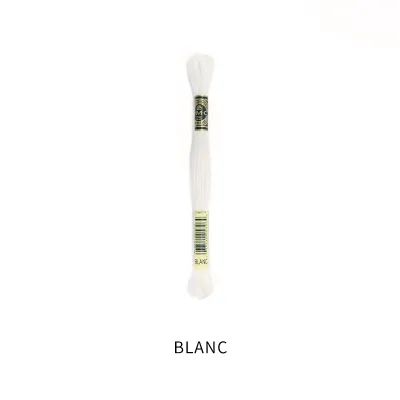
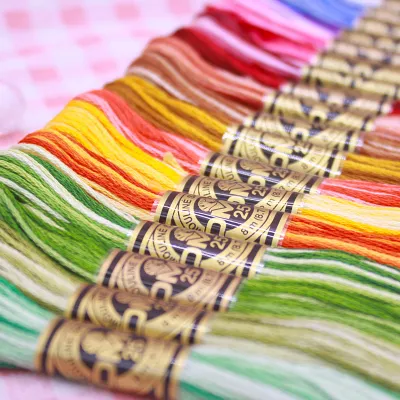
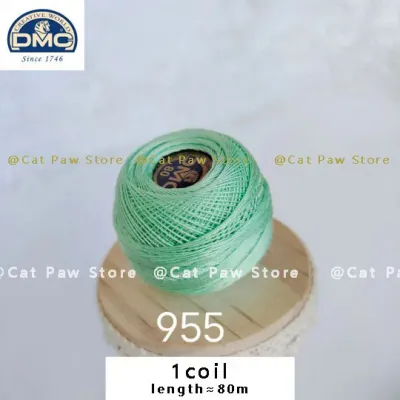
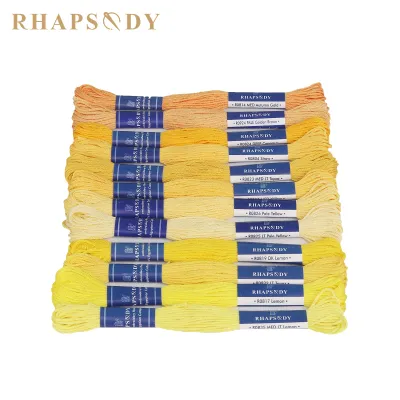
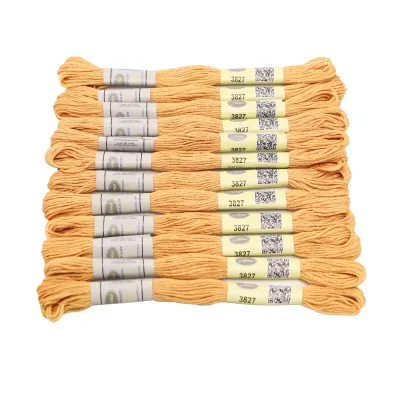

Prices are valid at publication and may change. Please refer to the product page for the latest price.
Pearl cotton, or coton perlé, is a non-divisible, highly mercerized cotton thread that features a distinct, rope-like twist. Unlike stranded cotton, pearl cotton cannot be split into thinner strands; you must use the thread exactly as it comes off the ball or skein. It is characterized by a smooth, lustrous finish that creates a raised, textured effect on the fabric surface. Pearl cotton is categorized by numerical sizes, such as 3, 5, 8, and 12, where a larger number indicates a finer, thinner thread. For example, size 3 is quite thick and heavy, while size 12 is very fine and delicate.
While browsing, you will also encounter specialty threads, including metallic threads (such as DMC Light Effects), satin threads, and tapestry wool. While these specialty options look appealing on the shelf, they are generally best avoided for your very first project. Metallic threads are notoriously stiff, prone to fraying, and difficult to pull through fabric without snagging, which can quickly frustrate a beginner. Tapestry wool is a heavy, single-ply wool thread designed specifically for canvas work and needlepoint, making it unsuitable for standard cross-stitch or delicate surface embroidery. Sticking to basic cotton threads for your initial projects allows you to master tension control and stitch placement without fighting your materials.
How to Choose the Right Thread for Your Specific Project
Matching your thread to your chosen fabric and technique is essential for achieving clean, even stitches. If your thread is too thick for your fabric, it will distort the weave and be difficult to pull through; if it is too thin, the background fabric will show through your stitches, leaving your design looking sparse.

For traditional cross-stitch, stranded cotton is the undisputed standard. Cross-stitch is typically worked on evenweave fabrics, most commonly Aida fabric, which is woven with clear, open grids of holes. The size of Aida fabric is measured in “count,” which refers to the number of squares per inch. For a standard 14-count Aida fabric, using two strands of DMC stranded cotton provides optimal coverage, filling the squares neatly without crowding the holes. If you choose a finer fabric, such as 18-count Aida or 28-count linen, you may need to drop down to a single strand to keep your stitches flat and defined.
Surface embroidery, which involves freeform stitching on tightly woven fabrics like linen, cotton calico, or canvas, offers more flexibility. Here, both stranded cotton and pearl cotton have their places. If your project involves delicate line work, shading, or intricate details like French knots, stranded cotton is the preferred choice because you can adjust the thickness strand by strand. However, if your project features bold, graphic lines, decorative borders, or textured stitches like chain stitch and buttonhole stitch, pearl cotton is highly effective. Pearl cotton size 8 or 12 provides a consistent, rounded line that sits proudly on top of the fabric, giving your embroidery a beautiful three-dimensional quality.
Before purchasing your materials, always check your pattern instructions or kit guide. Most modern patterns specify the exact DMC color codes, the recommended thread type, and the number of strands to use for each stitch. If you are designing your own project or working from a vintage pattern, a reliable starting point is to pair 14-count Aida fabric with two strands of stranded cotton, or a medium-weight linen fabric with size 8 pearl cotton. Conducting a quick test stitch on a scrap piece of your chosen fabric is an excellent way to verify that your thread weight and needle size are perfectly matched before committing to the main design.
Recommended DMC Thread Types for Your First Purchase
For a beginner, the sheer variety of DMC products can lead to choice paralysis. To keep your initial investment manageable and successful, focus on specific, highly versatile thread lines that offer the most forgiving handling characteristics.
DMC Stranded Cotton (Art. 117) is the absolute best starting point for almost every beginner. It is made from 100% long-staple Egyptian cotton and is double-mercerized for a subtle sheen and excellent strength. Because it is the global standard, nearly every cross-stitch and embroidery pattern is designed with its color numbering system in mind. The primary learning curve with stranded cotton is learning how to separate the strands without creating knots. To do this easily, cut a length of thread, tap the end to splay the fibers, and pull out one individual strand at a time, rather than trying to pull multiple strands apart at once. Once separated, you can recombine the required number of strands, which helps them lie flat and smooth on your fabric.
If you prefer to avoid the process of separating strands entirely, DMC Pearl Cotton (Art. 115 or Art. 116) is an excellent alternative. For beginners, size 8 and size 12 are the most practical choices. Size 8 pearl cotton is medium-thin and works beautifully on 11-count Aida fabric or for bold line work on linen. Size 12 is finer, making it suitable for 14-count Aida or more delicate surface embroidery. Because pearl cotton does not split, it maintains a uniform thickness throughout your project, which is highly beneficial for beginners working on maintaining consistent stitch tension. It is also less prone to twisting and knotting during use compared to stranded cotton.
While you may be tempted by variegated threads (such as DMC Color Variations) or light-effect metallic threads, it is highly recommended to save these for later. Variegated threads require careful planning to ensure the color transitions flow logically across your stitches, which can add unnecessary complexity to your first project. Metallic threads require specialized techniques, such as using shorter lengths, larger needles, and thread conditioners, to prevent the metallic wrapping from separating from the core thread. By mastering your tension and stitch consistency with solid-colored cotton threads first, you will build the muscle memory needed to handle more challenging specialty threads in the future.
Building a Beginner-Friendly DMC Thread Starter Kit
When assembling your first thread collection, it is easy to overspend on colors you may never use. A strategic, cost-effective approach will help you build a functional kit that matches your immediate project needs while establishing a solid foundation for future work.
Rather than buying large, pre-packaged color assortments, which often contain highly specific shades you may not need, it is usually more practical to buy threads on a project-by-project basis. Look for a beginner-friendly pattern first, and purchase only the specific DMC color numbers listed in the pattern key. If you prefer to practice basic stitches before starting a formal pattern, you can build a versatile, custom starter kit by selecting a core palette of eight to ten basic colors. This palette should include a solid black (DMC 310), a clean white (DMC Blanc or B5200), and a selection of primary and secondary colors in medium tones, such as a classic red (DMC 321), a royal blue (DMC 796), a bright yellow (DMC 725), and a forest green (DMC 895). A single skein of DMC stranded cotton typically costs around S$1.30 to S$1.60 at local craft shops, making it a highly affordable hobby to start.
To estimate how much thread you need, keep in mind that a single 8-meter skein of DMC stranded cotton actually yields 48 meters of usable thread when split into the standard two-strand thickness. For most small beginner projects (such as a 4-inch hoop design or a simple cross-stitch pattern on 14-count Aida), one skein of each color is more than sufficient. If your design features large areas of solid color fill, you may need to purchase two or three skeins of those specific shades.
To complete your starter kit, you will need a few essential accessories to pair with your thread. First, select the correct needle type: tapestry needles (sizes 24 or 26) are essential for cross-stitch because their blunt tips slide easily through the holes of Aida fabric without piercing the fibers. For surface embroidery on woven fabric, choose sharp crewel needles (sizes 7 to 9), which easily pierce the fabric weave. You will also need a pair of small, sharp embroidery scissors for clean thread cuts, and a simple storage solution, such as plastic or cardboard thread bobbins, to wind your leftover threads and keep them from tangling in your workbox.
Purchasing Tips and Quality Checks for DMC Threads
To ensure a smooth stitching experience, it is important to buy authentic DMC threads and inspect them before starting your project. Counterfeit threads are common on unverified online marketplaces, and using low-quality imitations can lead to severe issues like color bleeding, frequent snapping, and excessive knotting.
Authentic DMC stranded cotton skeins are easily identified by their distinct packaging. Each genuine skein features two paper bands: a wider band displaying the prominent, stylized DMC logo and a smaller band showing the color number and barcode. The thread itself should feel soft, smooth, and have a noticeable mercerized sheen. If you encounter threads sold in bulk assortments at unusually low prices (such as dozens of skeins for just a few dollars) on discount ecommerce platforms, they are highly likely to be polyester imitations. These imitation threads lack the strength, luster, and colorfastness of genuine long-staple cotton, and their colors may not match the official DMC color card.
When purchasing thread for a large project that requires multiple skeins of the same color, pay close attention to the dye lot numbers if they are printed on the label, or purchase all your skeins at the same time from the same retailer. While DMC maintains incredibly high manufacturing standards, minor variations in dye baths can occur over time. Using skeins from different dye lots in a single solid-colored area can result in a subtle but visible line across your finished piece.
Once you have purchased your threads, proper storage is key to maintaining their quality, especially in warm or humid environments. High humidity can encourage mold growth on natural cotton fibers and weaken the thread over time. Store your skeins or wound bobbins in a dry, dust-free container, such as a clear plastic organizer box with compartments. Keep your storage container out of direct sunlight to prevent the colors from fading. Before starting your project, you can verify the colorfastness of your thread—especially dark reds and blues—by wetting a small snippet of thread and pressing it between two pieces of white paper towel. If any dye transfers to the towel, take extra care when washing your finished piece, using only cool water and a mild, pH-neutral soap.
Frequently Asked Questions (FAQ)
Do I need to use all six strands of DMC stranded cotton?
No, you should rarely use all six strands of DMC stranded cotton at once for standard embroidery or cross-stitch. The six-strand structure is designed to be separated so you can customize the thickness of your stitches to match your fabric. For example, on 14-count Aida fabric, two strands are the standard recommendation for balanced coverage. If you are working on a finer fabric like 18-count Aida, you will typically use only one strand. Using all six strands on fine fabrics will crowd the holes, distort the weave, and make it extremely difficult to pull your needle through, leading to hand fatigue and uneven stitches. Always check your pattern instructions, as they will specify the exact number of strands required for each part of the design.
Can I mix stranded cotton and pearl cotton in the same project?
Yes, you can mix stranded cotton and pearl cotton in the same project, and doing so is an excellent way to create beautiful visual and textural contrast. However, you should avoid blending them together within a single stitch or needle load. Instead, use them for distinct, separate elements of your design. For example, you can use stranded cotton for flat, detailed background shading, and use pearl cotton for raised foreground elements, borders, or textured outlines. This technique highlights the unique properties of both threads—the soft, matte finish of stranded cotton against the rope-like, glossy texture of pearl cotton—adding depth and dimension to your embroidery.
How do I keep my DMC threads from tangling while stitching?
Preventing tangles starts with proper thread preparation and handling. First, avoid cutting your thread lengths too long; a good rule of thumb is to cut pieces no longer than 45 to 50 centimeters, which is roughly the distance from your fingertips to your elbow. Longer threads are highly prone to twisting, knotting, and fraying due to the friction of repeatedly passing through the fabric. Second, let your needle hang freely every few stitches to allow the thread to untwist naturally. If you notice the thread starting to bunch or twist, simply drop the needle and let it spin until it hangs straight. For extra control, you can run your cut thread through a beeswax conditioner, or simply dampen it slightly with a clean, damp sponge before stitching to smooth down the fibers and reduce static.

Community discussion
Share your experience or ask a question. Comments are reviewed before publication.