
Quick Guide: What Makes a Good Crochet Starter Kit
A comprehensive crochet starter kit acts as a roadmap for new crafters, removing the overwhelming guesswork that often accompanies a new hobby. Instead of wandering through craft store aisles trying to decode complex labels, a beginner can open a single package and find a coordinated set of tools designed to work together. The primary goal of a starter kit is to build confidence, allowing you to focus on learning physical techniques rather than troubleshooting mismatched equipment.
To achieve this, a kit must meet absolute minimum requirements: a small range of mid-sized hooks, a skein of smooth worsted-weight yarn, and basic finishing accessories like stitch markers and a tapestry needle. When evaluating options, remember that the quality and usability of these core tools matter far more than the sheer quantity of items packed into a box. A kit containing fifty low-grade plastic pieces will quickly cause frustration, whereas a simple, well-curated set with a single high-quality hook and premium yarn will set you up for immediate success.
Choosing the Right Crochet Hooks for Beginners
The crochet hook is your primary tool, acting as an extension of your hand as you form loops and build fabric. A poorly designed hook can cause yarn to split, stitches to snag, and hands to cramp, turning a relaxing craft into a frustrating chore. When selecting a kit, understanding the nuances of hook sizes, materials, and handle designs will help you choose a tool that feels natural and comfortable.
Products mentioned in this guide
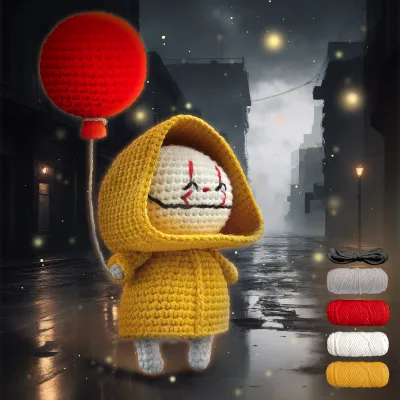
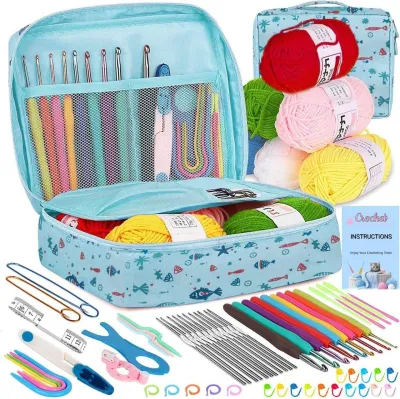
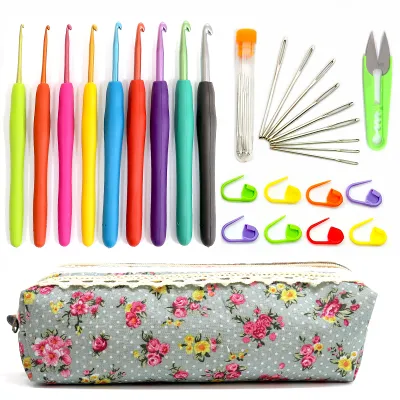
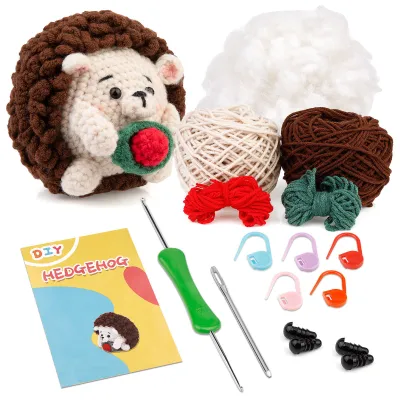
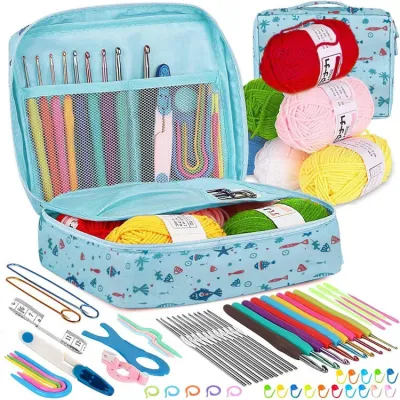
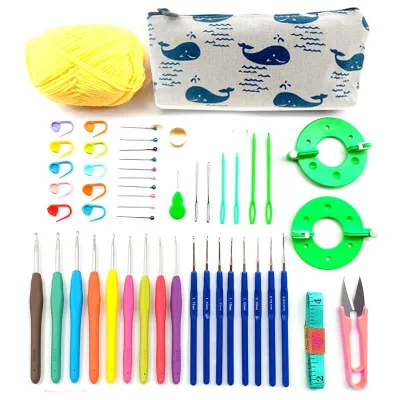
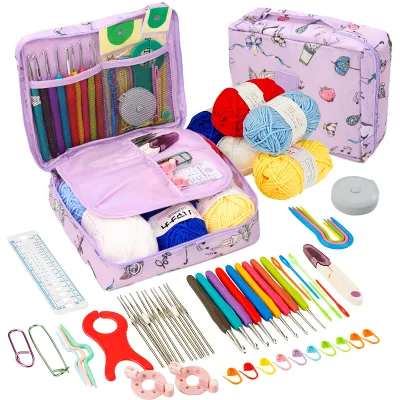
Prices are valid at publication and may change. Please refer to the product page for the latest price.

Hook Sizes and Materials for Learning
For those just starting out, hook size is the most critical factor in determining how easily you can see and manipulate your stitches. Mid-range sizes, specifically from 4.0 mm (US G/6) to 6.0 mm (US J/10), are the most forgiving for beginners. These sizes are large enough to hold comfortably and create clearly defined stitches, yet small enough to keep your project manageable and neat. When a hook is too small, the stitches become tight and difficult to see; when it is too large, the work can feel clumsy and loose.
The material of the hook also significantly influences the friction and glide of the yarn:
- Aluminum: This is the gold standard for beginners. Aluminum hooks are highly durable, lightweight, and exceptionally smooth. They allow yarn to glide effortlessly, which helps you maintain a consistent tension as you learn.
- Plastic or Acrylic: While highly affordable and lightweight, plastic hooks can bend or flex under tight tension. Cheaper versions often have rough mold seams that snag delicate yarn fibers.
- Wood or Bamboo: These materials offer a natural grip and a warm feel in the hand. They have more surface friction than metal, which is excellent for keeping slippery yarns (like silk or bamboo rayon) from sliding off the hook, though they can slow down your pace when using standard acrylic or cotton yarns.
Beyond material, pay attention to hook anatomy, specifically the difference between inline and tapered hooks. Inline hooks feature a deeper, flatter throat and a more pointed head, which helps catch yarn easily but can split it if you are not careful. Tapered hooks have a rounded head and a narrower neck, which glides smoothly through stitches but might slip off for some beginners. A versatile starter kit often includes tapered aluminum hooks, as they offer the most balanced learning experience.
Ergonomic vs. Standard Handles
The handle of the hook plays a major role in hand comfort and endurance. Standard hooks are typically made from a single piece of metal, wood, or plastic, featuring a flat thumb rest. While lightweight and excellent for experienced crafters who prefer a delicate touch, standard metal hooks can cause hand cramping and fatigue during long practice sessions, especially for beginners who tend to hold their tools with a tight, tense grip.
Ergonomic hooks feature a wider, cushioned handle made of rubber, silicone, or soft plastic. This design distributes pressure more evenly across the palm and fingers, accommodating both the “pencil grip” (holding the hook like a pen) and the “knife grip” (holding the hook overhand). For beginners, an ergonomic handle reduces physical strain, allowing for longer practice sessions without joint discomfort. If you plan to practice regularly, prioritizing a kit with ergonomic handles is one of the most effective ways to prevent early burnout.
Essential Accessories Every Kit Should Have
While hooks and yarn are the core elements, completing a project requires a small set of utility tools. A well-rounded starter kit must include accessories that assist with counting, finishing, and organizing your work. Without these items, you will find yourself struggling to secure loose ends or losing track of your progress.
Stitch Markers and Tapestry Needles
Crochet is worked in rows or continuous rounds, and keeping track of where a row begins or ends is one of the biggest challenges for beginners. Stitch markers solve this problem by physically marking specific stitches.
- Locking Stitch Markers: These function like safety pins, opening and closing to secure themselves directly onto a stitch. They are essential for crochet because they can be easily moved as your work progresses and will not fall out. Avoid solid ring markers, which are designed to slide along knitting needles and cannot be easily attached to individual crochet stitches.
- Tapestry Needles: Also known as yarn needles, these are blunt-tipped needles with an extra-large eye. They are used to weave the loose yarn tails back into the finished fabric to prevent unraveling. The blunt tip is crucial because it glides between stitches rather than piercing and splitting the yarn fibers, preserving the structural integrity of your project.
Measuring Tools, Scissors, and Storage
Maintaining consistent dimensions is vital, whether you are making a simple coaster or a fitted garment. A flexible measuring tape—featuring both metric (centimeters) and imperial (inches) units—is necessary for checking your gauge (the number of stitches per inch) and measuring the overall length of your work. Unlike rigid rulers, a flexible tape easily conforms to the soft, uneven shape of crocheted fabric.
Clean cuts are essential when finishing a project or changing yarn colors. Small, sharp embroidery scissors or spring-loaded thread snips are highly preferred over standard household scissors. They allow you to cut close to the fabric with precision, preventing the yarn ends from fraying.
Finally, a dedicated storage solution is highly beneficial. A zippered case, roll-up pouch, or compartmentalized bag keeps your hooks organized by size and prevents small items like stitch markers and tapestry needles from getting lost. A structured case also protects your tools from damage and dust when not in use.
Selecting Beginner-Friendly Yarn for Your First Projects
The yarn you choose can either make your learning experience smooth and rewarding or incredibly frustrating. Beginner yarn must be easy to handle, highly visible, and forgiving of mistakes, allowing you to undo stitches (a process called “frogging”) and rebuild them without damaging the fibers.
Yarn Weight and Fiber Content
Yarn thickness is categorized by weight classes, ranging from lace (Category 0) to jumbo (Category 7). For beginners, Worsted weight (Category 4) or Aran weight is universally considered the gold standard. This medium thickness is easy to hold, works up relatively quickly, and makes individual stitches clearly visible. Avoid thin lace weights, which require high precision, and extremely bulky yarns, which can make it difficult to identify the structure of your stitches.
The fiber composition of the yarn affects both the crafting process and the finished product:
- Acrylic Yarn: This is highly popular for beginners because it is affordable, widely available in many colors, and machine washable. It has a moderate amount of stretch, making it forgiving as you learn to control your tension.
- Cotton Yarn: This fiber offers outstanding stitch definition because it does not have a fuzzy surface. It is less stretchy than acrylic, which means it shows your exact tension—both a benefit for learning and a slight challenge for those with a tight grip.
- Fibers to Avoid: Steer clear of novelty yarns, boucle, chenille, fuzzy mohair, or highly textured yarns. These textures obscure the loops of your stitches, making it nearly impossible to see where to insert your hook, leading to skipped stitches and uneven edges.
Additionally, consider your local environment. In warm, humid climates like Singapore, working with heavy 100% wool yarns can feel uncomfortably hot in your hands. High-quality acrylic, cotton, or cotton-acrylic blends are excellent alternatives. They are lightweight, comfortable to handle in tropical weather, and highly durable under local humidity levels.
Why Light Colors Are Best for Beginners
Color choice is not just an aesthetic decision; it directly impacts your ability to learn. When first starting out, you must constantly read your stitches to count them and identify where to insert the hook for the next row. Light, solid colors—such as soft yellow, light blue, cream, mint green, or pastel pink—reflect light effectively, casting clear shadows that define the top loops (the “V” shape) and the posts of each stitch.
In contrast, dark colors like black, deep navy, dark brown, or charcoal absorb light, making the individual stitches blend into a solid, indistinct mass. Working with dark yarn often requires intense eye strain or artificial lighting, which can quickly lead to fatigue. Variegated or multi-colored yarns can also be distracting, as the shifting colors can camouflage the physical structure of your stitches. Stick to bright, solid pastels until you are comfortable identifying stitches by feel.
Pre-Made Kits vs. Building Your Own: Which is Better?
When starting your crochet journey, you face a choice: purchase a pre-assembled commercial kit or build a custom kit from individual components. Both approaches have distinct advantages and drawbacks, and the right choice depends on your budget, learning style, and long-term interest in the craft.
The Case for Pre-Made Kits
Pre-made kits offer unmatched convenience. They package everything you need into a single box, saving you the time and effort of researching and purchasing items separately. Many modern kits are designed around specific beginner projects, such as a simple scarf or a small stuffed animal (amigurumi). These project-focused kits often include curated yarn colors in the exact quantities needed, along with step-by-step printed instructions or access to exclusive online video tutorials. This streamlined approach is excellent for those who want to try the hobby with minimal setup.
The Drawbacks of Pre-Made Kits
However, commercial kits frequently suffer from quality compromises to keep retail prices low. To pack dozens of items into a single box, manufacturers may include cheap, flimsy plastic hooks that bend, scratchy acrylic yarn that splits easily, or low-quality plastic accessories that break after a few uses. Some kits also pad their item count with unnecessary tools—such as knitting needles, pom-pom makers, or row counters—that a crochet beginner will not use for months, if ever.
The Case for Custom Assembly
Building your own kit allows you to control the quality of every single tool. While the upfront cost may be slightly higher, investing in one or two high-quality ergonomic hooks (such as those from reputable Japanese or European brands) and a skein of premium, smooth cotton or acrylic yarn ensures a far more pleasant tactile experience. High-quality hooks glide effortlessly through yarn, reducing splitting and hand fatigue, and they can last a lifetime.
In terms of cost, a basic pre-made kit on online marketplaces typically ranges from S$15 to S$30. In contrast, assembling a custom kit—comprising one premium ergonomic hook (around S$8 to S$15), a high-quality skein of worsted-weight yarn (S$5 to S$12), a small pack of locking stitch markers (S$3 to S$5), and a tapestry needle—will cost approximately S$20 to S$40. While the custom route may limit you to one hook size initially, the massive leap in tool quality and comfort is well worth the minor price difference.
How to Evaluate a Pre-Made Kit
If you decide to purchase a pre-made kit, use this checklist to ensure it is of high quality:
- Hook Quality: Ensure the hooks are made of smooth aluminum or have comfortable, securely attached ergonomic handles rather than hollow, rough plastic.
- Yarn Suitability: Verify that the included yarn is a smooth, non-fuzzy worsted weight (Category 4) in a light, solid color.
- Instructional Support: Check if the kit provides clear, beginner-friendly instructions, preferably with video links, as static diagrams can be difficult to interpret.
- Essential Accessories: Ensure it includes at least a few locking stitch markers and a blunt tapestry needle.
Frequently Asked Questions (FAQ)
Do I need a crochet kit with a physical pattern book?
No, a physical pattern book is not strictly necessary. While printed booklets are convenient for quick reference, many modern beginners find video tutorials or interactive digital guides much easier to follow because they show the actual movement of the hands and hook in real-time. A good starter kit should provide clear, basic stitch diagrams or direct links to high-quality online video libraries that walk you through the foundational techniques step-by-step.
Is it better to buy a massive kit with 50+ accessories or a small basic one?
A smaller, well-curated kit containing high-quality essentials is vastly superior to a massive, low-cost kit filled with dozens of flimsy accessories. Large kits often prioritize quantity over quality, packing in cheap, rough hooks and splitting yarn that will frustrate your learning process. A minimalist kit with one or two ergonomic hooks, a skein of smooth, premium yarn, a few locking stitch markers, and a sharp pair of snips provides a far better crafting experience.
Can I use knitting yarn for my crochet starter kit?
Yes, yarn is generally interchangeable between knitting and crochet, as both crafts use the same fiber structures. However, you must still ensure the yarn meets beginner-friendly criteria: it should be a smooth, non-fuzzy worsted-weight (Category 4) yarn in a light, solid color. Avoid textured or delicate yarns marketed for knitting, such as lace-weight mohair or single-ply roving, as these are difficult to crochet with when you are first learning.

Community discussion
Share your experience or ask a question. Comments are reviewed before publication.