
When starting your embroidery journey, choosing the right needle threader tool set can mean the difference between a relaxing craft session and hours of frustration. A beginner-friendly needle threader set must prioritize needle eye compatibility, mechanism durability, and a practical variety of tools over sheer piece count.
In Singapore, where crafting communities are growing and local haberdasheries offer a wide array of imported linens and threads, finding a reliable set is highly accessible. A functional beginner set typically ranges from S$5 to S$20 on local online marketplaces or specialty craft shops. Investing in this price range ensures you receive durable materials that can withstand repetitive use without breaking. A well-curated set focuses on providing different types of threaders to match various needle sizes, rather than packing the box with identical, low-quality wire loops that snap after a few uses.
Essential Tools to Expect in a Beginner Embroidery Set
Embroidery projects require a different set of tools compared to standard hand sewing. Because embroidery floss is significantly thicker and often composed of multiple strands, the needles used—such as crewel, chenille, and tapestry needles—have larger, longer eyes. Consequently, a beginner needle threader set must contain tools specifically designed to navigate these larger dimensions without damaging the delicate fibers of your thread.
Products mentioned in this guide
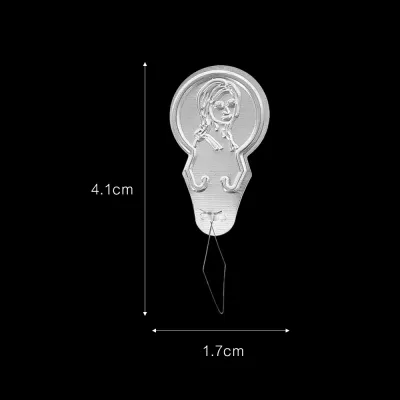
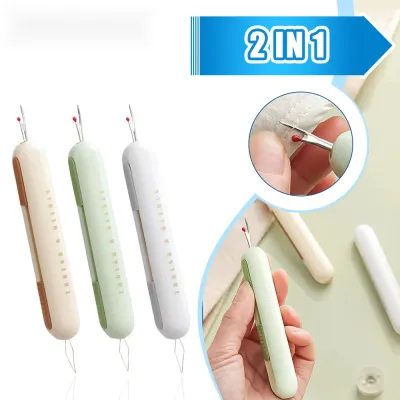
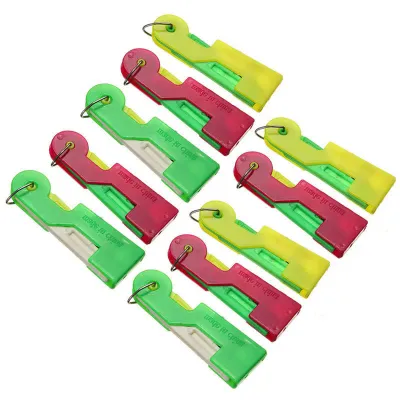
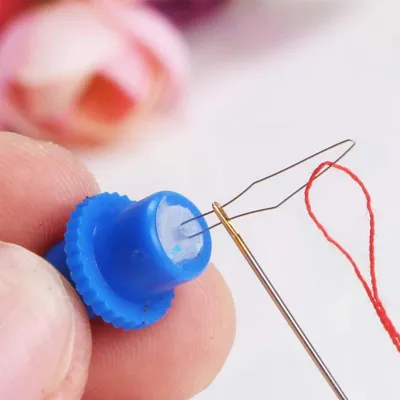
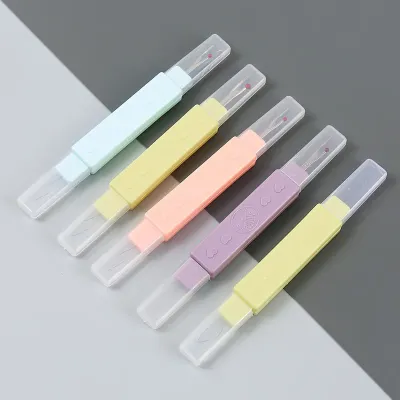
Prices are valid at publication and may change. Please refer to the product page for the latest price.
A comprehensive starter set should feature a mix of wire loop threaders, rigid hook threaders, and flat metal slot threaders. Each of these designs serves a distinct purpose depending on the thickness of your thread and the size of your needle eye. For instance, a fine crewel needle requires a delicate wire loop, while a thick tapestry needle paired with heavy wool yarn demands a sturdy, rigid hook.
Beyond the threaders themselves, a practical beginner set often includes complementary accessories that streamline your workflow. Look for sets that bundle small, sharp embroidery scissors for clean thread cuts, fine-tip tweezers for pulling short thread tails through tight spaces, and a dedicated thread cutter. Having these tools consolidated in one set saves you from purchasing them separately and ensures your workspace remains organized.
Wire Loop Threaders vs. Rigid Hook Threaders
Understanding the structural differences between wire loops and rigid hooks is essential for selecting the right tool for your project. Wire loop threaders consist of a thin, flexible steel wire folded into a diamond shape and secured to a handle. This flexibility allows the wire to compress as it passes through tiny needle eyes, making it highly suitable for fine needles and single strands of delicate silk or cotton floss.
However, the primary drawback of wire loops is their fragility. If you attempt to pull a thick, multi-strand thread through a small needle eye, the friction can easily pull the wire out of its handle or snap it at the base. To test the quality of a wire loop threader before use, gently press the wire loop against your fingertip; it should bend smoothly and spring back into its diamond shape without creasing or loosening at the handle joint.
Rigid hook threaders, on the other hand, are stamped from flat sheets of metal or molded from durable plastic with a small hook at one or both ends. These tools do not compress, meaning they are incredibly durable and virtually impossible to bend during normal use. They are the ideal choice for threading thick embroidery floss, pearl cotton, or knitting yarn through large-eyed tapestry and chenille needles. When choosing a rigid hook, run your finger along the hook’s edges to verify that there are no sharp burrs or rough metal edges that could snag and fray your embroidery thread.
Specialty Threaders for Embroidery Needles
Standard sewing threaders are rarely sufficient for the unique demands of embroidery. When working with multi-strand embroidery floss, such as standard six-strand cotton, trying to force all strands through a basic sewing threader often results in uneven tension, bunching, and broken wires. Specialty embroidery threaders address this by utilizing wide-slot or multi-hole designs.
Wide-slot threaders feature a broad, flat opening that keeps the multiple strands of floss parallel and flat as they are drawn through the needle eye. This design prevents the strands from twisting or knotting, ensuring a smooth pull and preserving the sheen of the thread. If you plan to explore ribbon embroidery, verify that the set includes a flat, wide-slot threader specifically rated for silk ribbons, as standard wire loops will crush and ruin ribbon textures.
Using a standard sewing threader for heavy embroidery work is a common beginner mistake that leads to immediate tool failure. Standard threaders are calibrated for thin polyester sewing threads and small hand-sewing needles. Forcing them to accommodate the bulk of embroidery floss creates excessive friction inside the needle eye, which inevitably destroys the threader and damages the thread fibers.
Material and Ergonomic Checks for Reliable Threaders
When evaluating a needle threader set, the materials used in construction directly impact both the lifespan of the tools and your comfort during long stitching sessions. Handles are typically made from molded plastic, aluminum, brass, or wood. Molded plastic handles should feel solid and dense; avoid sets with thin, hollow plastic handles that flex under pressure, as these are prone to cracking.

Metal handles, such as the classic aluminum coin-style threaders, offer excellent durability but can be difficult to grip if you have slippery hands or suffer from joint fatigue. Wood handles provide a comfortable, natural grip and are often found in premium, artisan-style sets. Regardless of the material, the handle should offer a textured surface or an ergonomic contour that allows you to maintain a secure grip without applying excessive pinching force.
In Singapore’s humid tropical climate, rust resistance is a critical specification to verify. High humidity can cause low-grade carbon steel wires and hooks to oxidize quickly. Rust not only weakens the structural integrity of the threader, causing it to snap prematurely, but it can also transfer permanent orange stains onto your expensive embroidery fabrics and threads. Look for sets that specify the use of stainless steel, brass, or nickel-plated copper for all metal components to ensure long-term resistance to corrosion.
For beginners who experience eye strain or have limited hand dexterity, ergonomic enhancements can make embroidery much more accessible. Some modern threader sets include built-in magnifying glasses that attach directly to the threader handle, allowing you to see the needle eye clearly without straining. Others feature integrated LED lights that illuminate the threading area, which is incredibly helpful when working with dark-colored fabrics or in dimly lit environments.
Evaluating Set Value, Storage, and Packaging
It is easy to be enticed by online listings offering “100-piece needle threader sets” for incredibly low prices. However, these bulk packages almost always consist of dozens of identical, low-quality wire threaders that break after a single use, along with non-functional filler items like cheap plastic safety pins or low-grade needles. When assessing value, prioritize tool diversity and build quality over sheer quantity.
A high-value beginner set should contain a curated selection of different threader types, a pair of quality snips, and a durable storage solution. A dedicated storage case, such as a hard-shell plastic box or a compact metal tin with a secure latch, is essential. Loose wire threaders thrown into a sewing basket will quickly become bent, tangled, or crushed under the weight of other tools. A proper case keeps each tool in its designated slot, protecting the delicate wires from damage.
To calculate the true value of a set, look at the cost-per-useful-tool ratio. If a S$15 set contains three highly durable, ergonomic threaders and a sturdy storage tin that lasts for years, it represents far better value than a S$5 bulk bag of fifty fragile wire loops that you will constantly throw in the bin. Avoid sets that do not clearly list the materials used or those that feature repetitive, identical items designed solely to pad the product’s piece count.
Building Your Shortlist: Pre-Purchase Compatibility Checks
Before finalizing your purchase, it is vital to perform a few compatibility checks to ensure the threader set will work seamlessly with your existing embroidery gear. First, cross-reference the physical dimensions of the threaders with the needles you plan to use. Many high-quality threader manufacturers specify the minimum needle eye size their tools can accommodate (often measured in millimeters, such as 0.5mm or 0.8mm).
If you already own a favorite brand of embroidery needles, check if the threader set’s hooks or wires are thin enough to pass through those specific eyes. For example, fine crewel needles (sizes 9 and 10) have incredibly narrow eyes that require ultra-fine wire loops, whereas thick tapestry needles (sizes 18 to 24) can easily accommodate heavy-duty rigid hooks. Ensuring this compatibility beforehand prevents the frustration of receiving tools that are physically too large for your needles.
Next, spend some time reading user feedback on local retail sites and crafting forums. Look specifically for reviews that mention common failure points, such as “wire pulled out of the handle on first use” or “hook snapped when threading two strands.” Consistent complaints about these issues indicate poor manufacturing quality and weak solder joints. Conversely, positive reviews highlighting the durability of the wire connections and the smoothness of the metal hooks are strong indicators of a reliable product.
Finally, verify the retailer’s return policy and warranty conditions. Because needle threaders are delicate tools, manufacturing defects can occasionally result in a wire detaching prematurely. A reputable seller should offer a straightforward replacement or refund policy if the tools arrive damaged or fail within the first few uses. Checking these details before you buy ensures a risk-free purchase and sets you up for a successful, enjoyable start to your embroidery journey.
Frequently Asked Questions (FAQ)
Can I use a standard sewing needle threader for embroidery floss?
While you can physically fit a standard sewing needle threader through the eye of an embroidery needle, doing so with multi-strand embroidery floss is not recommended. Standard sewing threaders are designed for thin, single-strand polyester threads. The high friction created by pulling thick, multi-strand cotton floss through a small needle eye will quickly snap the delicate wire loop of a standard threader or shred the embroidery floss. For embroidery, it is highly recommended to use specialty threaders with wider slots or heavy-duty rigid hooks designed to handle the bulk of embroidery threads.
How do I prevent the wire loop on my threader from breaking?
To extend the lifespan of your wire loop threader, always insert and pull the threader through the needle eye at a straight, perpendicular angle. Avoid twisting, bending, or pulling the threader at an angle, as this places uneven stress on the solder joint where the wire meets the handle. Additionally, never force a wire loop through a needle eye that feels too tight. If you encounter resistance, stop immediately and switch to a larger needle or a thinner threader. Ensuring your needle eyes are clean and free of manufacturing burrs will also prevent the wire from catching and snapping.
Are automatic needle threaders worth including in a beginner set?
Automatic or desktop needle threaders offer great convenience, but they are generally not essential for a beginner embroidery set. These devices operate on strict mechanical tolerances and are usually compatible only with specific sizes of standard sewing needles and thin threads. They rarely accommodate the wide variety of needle shapes, eye sizes, and thick multi-strand threads used in embroidery. For a beginner, manual threaders—such as rigid hooks and flexible wire loops—offer far greater versatility, portability, and reliability across different embroidery projects.

Community discussion
Share your experience or ask a question. Comments are reviewed before publication.