
When preparing documents for mailing, choosing the correct container ensures your contents arrive professional, intact, and without unnecessary creases. If you are holding a standard C5 envelope, the quick answer is that it perfectly fits an unfolded A5 sheet of paper or a standard A4 sheet folded in half exactly once.
This compatibility is not accidental; it is the result of a highly structured international sizing system designed to make paper and packaging work together seamlessly. Understanding how these dimensions interact allows you to streamline your office mailing processes, budget accurately for local postage, and present clean, unblemished documents to your recipient.
Understanding C5 Envelope Dimensions
To understand why certain paper sizes fit so well, it helps to look at the exact physical measurements of a C5 envelope. Under the ISO 269 international standard, a C5 envelope measures exactly 162 mm by 229 mm (approximately 6.4 inches by 9.0 inches).
Products mentioned in this guide
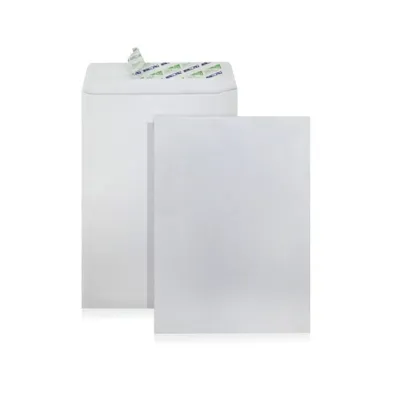
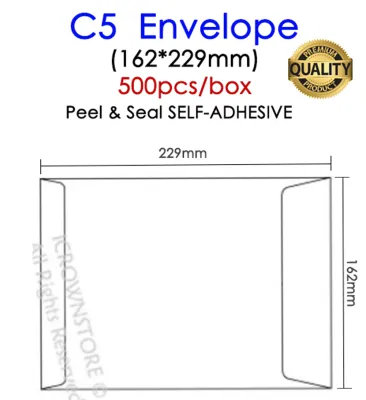
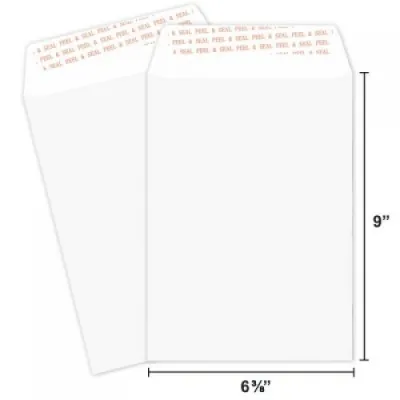
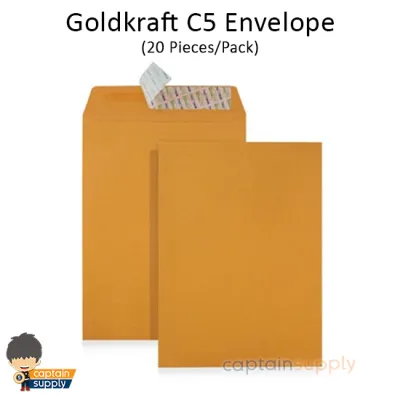
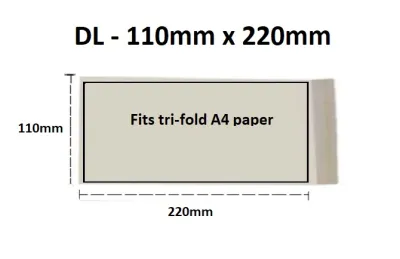
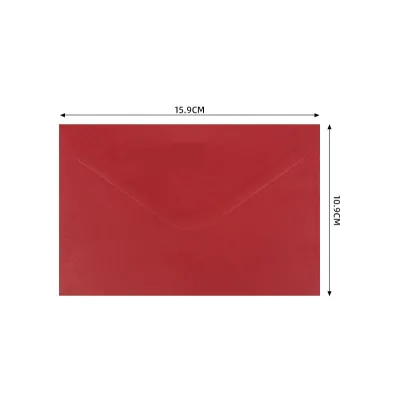
Prices are valid at publication and may change. Please refer to the product page for the latest price.
The design logic behind the ISO “C” series is based on a geometric progression. Every “C” series envelope is engineered to be the geometric mean of the corresponding “A” and “B” series paper sizes. This mathematical relationship ensures that a C5 envelope is slightly larger than an A5 sheet of paper, providing just enough clearance for the paper to slide inside without sliding around loosely or getting stuck.
However, when planning your mailings, you must distinguish between external and internal dimensions. The official 162 mm × 229 mm specification refers to the outer edges of the envelope. The actual internal usable space is always slightly smaller because of the paper seams, the adhesive glue lines, and the fold of the sealing flap. For a single thin sheet, this difference is negligible, but it becomes critical when mailing thicker documents or booklets.
Standard Paper Sizes That Fit Inside a C5 Envelope
Because C5 envelopes are built around the ISO standard, they accommodate specific paper configurations perfectly. Let us examine the two most common formats you will use with this envelope size.

Unfolded A5 Paper
An unfolded sheet of A5 paper measures 148 mm by 210 mm. When placed inside a C5 envelope, the paper fits completely flat without any folding required. This leaves a comfortable margin of error: you have 14 mm of clearance along the width (229 mm envelope width minus 210 mm paper width) and 19 mm of clearance along the height (162 mm envelope height minus 148 mm paper height).
This generous margin makes insertion fast and effortless, which is highly beneficial for high-volume mailing tasks. Common items that utilize this flat-fit configuration include promotional flyers, half-page event invitations, standard greeting cards, and small corporate booklets or pamphlets. Because the paper does not need to be folded, these documents maintain a premium, pristine look upon arrival.
Folded A4 Paper (Half-Fold)
In a professional office environment, the most frequent use case for a C5 envelope is sending standard A4 documents. A standard sheet of A4 paper measures 210 mm by 297 mm. When you fold this sheet exactly in half once along its longer edge, you create a folded document that measures 148 mm by 210 mm—the exact dimensions of an A5 sheet.
This half-fold technique is the standard method for mailing business correspondence, such as invoices, contracts, customer statements, and academic transcripts. To ensure a smooth mailing process, fold the paper cleanly by aligning the outer corners perfectly before pressing down on the crease. Using a flat edge to flatten the fold prevents the paper from springing back open, which can make insertion difficult and cause the document to catch on the internal seams of the envelope.
Practical Factors: Paper Thickness and Envelope Flaps
While the theoretical dimensions suggest a perfect fit, real-world mailing requires you to account for physical variables like paper weight, envelope construction, and postal regulations.
Paper Weight (GSM) and Bulk
Paper thickness is measured in grams per square metre (gsm). In Singapore, standard office printer paper is typically 80gsm, while premium letterheads might use 100gsm or 120gsm. While a single sheet of folded 80gsm paper slides into a C5 envelope effortlessly, stacking multiple sheets quickly increases the bulk.
As a general rule, a standard C5 envelope can comfortably hold between 4 to 8 sheets of folded 80gsm paper. Once you exceed 8 sheets (which equals 16 pages of printed content if printed double-sided), the folded edge becomes thick and rigid. This thickness causes the envelope to bulge, which pulls the front and back faces closer together, effectively reducing the internal width and height. Furthermore, local postal services classify mail based on thickness; keeping your C5 envelope under 6 mm of thickness ensures it qualifies for standard local postage rates rather than more expensive package rates.
Envelope Flap Styles
The way an envelope opens and seals also dictates how easily you can pack your documents:
- Wallet or Commercial Flaps: These feature a straight, horizontal flap on the long edge of the envelope. They are the most popular choice for office environments because the wide opening allows you to slide folded A4 sheets in quickly, and they are highly compatible with automatic envelope-stuffing machines.
- Pocket Flaps: These open on the short edge (162 mm side). While they offer a secure hold for heavy documents, the narrower opening can make inserting multi-page folded documents slightly more tedious.
- Diamond Flaps: These classic, V-shaped flaps fold down to a central point. They are elegant and commonly used for formal invitations, but the angled design can occasionally restrict the usable depth near the top corners.
Seam Allowance
Always remember that internal seams are glued flat. When inserting thicker items like booklets, the edges of the booklet will push against these seams. To prevent tearing, always maintain a 5 mm to 10 mm safety buffer between the edge of your document stack and the outer dimensions of the envelope.
C5 vs. C4 vs. C6: Which Envelope Do You Actually Need?
Choosing the wrong envelope size can lead to delayed mail, damaged documents, or unnecessary postage costs. To help you verify if C5 is the correct choice for your specific mailing task, compare it to the adjacent standard sizes in the table below.
| Envelope Size | Dimensions (mm) | Best-Fit Paper Format | Folding Required for A4 Paper |
|---|---|---|---|
| C4 | 229 mm × 324 mm | Unfolded A4 (210 mm × 297 mm) | None (remains completely flat) |
| C5 | 162 mm × 229 mm | Unfolded A5 or Half-Folded A4 | Folded in half once |
| C6 | 114 mm × 162 mm | Half-Folded A5 or Quarter-Folded A4 | Folded in half twice (quartered) |
Use this simple decision rule to select your envelope:
- If your document is a formal contract, certificate, or professional photograph that must not be bent or folded, choose a C4 envelope.
- If you are sending standard business letters, invoices, or multi-page documents that can be folded once, choose a C5 envelope.
- If you are mailing small personal notes, RSVP cards, or lightweight receipts folded twice into quarters, choose a C6 envelope.
Frequently Asked Questions (FAQ)
Can an unfolded A4 sheet fit inside a C5 envelope?
No, an unfolded A4 sheet cannot fit inside a C5 envelope. An A4 sheet measures 210 mm by 297 mm, which is significantly larger than the 162 mm by 229 mm dimensions of a C5 envelope. Attempting to force an unfolded A4 sheet inside will result in severe bending, tearing, or buckling of both the document and the envelope. If you must keep your A4 document flat, you should use a C4 envelope instead.
How many folded A4 pages can a C5 envelope hold?
A standard C5 envelope can comfortably hold approximately 4 to 8 sheets of standard 80gsm A4 paper folded in half. If you are using heavier paper, such as 100gsm or 120gsm letterhead, the capacity drops to about 3 to 5 sheets. Packing more than 8 sheets is not recommended, as the resulting bulge can split the envelope seams and may exceed the 6 mm thickness limit set by local postal services for standard mail rates.

Community discussion
Share your experience or ask a question. Comments are reviewed before publication.