
Choosing the correct poly mailer size is essential for protecting your items during transit, minimizing shipping costs, and presenting a professional package. A mailer that is too small will stretch, strain the seams, or fail to seal securely, while an oversized bag leaves excess material that can get caught in sorting machinery. By taking precise measurements of your product in its final shipping state and applying a simple sizing formula, you can select the ideal shipping bag that balances security, presentation, and cost-efficiency.
How to Measure Your Product for Shipping
Before selecting a shipping bag, you must determine the exact physical dimensions of the item as it will be packaged. This means measuring the product after it has been folded, compressed, or placed inside any primary packaging. Measuring a loose, uncompressed item often leads to purchasing mailers that are far too large or unexpectedly tight.
To begin, gather your product, any inner packaging materials, and a reliable measuring tool such as a flexible tape measure or a standard ruler. If you plan to wrap the item in tissue paper, place it in a protective sleeve, or include promotional inserts, assemble the entire bundle first. This complete bundle represents the actual object you need to fit inside the mailer.
Products mentioned in this guide
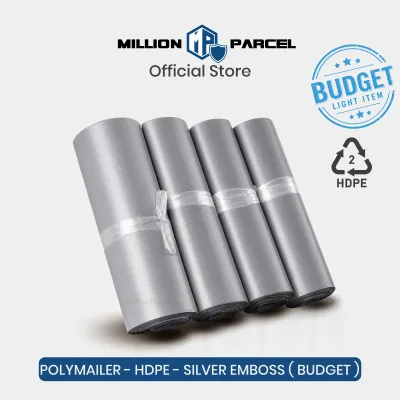
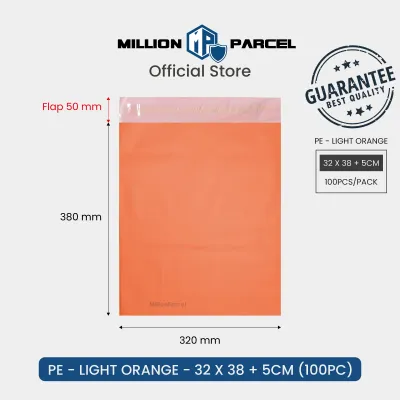

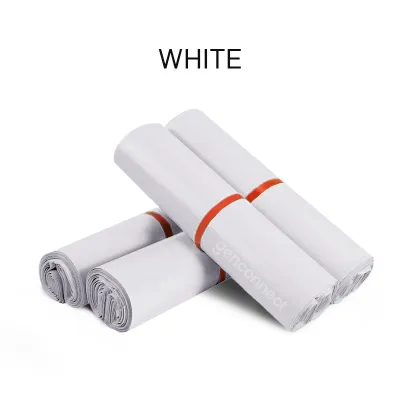
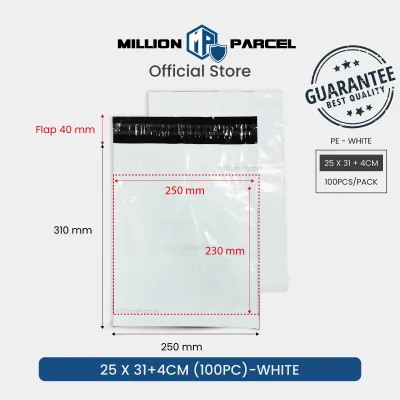
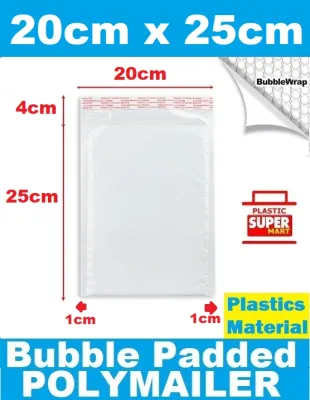
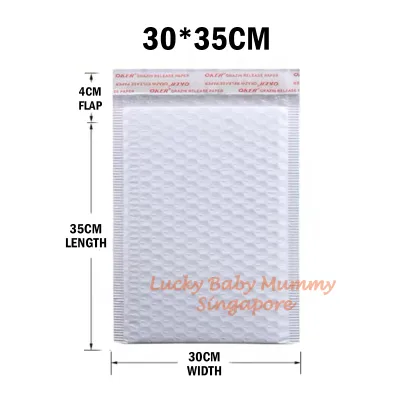
Prices are valid at publication and may change. Please refer to the product page for the latest price.
Lay the prepared item flat on a hard surface to measure its three primary dimensions: length, width, and thickness. The length is the longest side of the item, while the width is the shorter side perpendicular to the length. The thickness, or depth, is the vertical height of the item when lying flat.
For soft goods like apparel, compress the item slightly with your hand while measuring its thickness to prevent overestimating the required bag size. If your item is irregular or has protruding parts, measure the widest points for all three dimensions. Do not assume a product is uniform; a single bulky seam or decorative element can prevent an item from sliding smoothly into a tight mailer.
Calculating the Required Poly Mailer Dimensions
Once you have the exact length, width, and thickness of your packaged product, you can calculate the minimum dimensions required for your poly mailer. Because a mailer is flat, its usable width and length decrease as the thickness of the inserted item increases. You must compensate for this dimensional loss to ensure a proper fit.

To find the minimum width, add your product’s width to its thickness, plus a 15-millimetre clearance margin to prevent seam tears. For the minimum length, add the product’s length to its thickness, plus a 40 to 50-millimetre allowance for the sealing flap. These formulas ensure the mailer can close securely without stretching the material.
For example, if you are shipping a folded sweater that measures 300 millimetres in length, 200 millimetres in width, and 50 millimetres in thickness, your calculations would be as follows. The minimum width required is 200 + 50 + 15, which equals 265 millimetres. The minimum length required is 300 + 50 + 50, which equals 400 millimetres. Therefore, you would look for a mailer that is at least 265 mm x 400 mm.
Always compare your calculated dimensions against the usable interior space of the mailer rather than its total exterior dimensions. Some manufacturers list the total length including the flap, while others list only the usable length up to the adhesive strip. Verifying this distinction prevents errors that could leave your product exposed or unable to seal.
Decoding Poly Mailer Size Labels and Specifications
When browsing packaging suppliers, understanding standard industry labeling formats will help you avoid ordering the wrong size. Most manufacturers list poly mailer dimensions as Width x Length, where the opening is almost always along the width dimension. For example, a mailer labeled as 250 mm x 350 mm has a width of 250 millimetres across the opening and a length of 350 millimetres.
You must also verify whether the manufacturer’s stated length includes the sealing flap. If the flap is included in the total length, the actual usable length of the bag will be shorter by the width of that flap. Check the product specifications or contact the supplier to confirm if the measurements represent the usable interior space.
Beyond width and length, pay close attention to the material thickness, which is typically measured in mils (thousandths of an inch) or microns. Standard poly mailers usually range from 2.0 to 3.0 mils in thickness. A thickness of 2.0 mils is generally suitable for lightweight, soft goods, while 3.0 mils or higher offers better puncture resistance for heavier or sharp-edged items.
For specialized shipping needs, check if the mailer features a double adhesive strip. Double-strip mailers allow customers to reuse the same bag for returns by using the second adhesive line. This is a highly valued feature in e-commerce that improves the customer experience and reduces packaging waste.
Sizing Adjustments for Common E-commerce Products
Different types of products require distinct sizing strategies to ensure they arrive safely and look professional. Soft goods, such as t-shirts, hoodies, and blankets, are highly compressible and forgiving. You can fold these items tightly to fit into smaller mailers, but avoid leaving too much empty space, as excess plastic can fold over itself and get caught in conveyor belts.
For rigid or boxed items, such as books, board games, or cosmetics in primary boxes, the mailer must fit snugly to prevent the item from sliding around. However, because rigid corners do not stretch, you must be precise with your thickness calculations. If the fit is too tight, the sharp corners of the inner box can easily puncture the plastic during handling.
Fragile or irregular items require extra consideration. If you are shipping a delicate item, you must wrap it in bubble wrap or foam cushioning before measuring. Calculate your mailer size based on the fully wrapped dimensions, adding extra clearance to avoid compressing the protective bubbles, which would reduce their cushioning effectiveness.
If an item is extremely fragile, heavy, or sharp, a flexible poly mailer may not be the appropriate choice. In these cases, a rigid cardboard box or a padded bubble mailer provides superior structural support and impact protection. Recognizing when to transition from a standard poly mailer to a rigid box is key to maintaining low damage rates.
Frequently Asked Questions (FAQ)
Does the stated poly mailer length include the sealing flap?
The inclusion of the sealing flap in the stated length varies by manufacturer. Many packaging suppliers list the total exterior length including the flap, while others list only the usable interior length up to the adhesive strip. To avoid sizing errors, always check the detailed product specifications or contact the supplier to confirm whether the flap is included in the advertised dimensions.
What should I do if my product falls between two standard poly mailer sizes?
If your calculated dimensions fall between two standard mailer sizes, it is always safest to size up to the larger option. A slightly larger mailer ensures that your product fits easily without straining the seams and allows the adhesive flap to seal completely. You can easily fold over and tape down any excess material to keep the package neat, secure, and compact for shipping.

Community discussion
Share your experience or ask a question. Comments are reviewed before publication.