
Selecting the correct parcel bag size requires balancing the physical dimensions of your item with the structural limits of the packaging material. To ensure your shipments arrive intact without incurring unnecessary shipping fees, you must calculate the total volume of your item—including its height and any protective wrapping—rather than relying solely on flat measurements. Choosing a bag that is too tight risks seam splits during transit, while an oversized bag leads to shifting, damage, and potential volumetric weight surcharges from local couriers.
Decoding Parcel Bag Dimensions and Measurements
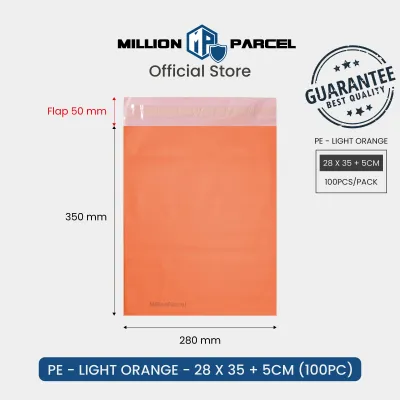
When browsing packaging supplies, dimensions are typically listed as Width x Length (W x L), where the width represents the opening of the bag. For example, a 250 mm x 350 mm bag has a 250 mm opening. It is crucial to verify which side contains the opening, as this dictates how easily your items can be inserted.
The listed dimensions represent the flat lay exterior measurements of the bag. This does not equal the usable internal space. Side welds or seams usually consume 5 mm to 10 mm of width, and the top adhesive flap is often excluded from the primary length measurement, though it is vital to check the manufacturer’s specification sheet to confirm whether the flap length is included in the total.
Products mentioned in this guide
![[SG] ⭐CHEAPEST⭐ Rose Pink Polymailers / Courier Bag / Mailer bag 100pcs shipping mailing](https://img.lazcdn.com/g/p/3ae4169151b5911445ec0160a91b2a22.png_400x400q80.png_.webp)
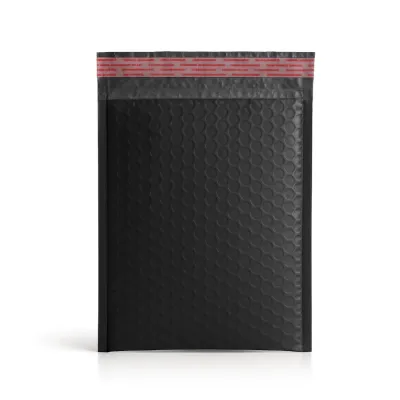
Prices are valid at publication and may change. Please refer to the product page for the latest price.
Material thickness is another critical specification, usually measured in microns (µm) or mils (thousandths of an inch). Standard lightweight mailers typically range from 45 to 55 microns, which is suitable for soft, non-abrasive goods like clothing. For heavier items or those with sharp edges, choosing a heavy-duty bag of 75 to 100 microns prevents punctures and tears during sorting and transit.
How to Calculate the Ideal Bag Size for Your Items
To find the minimum bag size required, you must measure the maximum length, width, and height of your item at its thickest points. Do not assume a flat item will remain flat; even a stack of documents or a folded shirt has a measurable height that pulls the sides of the bag inward.

A reliable formula for determining the minimum flat bag width is: Item Width + Item Height + a safety margin of at least 20 mm to 30 mm. For the bag length, use: Item Length + Item Height + the flap length (typically 40 mm to 50 mm) + an additional 20 mm margin. This ensures the bag can wrap fully around the depth of the item and still seal securely.
If you are shipping irregularly shaped items, multiple loose products, or items wrapped in thick bubble wrap, you must measure the item after it has been fully prepared for shipping. Bubble wrap can easily add 10 mm to 20 mm of thickness to every side, which quickly exhausts the capacity of a tight-fitting bag.
Matching Bag Sizes to Common Item Profiles
Flat and flexible items, such as documents, catalogs, or single t-shirts, are the easiest to size. For standard A4 documents or magazines, a bag measuring approximately 250 mm x 350 mm provides a comfortable fit without excessive shifting. Single apparel items usually fit well in medium mailers around 300 mm x 400 mm.
Bulky or compressible items, such as sweaters, plush toys, or small cushions, require extra width because they expand outward and pull the bag’s seams tight. For these items, it is often best to size up by one or two standard bag increments, or look for specialized bags with expandable bottom or side gussets that naturally accommodate three-dimensional volume.
When shipping rigid items that require an inner cardboard box for structural protection, the parcel bag acts primarily as a waterproof outer layer. In this scenario, do not measure the product itself; instead, measure the outer dimensions of the cardboard box and apply the standard calculation formula to ensure the box slides easily into the bag without tearing the corners.
Evaluating Material Thickness and Seal Specifications
The interaction between material thickness and seal strength determines how well a package survives the shipping process. Thinner bags are highly flexible but offer minimal resistance to sharp corners, meaning a heavy book or a boxed item can easily pierce the plastic if dropped. Matching the weight of your item to the micron rating is essential for transit safety.
Most modern parcel bags feature a self-adhesive peel-and-seal strip with a permanent hot-melt glue. Once pressed down, this adhesive cures quickly to form a tamper-evident bond. For high-volume shipping, verify that the release liner peels away cleanly without static cling, which can slow down the packing process.
It is always safer to choose a slightly larger bag with a relaxed fit than to force an item into a bag that is too small. When a bag is stretched to its limit, constant tension is placed on the side seams and the adhesive seal. During transit, the pressure of other packages stacked on top can cause these stressed seams to burst open.
Balancing Protection with Shipping and Material Costs
While using an oversized bag might seem like an easy way to ensure a fit, excess empty space creates several problems. Loose items will slide around inside, increasing the risk of damage, and the excess plastic can fold over, creating an untidy, unprofessional presentation for your customer.
Furthermore, local courier services often calculate shipping rates based on volumetric (dimensional) weight rather than actual weight, especially for larger or padded packages. If an oversized bag is not folded down tightly, its bulk can push the package into a higher pricing tier, resulting in unexpected shipping surcharges.
By right-sizing your parcel bags to match your product profiles, you minimize both material waste and dimensional weight penalties. Keeping a small inventory of three or four distinct bag sizes allows you to select the most efficient packaging for each order, keeping your fulfillment costs predictable and your deliveries secure.
Frequently Asked Questions (FAQ)
Can I use a standard parcel bag for fragile items?
Standard plastic parcel bags are designed to provide water resistance and surface protection, but they offer virtually no cushioning against impacts, drops, or crushing forces. If you are shipping fragile items like glassware, ceramics, or delicate electronics, you must first pack the item securely inside a rigid cardboard box with ample internal cushioning, such as bubble wrap or paper filler, before placing the box inside a parcel bag.
What is the difference between flat and gusseted parcel bags?
Flat parcel bags are constructed from two flat sheets of plastic sealed along the sides and bottom, making them ideal for flat or low-profile items. Gusseted parcel bags feature pleated sides or a pleated bottom that expands outward when filled. This structural design allows gusseted bags to accommodate thick, bulky, or boxy items much more efficiently than flat bags, providing a cleaner fit and reducing stress on the seams.
Community discussion
Share your experience or ask a question. Comments are reviewed before publication.