
Finding the right padded envelope size requires matching your item’s physical dimensions to the envelope’s usable inner space. By accounting for item thickness, protective padding, and sealing flaps, you can ensure a secure fit that protects your goods without wasting space or overspending on shipping. Selecting an incorrect size can lead to torn seams, damaged items, or unexpected postage fees at the post office.
How to Measure Your Item for Packaging
To establish a baseline for your packaging, start by measuring your item’s physical dimensions. Use a standard ruler or tape measure to find the maximum length, width, and thickness. Always measure at the widest, longest, and thickest points, especially for irregularly shaped items like cosmetics or molded plastic goods.
If you plan to wrap your item in tissue paper, bubble wrap, or protective sleeves before placing it in the envelope, perform these measurements after wrapping. The extra layers add bulk that will affect how the item fits inside the envelope.
Products mentioned in this guide
![[ALFAPKG] 10pcs Air Bubble Padded Envelope / Kraft Mailer Bag](https://img.lazcdn.com/g/p/695f88f9c256405b4de7a2e6ff315d86.png_400x400q80.png_.webp)
![[SG SELLER] Matte Bubble Mailer Poly Mailer Self-Seal Adhesive Padded Envelope Water Resistant Shipping Bags for Mailing](https://img.lazcdn.com/g/p/a61faf78eab8d6675425500915db76e8.png_400x400q80.png_.webp)
![[SG] ⭐CHEAPEST BUNDLE⭐ Bubble Polymailer | Bubble Envelope | Bubble Mailer | Padded Envelope | 20pcs/50pcs/100pcs](https://img.lazcdn.com/g/p/bc59e22c194caebccc2d4f06ccb2fc3f.jpg_400x400q80.jpg_.webp)
![[SG] ⭐CHEAPEST BUNDLE⭐ Bubble Polymailer | Bubble Envelope | Bubble Mailer | Padded Envelope | Bulk Purchase](https://img.lazcdn.com/g/p/d1f9b06ebe577dd9b0f70feb1fa794ad.jpg_400x400q80.jpg_.webp)
Prices are valid at publication and may change. Please refer to the product page for the latest price.
Additionally, weigh your item on a small scale. The weight of your item, combined with the envelope, determines the final shipping cost and helps you decide whether you need a lightweight poly mailer or a heavy-duty paper-padded envelope.
Decoding Padded Envelope Size Specifications
Padded envelope manufacturers label their products with specific dimensions, but these numbers can be misleading if you do not know how to read them. Understanding how these measurements are calculated prevents you from ordering envelopes that are too small for your items.

Outer vs. Inner Dimensions
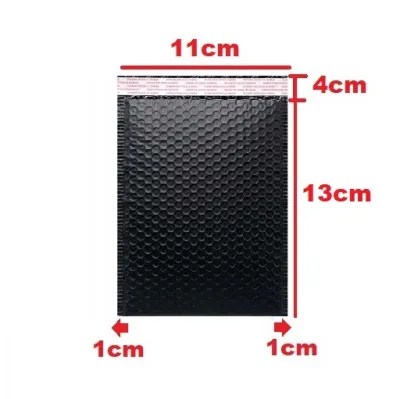
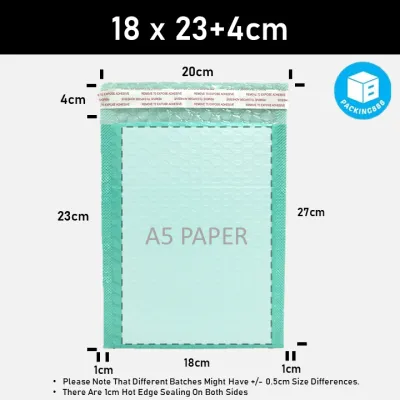
The most critical distinction to understand is the difference between outer and inner dimensions. Outer dimensions represent the total physical footprint of the envelope, including the sealed side seams and the top flap. Inner dimensions represent the actual usable packing space inside the padded pocket.
Because the protective padding—whether made of plastic bubble wrap or recycled paper fibers—takes up physical space, the inner dimensions are always smaller than the outer dimensions. When shopping for envelopes, always look for the manufacturer’s specified inner dimensions to ensure your item will actually fit inside the pocket.
Accounting for Thickness and Sealing Flaps
Flat envelopes are designed to expand, but this expansion comes at the expense of the envelope’s width and length. When you insert a three-dimensional item, the sides of the envelope are pulled inward, reducing the usable flat space.
Furthermore, the sealing flap at the top of the envelope is used solely for closure. The length of this flap is typically included in the manufacturer’s outer length measurement but does not contribute to the usable depth of the envelope. You must subtract the flap’s length to determine the true depth available for your item.
How to Calculate the Right Envelope Size
To calculate the minimum envelope size you need, you must adjust your item’s flat measurements to account for its thickness. A reliable method is to add your item’s thickness to both its length and its width. For example, if your item is 150 mm wide, 200 mm long, and 20 mm thick, your minimum target inner dimensions would be 170 mm wide by 220 mm long.
Next, add a small clearance allowance of about 10 mm to 15 mm to both dimensions. This extra space ensures you can slide the item into the envelope smoothly without straining the seams or tearing the material.
Finally, compare these adjusted dimensions against the inner dimensions listed by the envelope supplier, always rounding up to the next available size if your calculations fall between two options.
Standard Padded Envelope Sizes and Best Uses
Padded envelopes generally fall into standard size categories, though exact dimensions vary by brand and region. Small envelopes, often labeled as sizes 000 to 0, are ideal for tiny, flat items like jewelry, USB flash drives, keys, and small cosmetics.
Medium envelopes, ranging from sizes 1 to 5, are highly versatile and commonly used for shipping books, DVDs, video games, folded apparel like t-shirts, and small electronic accessories.
Large envelopes, spanning sizes 6 to 7 and above, accommodate bulkier clothing, multiple items, or large documents like A4 manuscripts.
Because sizing standards are not universal across all manufacturers, always verify the specific millimeter or inch measurements on the retailer’s product page before purchasing.
Tips for a Secure Fit and Lower Shipping Costs
To keep your shipping costs low and your items secure, avoid using an envelope that is significantly larger than your item. Excessive empty space allows the item to slide around during transit, which can cause damage and may increase your shipping volume costs.
Conversely, never overstuff an envelope. Forcing a bulky item into a tight space stretches the seams, weakens the adhesive seal, and flattens the bubble padding, which reduces its shock-absorbing capabilities.
Finally, familiarize yourself with local postal and courier weight and thickness thresholds. In Singapore, keeping your package under specific thickness limits can qualify you for lower postage rates, saving you money on every shipment.
Frequently Asked Questions (FAQ)
Can I use a padded envelope for highly fragile items?
Padded envelopes offer excellent protection against scratches, dust, and minor impacts, but they lack structural rigidity. They cannot protect delicate items from being crushed if a heavy box is stacked on top of them during transit. For highly fragile, heavy, or easily crushed items like glassware, ceramics, or delicate electronics, it is safer to use a rigid corrugated box filled with custom packing material.
Do padded envelopes cost more to ship than standard paper envelopes?
Yes, padded envelopes are thicker and heavier than standard paper envelopes, which often pushes them into higher shipping categories. Most postal services and couriers charge based on both weight and thickness, meaning a padded envelope is more likely to be classified as a parcel or a large letter rather than standard mail. Always check your local courier’s dimension and weight limits to accurately calculate your postage costs before sending.

Community discussion
Share your experience or ask a question. Comments are reviewed before publication.