
Matching your documents to the correct envelope size is a matter of understanding the standard ISO envelope system. Standard envelope sizes, primarily the C-series (such as C4, C5, and C6) and the DL format, are designed to correspond directly with standard A-series paper sizes (like A4 and A5). By selecting an envelope that matches how you plan to fold your document, you can ensure a clean fit, protect your contents, and avoid postal processing issues.
Understanding the ISO Envelope Size System
The global standard for envelope sizes is governed by the ISO 269 system, which works in tandem with the ISO 216 standard for paper sizes. This relationship is mathematical, meaning each envelope size is scaled to accommodate a specific paper size. If you know the size of your paper and how many times you intend to fold it, you can easily determine the correct envelope without measuring every piece of mail by hand.
To ensure paper fits comfortably inside without bending or tearing, C-series envelopes are designed to be slightly larger than their corresponding A-series paper counterparts. For example, a sheet of A4 paper measures 210 mm by 297 mm, while a C4 envelope measures 229 mm by 324 mm. This extra clearance allows the flat sheet to slide in smoothly. Similarly, if you fold that A4 sheet in half, it becomes an A5 size, which fits cleanly into a C5 envelope.
Products mentioned in this guide
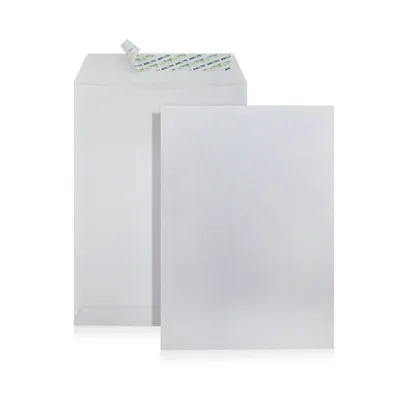
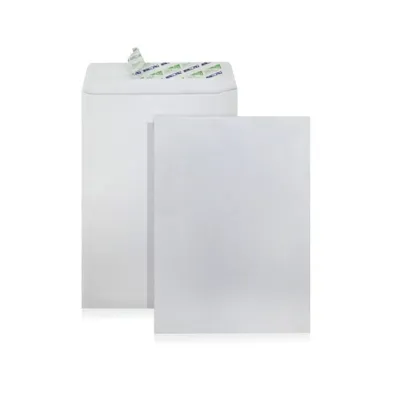
![[SG SELLER] Self Adhesive Business Envelopes White 105 x 24cm standard size](https://img.lazcdn.com/g/p/92cfd298bb7e634c5c162c74b0a99167.png_400x400q80.png_.webp)
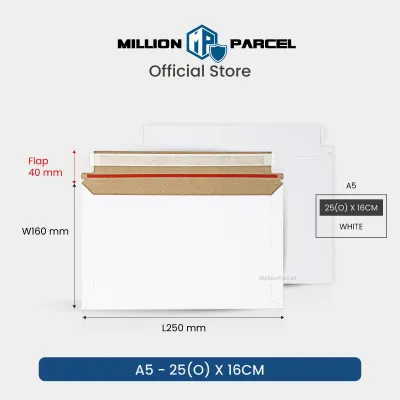
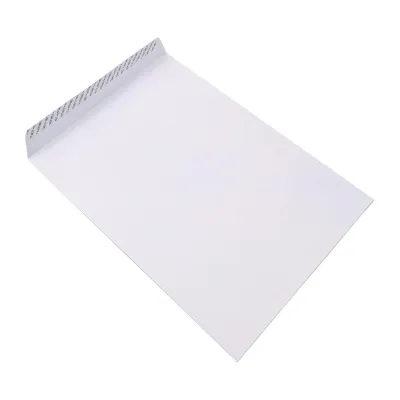
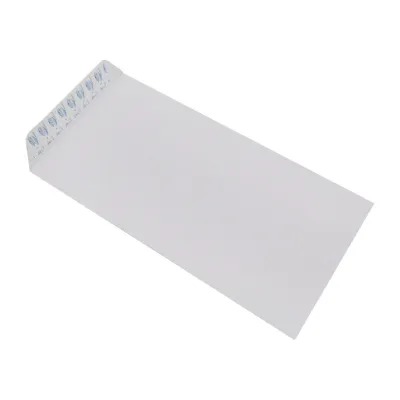
Prices are valid at publication and may change. Please refer to the product page for the latest price.
The DL (Dimension Length) format is a unique addition to this system, specifically created for business correspondence. It does not follow the C-series progression but is designed to hold an A4 sheet that has been folded horizontally into three equal parts. This long, narrow format is the standard choice for professional letters, invoices, and statements.
Standard Envelope Sizes and Document Compatibility
To select the right envelope, you can refer to standard dimensions and their corresponding paper capacities. A C4 envelope measures 229 mm by 324 mm and is designed to hold an A4 sheet completely flat, making it ideal for certificates, contracts, and multi-page documents that must not be creased.

A C5 envelope measures 162 mm by 229 mm. It accommodates an A5 sheet flat, or an A4 sheet folded once in half. This size is commonly used for greeting cards, brochures, and short letters.
A C6 envelope measures 114 mm by 162 mm. It fits an A6 sheet flat, an A5 sheet folded in half, or an A4 sheet folded in half twice (into quarters). This compact size is popular for invitations, small cards, and personal notes.
A DL envelope measures 110 mm by 220 mm. It is specifically sized to hold an A4 sheet folded into thirds, or an A5 sheet folded in half lengthwise.
When choosing a size, you must account for the thickness of your document. While a single sheet of paper fits easily into its designated envelope, multiple pages or heavier paper stocks increase the overall thickness. This extra volume pulls the sides of the envelope inward, reducing the usable width and height. For thick documents or booklets, you will often need to step up to a larger envelope size or select a pocket envelope with a gusset.
How to Measure and Choose the Right Envelope
When purchasing envelopes, the dimensions are standardly listed as width by height (for example, 220 mm x 110 mm). It is also important to identify the flap orientation, which typically falls into two categories: pocket and wallet. Pocket envelopes have the opening flap on the shorter side, which is ideal for automatic inserting machines or heavy documents, while wallet envelopes have the flap on the longer side, making them easier to fill by hand.
If you are mailing bulky items, multiple enclosures, or rigid documents that cannot be folded, you must adjust your size choice accordingly. A rigid item like a cardboard-backed certificate or a thick catalog requires extra clearance. For these items, select an envelope that is at least 6 mm to 10 mm larger than the document in both dimensions to prevent the seams from splitting.
Always check the manufacturer’s specifications for the internal usable space of the envelope. The external dimensions listed on the packaging refer to the closed, flat body of the envelope, but the internal space is always slightly smaller due to the glued seams, paper thickness, and flap folds. Checking these details beforehand ensures your contents will slide in without resistance.
Practical Mailing Constraints and Postage in Singapore
In Singapore, selecting the right envelope size is crucial for managing postage costs and ensuring smooth delivery. SingPost categorizes mail based on dimensions, weight, and thickness. Standard mail rates apply only to envelopes that fall within specific size limits and remain relatively thin. If your envelope exceeds these thresholds, it may be classified as a non-standard letter or a package, which incurs higher postage fees.
Automated sorting machines process mail efficiently, but they require envelopes to meet strict physical criteria. Envelopes must be rectangular, within the minimum and maximum dimension limits, and sufficiently flexible to pass through rollers without jamming. Bulky inserts, rigid items, or envelopes that are too small or too large cannot be processed by these machines and may require manual handling, leading to potential delays or surcharges.
When dealing with fragile, unusually thick, or heavy documents, standard paper envelopes may not provide enough protection. In these cases, it is best to abandon standard paper envelopes in favor of padded mailers or rigid cardboard envelopes. While these options may move your shipment into a higher postage tier, they protect your items from tearing or bending during transit.
Frequently Asked Questions (FAQ)
Can I put an A4 document in a C5 envelope without folding it?
No, an A4 document will not fit into a C5 envelope without folding. A C5 envelope is designed to hold an A5 sheet flat, or an A4 sheet folded in half once. To mail an A4 document completely flat without any folds, you must use a larger C4 envelope.
What is the difference between C6 and DL envelopes?
The primary difference lies in their dimensions and shapes. A C6 envelope is a wider, more traditional rectangle measuring 114 mm by 162 mm, designed for A6 paper or an A4 sheet folded into quarters. A DL envelope is long and narrow, measuring 110 mm by 220 mm, and is specifically designed for an A4 sheet folded into thirds, making it the standard choice for business letters.
Do envelope sizes include the flap in their measurements?
No, standard envelope measurements refer strictly to the closed, flat body of the envelope (width by height) and do not include the open flap. When planning your mail, always base your measurements on the closed envelope, and verify the internal usable space if you are inserting thick or rigid items that cannot bend near the seams.
Community discussion
Share your experience or ask a question. Comments are reviewed before publication.