
To fit bulky items like winter jackets, heavy bedding, and pillows into a flat poly mailer, you must choose a bag size that accounts for the item’s three-dimensional thickness. A standard flat mailer expands by pulling material from the sides, which dramatically reduces the available width and length of the bag. For a typical folded winter jacket or a standard bed pillow, you will generally need a large poly mailer ranging from 14×19 inches to 24×24 inches or larger, calculated using a specific volumetric formula.
Understanding how to convert a three-dimensional object’s dimensions into a two-dimensional flat bag size is the key to preventing burst seams, avoiding high shipping fees, and ensuring your items arrive intact. By measuring your items accurately and applying a simple mathematical formula, you can confidently select the most cost-effective packaging size for your shipping needs.
The Core Sizing Formula for Bulky Items in Flat Poly Mailers
Poly mailers are two-dimensional envelopes when empty. They do not have built-in depth or side gussets unless you specifically purchase gusseted mailers. When you insert a thick, bulky item like a puffer jacket or a decorative cushion, the mailer must stretch around the item’s height. This expansion pulls the front and back sheets together, which effectively shrinks the usable width and length of the bag.
Products mentioned in this guide
![[100pcs] White Polymailer Bags – Waterproof Tear-Resistant Courier Shipping Bags for eCommerce & Mailing](https://img.lazcdn.com/g/p/5ac19457619c8d71b03e006291511e2b.png_400x400q80.png_.webp)
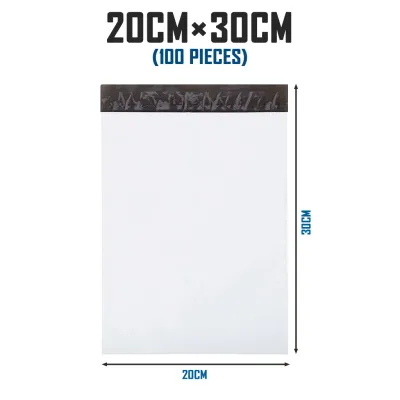
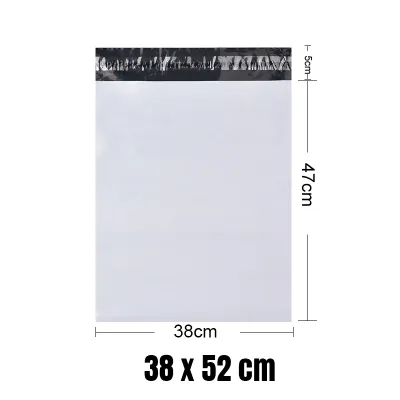
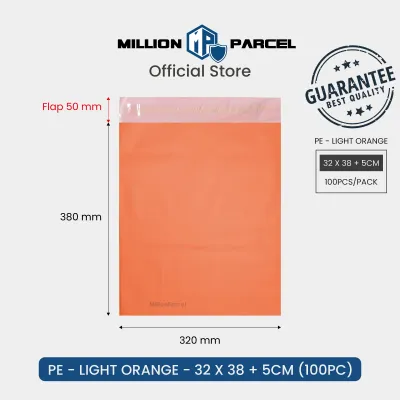
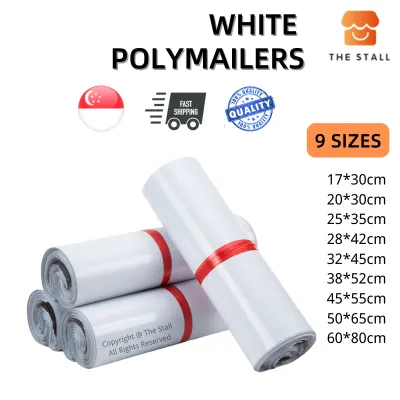
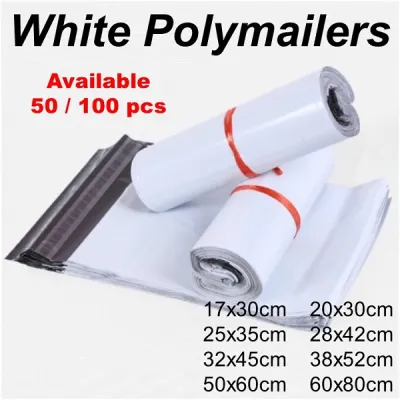
Prices are valid at publication and may change. Please refer to the product page for the latest price.
To avoid purchasing bags that are too small, you must use a standard sizing formula that accounts for this three-dimensional displacement. The plastic material must wrap around the entire volume of the item, meaning the thickness of the item is just as important as its length and width.
The Sizing Formula for Flat Poly Mailers:
- Required Mailer Width = Item Width + Item Thickness + 1 to 2 inches (2.5 to 5 cm) of safety allowance.
- Required Mailer Length = Item Length + Item Thickness + 2 to 3 inches (5 to 7.5 cm) of safety allowance.
The safety allowance is critical. The width allowance ensures you do not have to struggle to slide the item into the opening, which can tear the side seams. The length allowance ensures you have enough material to fold the adhesive flap over the opening and secure a tight seal. Ignoring the thickness variable is the single most common mistake shippers make, leading to wasted packaging and damaged goods.
How to Measure Compressible Items Before Choosing a Mailer
Before applying the formula, you need accurate measurements. Because jackets, sweaters, and pillows are soft and compressible, measuring them can be tricky. If you measure them when they are completely loose, you might buy an excessively large mailer. If you compress them too tightly during measurement, you will select a mailer that is too small, putting immense pressure on the seams.

Measuring Folded Apparel (Jackets and Sweaters)
To get an accurate measurement for clothing, fold the item naturally as if preparing it for presentation to a customer. Do not press all the air out of a puffer jacket or heavy wool sweater, but do not leave it completely loose either. Let the folded stack rest on a flat surface for a moment.
Use a firm ruler or measuring tape to capture the maximum dimensions of the folded stack:
- Length: Measure from the top folded edge to the bottom edge.
- Width: Measure across the widest part of the fold.
- Thickness (Height): Measure the vertical height of the stack at its thickest point.
Keep in mind that different apparel materials behave differently. A lightweight windbreaker or thin fleece can be compressed easily with minimal resistance, requiring only a basic safety allowance. In contrast, heavy winter coats, down jackets, and chunky knit sweaters have high loft and spring back, requiring a much more generous thickness calculation to avoid over-stretching the poly mailer.
Measuring High-Loft Items (Pillows and Cushions)
Pillows and cushions present a unique challenge because they are highly elastic and filled with air. To measure these high-loft items, first measure the pillow in its natural, uncompressed state. Then, gently press down on the pillow with your hands to simulate the realistic amount of compression it will experience inside a sealed poly mailer.
Do not flatten it completely unless you plan to use a vacuum-storage bag before inserting it into the mailer. Measure the length, width, and thickness of this partially compressed state.
Alternatively, you can measure the pillow’s girth (the distance around the thickest part) using a flexible sewing tape.
- Girth-Based Width: Divide the horizontal girth by 2, then add 1 to 2 inches for wiggle room.
- Girth-Based Length: Divide the vertical girth by 2, then add 2 to 3 inches for the sealing flap.
Always exercise caution when shipping high-loft items. Forcing a memory foam pillow or a structured orthopedic cushion into a mailer that is too small can cause immediate seam failure. More importantly, prolonged, excessive compression can permanently damage the internal structure or foam density of the item. Always verify the pillow manufacturer’s care label and packaging instructions to see if there are specific warnings against tight compression.
Calculating the Exact Mailer Dimensions: A Step-by-Step Example
Let us walk through a practical calculation to show how these formulas function in a real-world shipping scenario. Suppose you want to ship a folded winter puffer jacket.
After folding the jacket naturally, you measure the stack and obtain the following dimensions:
- Length: 15 inches
- Width: 12 inches
- Thickness (Height): 4 inches
Now, apply the flat poly mailer sizing formula:
- Calculate the Required Width:
– Formula: Item Width (12 inches) + Item Thickness (4 inches) + 2 inches (allowance) = 18 inches. - Calculate the Required Length:
– Formula: Item Length (15 inches) + Item Thickness (4 inches) + 2 inches (allowance) = 21 inches.
Based on this calculation, you need a flat poly mailer that measures at least 18×21 inches. If you search for mailers online and find standard sizes like 19×24 inches, that size will work perfectly, leaving a comfortable margin for easy packing.
Let us look at a second example involving a standard bed pillow. Suppose the partially compressed pillow measures:
- Length: 26 inches
- Width: 20 inches
- Thickness: 6 inches
Applying the formula:
- Calculate the Required Width:
– Formula: Item Width (20 inches) + Item Thickness (6 inches) + 2 inches (allowance) = 28 inches. - Calculate the Required Length:
– Formula: Item Length (26 inches) + Item Thickness (6 inches) + 3 inches (allowance) = 35 inches.
For this pillow, you would need a very large poly mailer, such as a 28×35 inch bag. If a standard size like 28×36 inches is available, it will accommodate the pillow comfortably.
However, when browsing product listings on e-commerce platforms or stationery supply sites, you must distinguish between “usable space” and “outer dimensions.” Many manufacturers list the outer dimensions, which include the adhesive sealing flap (often 1.5 to 2 inches long) and the welded side seams (typically 0.1 to 0.25 inches on each side).
Always check the product description or specification sheet to verify if the stated dimensions represent the usable interior space. If the listing only provides outer dimensions, subtract 2 inches from the listed length and 0.5 inches from the listed width to determine if your bulky item will actually fit.
Common Sizing Mistakes That Lead to Burst Seams or Higher Fees
Selecting the wrong size of a large poly mailer does not just make packing difficult—it can also lead to damaged inventory and unexpected shipping expenses.
- The "Flat Item" Fallacy: This is the most common error. A shipper sees a flat item that is 20×30 inches and assumes a 20×30 inch poly mailer will fit it perfectly. When the item has any thickness at all, the mailer's sides are pulled inward, reducing the opening width. Forcing the item inside stretches the low-density polyethylene beyond its yield point, leading to split side seams during transit.
- Ignoring the Sealing Flap: The adhesive strip is located on a fold-over flap at the top of the mailer. If your bulky item fills the mailer all the way to the very edge of the opening, you will not have enough excess plastic to fold the flap over and seal it securely. This forces you to use packing tape to patch a gaping opening, which looks unprofessional and compromises water resistance.
- Overestimating Size (The DIM Weight Penalty): To avoid tight fits, some shippers simply buy the largest mailer available, such as a 24×36 inch bag, for a medium-sized jacket. While the item fits easily, the excess, floppy plastic can easily get caught in automated sorting conveyor belts, leading to torn packages. Furthermore, international and domestic couriers often calculate shipping rates using Dimensional Weight (DIM weight). A bloated, oversized package occupies more physical volume on a delivery vehicle, which can trigger higher shipping rates even if the actual weight of the jacket or pillow is very light.
For example, most major couriers use a volumetric formula: (Length x Width x Height in cm) / 5000. If your poly mailer is allowed to bulge irregularly or is excessively large, you may find yourself paying for a 5 kg package when the actual weight is under 1 kg.
Verifying Mailer Strength and Seam Durability for Heavy Loads
A large poly mailer must be physically capable of holding bulky items without tearing. When shipping heavy winter coats, leather jackets, or dense pillows, the outward pressure on the bag is continuous.
To ensure your packaging is up to the task, check the manufacturer’s specifications for the following quality indicators:
- Material Thickness: Poly mailer thickness is measured in mils (thousandths of an inch). Standard lightweight mailers are often 1.5 to 2.0 mils thick. For bulky, heavy, or high-loft items, look for heavy-duty mailers with a thickness of 2.5 to 3.15 mils to provide adequate puncture and tear resistance.
- Seam Construction: Inspect the side seams. High-quality mailers feature wide, reinforced side welds that resist splitting when under tension.
- Adhesive Strength: The self-seal strip should feature a hot-melt adhesive that creates a permanent, tamper-evident bond. Once sealed, the flap should require tearing the plastic to reopen.
- Specialized Materials: If your bulky items have sharp or rigid components, such as heavy metal zippers, large buttons, or decorative buckles, standard poly mailers may puncture. In these cases, verify if you need a co-extruded (Co-Ex) poly mailer, which uses multiple layers of plastic for maximum durability, or a reinforced woven mailer for extreme loads.
Frequently Asked Questions (FAQ)
Does compressing a pillow in a poly mailer damage it?
Most synthetic polyester-filled and down pillows are highly resilient and can withstand temporary compression during transit without issue. They will naturally loft back up once unpacked and shaken out. However, memory foam, latex, or specialized orthopedic pillows can suffer permanent structural damage or creasing if compressed too tightly for extended periods. Always check the pillow manufacturer’s care and packaging labels for specific compression limits. If the manufacturer advises against compression, use a rigid cardboard shipping box instead of a poly mailer.
How does poly mailer size affect shipping costs for bulky items?
Many courier services calculate shipping fees using a formula based on dimensional weight (DIM weight) rather than actual weight. DIM weight is calculated by multiplying the package’s length, width, and height, then dividing by a standard shipping factor. If you use a poly mailer that is excessively large for your item, it creates bulkier outer dimensions. This extra volume can push your package into a higher weight tier, resulting in significantly higher shipping costs for a relatively light item. Selecting a properly fitted poly mailer minimizes excess volume and keeps your shipping costs as low as possible.

Community discussion
Share your experience or ask a question. Comments are reviewed before publication.