
To fit Singapore dollar (SGD) notes neatly without folding, you need a long birthday money envelope with external dimensions of at least 165 mm in length and 85 mm in width. This size comfortably accommodates the most common denominations, including S$2, S$5, S$10, and S$50 notes, while leaving enough clearance for seams and flaps. If you are gifting larger denominations like the S$100 note, you will need to look for slightly larger envelopes to prevent creasing.
Understanding SGD Note Dimensions and Envelope Sizing
Singapore dollar notes do not share a uniform size. Instead, their physical dimensions scale progressively with their value. For example, a S$2 note is the smallest in circulation, while a S$100 note is significantly longer and wider. This scaling design helps the visually impaired identify denominations, but it also means a birthday money envelope that perfectly fits a S$10 note might tightly pinch or bend a S$50 or S$100 note.
Before purchasing an envelope, it is highly recommended to measure the specific notes you plan to gift. Relying on memory can lead to purchasing envelopes that are too short, forcing you to fold the cash at the last minute. Use a standard ruler to measure the length and width of the notes to ensure an accurate match.
Products mentioned in this guide
![[IN SG STOCK]2026 Happy Birthday Big Size AngPao Red Packet Cute Cash Envelope Pouch](https://img.lazcdn.com/g/p/e5fc30e2a717c8fcb000625d9f7f2f0e.jpg_400x400q80.jpg_.webp)
![[IN SG STOCK]2026 Happy Birthday Red Packet HongBao AngPao Cash Envelope Chinese Birthday Gift Singapore Ready Stock](https://img.lazcdn.com/g/p/cf807213bb7be19a7d7503576c79aa70.jpg_400x400q80.jpg_.webp)
![[IN SG STOCK]2026 Creative Surprise Giant Red Packet Birthday Red Envelope](https://img.lazcdn.com/g/p/9455528c518cd79cbc12b041904113eb.jpg_400x400q80.jpg_.webp)
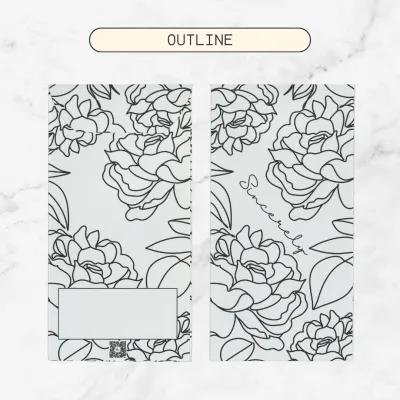
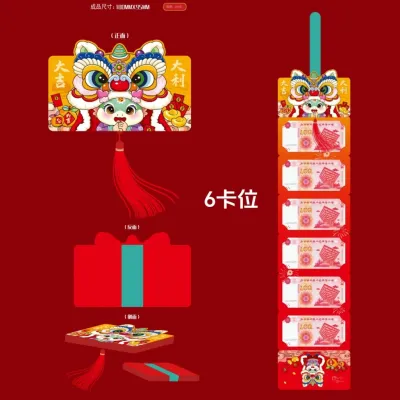
![[IN SG STOCK]2026 Horse Year CNY AngPao HongBao Wedding Birthday Red Packet Money Envelope Custom Print Logo Hot Stamping Xi Fu Red Envelope](https://img.lazcdn.com/g/p/154447c03eb3df4dc5c0f8aadc61f4da.jpg_400x400q80.jpg_.webp)
![[SG SELLER] Embroidered Chinese Envelope Plush Red Packets CNY 2026 Lucky Horse Birthday New Year Surprise Money Angpao](https://img.lazcdn.com/g/p/cc7289b36793f440816e1a26871e56bc.jpg_400x400q80.jpg_.webp)
Prices are valid at publication and may change. Please refer to the product page for the latest price.
When browsing stationery options, you will generally encounter two formats: short envelopes and long envelopes. Short envelopes are compact and require you to fold the notes once or twice to make them fit. Long envelopes are designed specifically to keep the currency flat, preserving the crisp, pristine presentation that makes cash gifts feel special.
Standard Envelope Sizes for Cash Gifts
Standard long envelopes designed for unfolded cash gifts—often sold as red packets, green packets, or festive money envelopes—typically feature external dimensions ranging from 165 mm to 175 mm in length and 80 mm to 90 mm in width. These dimensions are optimized to hold the most common denominations flat. Short envelopes, on the other hand, usually measure around 115 mm to 120 mm in length, requiring a clean fold down the center of the note.

When reading packaging labels in stationery stores, always look for the listed dimensions. However, do not assume the external dimensions represent the actual space available for your cash. The manufacturing process of paper envelopes requires folding and gluing flaps to create the pocket.
This construction means the internal usable space is always smaller than the external measurements. Side seams, bottom folds, and the top flap crease consume valuable millimeters. A standard envelope with an external width of 80 mm might only offer 72 mm of actual clearance inside, which can make inserting a wider note a tight squeeze.
How to Choose the Right Size for Your Gift
Choosing the right envelope size depends heavily on the total cash amount and how you plan to present it. Gifting a single, crisp note is straightforward, but gifting multiple notes requires extra planning. As you stack notes, the thickness of the stack increases. This physical volume pulls the front and back of the envelope closer together, effectively reducing the available width and length. For a stack of five or more notes, select an envelope that offers at least 10 mm of extra clearance on all sides.
Another critical factor is the top flap clearance. When you slide the notes into the envelope, they must sit entirely below the fold line of the flap. If the notes protrude even slightly, folding the flap down will crease the top edges of your gift. A secure seal is also harder to achieve if the contents press directly against the adhesive area, which can cause the envelope to pop open during transit.
Additionally, pay close attention to the material stiffness and internal texture of the envelope. Singapore’s lower-denomination notes, such as the S$2, S$5, and S$10 denominations, are printed on polymer. Polymer notes are highly durable but have a smooth, slightly static-prone surface. If the envelope is made of rough, fibrous paper or has exposed, sticky glue lines inside, the polymer notes can snag or cling to the interior, making them difficult to insert or slide out smoothly. Choosing an envelope with a smooth inner lining or high-quality, matte-finished paper prevents this friction.
Quick Checks Before Buying or Crafting
To ensure your birthday money envelope fits your gift perfectly, apply the usable space rule. As a general guideline, subtract 10 mm from both the external length and width listed on the packaging. This calculation gives you a realistic estimate of the internal pocket size. If the resulting dimensions are not at least 5 mm larger than your note’s measurements, opt for the next size up.
If you are crafting your own envelope or buying a premium handmade option, perform a paper template test. Cut a piece of scrap paper or cardstock to the exact dimensions of the notes you intend to gift. Use this template to test the fit of the envelope before inserting the actual cash. This step prevents accidental damage, smudging, or creasing of the real notes during trial fits.
Finally, inspect the envelope’s construction. Run your finger along the inside seams to check for internal ridges, heavy embellishments, or rough glue spots. Envelopes with heavy external foil stamping, embossing, or 3D decorations can sometimes have compressed internal spaces or rough backings that catch on the edges of the notes. Ensuring a smooth, unobstructed interior guarantees a seamless presentation.
Frequently Asked Questions (FAQ)
Can I use a standard greeting card envelope for SGD notes?
Standard greeting card envelopes, such as those sized for square or rectangular cards, are often wider but shorter than dedicated money envelopes. While they can hold cash, they frequently leave too much empty space vertically while pinching the notes horizontally. This mismatch increases the risk of the notes shifting around and bending at the corners. For a neat presentation, it is best to use envelopes specifically proportioned for currency rather than standard mailing or card envelopes.
Do polymer SGD notes require special envelope materials?
Polymer notes do not require specialized envelope materials; standard paper, cardstock, or parchment envelopes work perfectly well. The main consideration is avoiding extreme heat, direct sunlight, or airtight plastic sleeves, which can cause polymer to warp or degrade over time. Standard paper envelopes allow the notes to breathe and protect them from light, making them the ideal choice for safe storage and presentation.

Community discussion
Share your experience or ask a question. Comments are reviewed before publication.