
Finding the right notebook often comes down to how the pen tip meets the page. Midori MD Paper stands out in the premium stationery market because it deliberately preserves a tactile connection between hand and paper, eschewing the glassy, ultra-smooth coatings common in other high-end brands. Rather than aiming for a completely frictionless glide, this paper offers a subtle texture—often described as “tooth”—that gives writers physical feedback as they write. Combined with a warm, natural cream tone and a minimalist design philosophy, it provides a distinct sensory experience that appeals to fountain pen enthusiasts, sketchers, and daily journalers alike.
In Singapore’s warm and often humid climate, choosing the right paper involves more than just aesthetics. High humidity can affect how paper fibers absorb moisture, which in turn influences ink drying times and feathering. Understanding how Midori MD paper behaves under these environmental conditions, and how it interacts with different writing instruments, is essential before investing in a premium notebook for your daily desk setup.
Core Characteristics of Midori MD Paper
The defining feature of Midori MD paper is its unique surface texture. Many premium paper manufacturers apply heavy synthetic coatings or intensive calendering processes to make their pages as smooth as possible. Midori takes a different approach by leaving the paper relatively uncoated, preserving the natural texture of the wood pulp fibers. This creates a slight resistance, or tooth, when you write. This feedback allows for greater control over your pen strokes, making it feel as though you are actively sculpting your words rather than sliding aimlessly across a slick surface.
Products mentioned in this guide
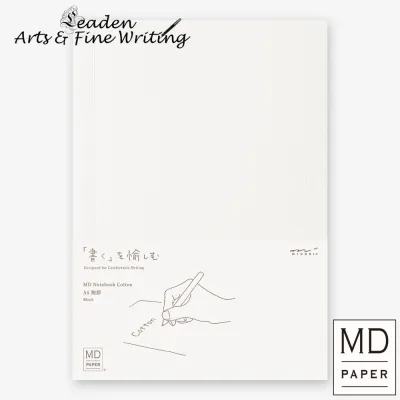
Prices are valid at publication and may change. Please refer to the product page for the latest price.
Ink handling is another area where this paper shows its thoughtful engineering. Despite the lack of a heavy plastic-like coating, the paper fibers are woven tightly enough to resist common writing issues like feathering—where ink spreads sideways into unsightly spiderweb patterns—and bleed-through, where ink penetrates completely to the back of the page. While extremely wet inks or broad calligraphy nibs may push the limits of any paper, standard writing instruments generally produce clean, crisp lines on this medium.
The optical properties of the paper also contribute significantly to its appeal. The pages feature a soft, natural cream color rather than a bright, bleached white. This cream tone is designed to reduce eye strain, especially when writing under bright desk lamps or in air-conditioned study spaces. Furthermore, the warm background provides an elegant contrast for a wide range of ink colors, softening harsh black inks and adding depth to blue, brown, and green tones.
How Midori MD Compares to Other Premium Papers
When evaluating Midori MD against other premium options on the market, thickness and opacity are key points of comparison. Some ultra-thin premium papers are famous for their lightweight portability but suffer from significant “ghosting”—where the writing on one side is highly visible from the other. Midori MD paper strikes a practical middle ground. It is substantial enough to minimize distracting show-through, allowing you to use both sides of a page comfortably, yet it remains thin enough that a full notebook does not feel excessively bulky in a commuter bag.

The difference in surface treatment becomes obvious when compared directly to heavily coated or polished alternatives. Glassy papers tend to sit the ink entirely on top of the page, which can showcase beautiful ink properties like sheen and shading but results in exceptionally slow drying times. Midori’s lightly sized approach allows the paper to absorb a small amount of ink while still keeping the lines sharp. This balance prevents the ink from pooling excessively, though you should still verify how your specific ink behaves on the page.
Drying time is a critical factor, particularly for left-handed writers or those who need to close their notebooks quickly during meetings. Because Midori MD paper is slightly more absorbent than its highly coated competitors, inks generally dry faster on its surface. However, in Singapore’s humid environment, ambient moisture can naturally extend drying times for any paper. It is wise to keep a sheet of blotting paper handy if you regularly use wet fountain pens or gel inks in non-air-conditioned spaces.
Matching Your Pens and Ink to Midori MD Paper
To get the most out of your notebook, it helps to match your writing tools to the paper’s characteristics. Fountain pen and rollerball users will find that the paper handles a wide variety of nib sizes well. However, because the paper has some absorbency, exceptionally wet pens or highly saturated inks may show more ghosting than dry-writing combinations. If you prefer fine or medium nibs with standard writing inks, you will likely enjoy a crisp line with minimal spread. It is always wise to test a new ink in an inconspicuous corner of the notebook first.
For everyday ballpoint and gel pens, the slight tooth of the paper is highly beneficial. Ultra-smooth papers can sometimes cause ballpoint pens to skip because the metal ball cannot grip the surface to rotate properly. The natural texture of Midori MD paper provides just enough friction to keep the ball rolling smoothly, ensuring a continuous flow of ink. Gel pens also glide effortlessly, with the paper absorbing the water-based ink quickly enough to prevent accidental smudging under normal writing speeds.
Pencil and graphite users will find this paper particularly rewarding. The surface tooth acts like a gentle file, pulling graphite from the pencil core with ease. This makes it excellent for sketching, drafting, or taking quick pencil notes, as you can achieve deep dark tones and subtle shading that are difficult to replicate on slicker papers. Additionally, the sturdy fiber structure resists tearing or pilling when you use a standard eraser, allowing you to make corrections without ruining the page.
Evaluating the Price-to-Performance Ratio
Deciding whether to invest in a premium notebook depends largely on your intended use cases. If you are using a notebook for quick, disposable shopping lists or temporary scratchpad notes, a standard utility notebook is more cost-effective. However, for daily journaling, archival records, creative writing, or professional planning, the tactile pleasure and durability of Midori MD paper easily justify the premium. It transforms writing from a mundane task into an intentional, enjoyable ritual.
The value of these notebooks also lies in their structural design and binding. Midori notebooks feature a minimalist aesthetic, often bound with an exposed cheesecloth spine or a simple paper cover that allows the book to open completely flat. This lay-flat binding is a crucial usability feature, ensuring you can write comfortably from margin to margin without fighting a stiff spine. The clean design allows the focus to remain entirely on your thoughts and your pen strokes, free from distracting cover graphics or heavy branding.
There are, however, scenarios where you might prefer alternative papers. If you absolutely demand zero ghosting when using heavy markers or wet brush pens, a thicker sketchbook-grade paper may be more appropriate. Similarly, if you prefer a stark, bright white background to evaluate the exact color accuracy of your art inks, a heavily bleached, coated paper might serve your needs better. Recognizing these trade-offs ensures you select the right tool for your specific creative workflow.
Frequently Asked Questions (FAQ)
Is Midori MD paper fountain pen friendly?
Yes, Midori MD paper is widely regarded as highly compatible with fountain pens. Its tight fiber structure prevents standard fountain pen inks from feathering or bleeding through the page under normal writing conditions. However, performance can vary depending on the wetness of your pen’s feed, the width of the nib, and the specific formulation of the ink. Highly saturated or specialty shimmering inks may behave differently, so it is recommended to perform a quick test on a back page before committing to extensive writing.
Does Midori MD paper come in different weights or sizes?
Midori MD notebooks are available in several standard sizes, including A5, A6, and B6 Slim, as well as various ruling formats such as blank, lined, and grid. While the classic MD paper is standard across most of their notebooks, the brand also offers specialized variations, such as thicker cotton-blend papers for sketching. To ensure you get the exact format and paper weight suited to your needs, always check the manufacturer’s packaging or official store listings for detailed specifications before making a purchase.

Community discussion
Share your experience or ask a question. Comments are reviewed before publication.