
Rafia yarn is a flat, ribbon-like crafting medium that has become a staple for crocheters seeking to create structured, lightweight, and breathable summer accessories. Unlike traditional spun fibers, it mimics the natural texture of palm fronds, offering excellent shape retention that makes it ideal for items like sun hats, beach bags, and home decor. Understanding its unique characteristics, material origins, and how it compares to alternative natural fibers is key to selecting the right yarn for your next crochet project.
What Is Rafia Yarn Made Of?
To choose the right yarn, you must first understand that “rafia” (or raffia) in the modern crochet market refers to several distinct materials. True natural raffia is harvested from the segments of the leaves of the Raphia farinifera palm, native to tropical regions. These leaves are harvested, cut into strips, sun-dried, and bundled. Natural raffia is highly durable, water-resistant, and possesses a slightly uneven, rustic texture that lends an organic charm to handmade items.
Because natural palm raffia is typically sold in short, irregular strands rather than continuous skeins, manufacturers developed continuous yarns designed specifically for knitting and crocheting. These manufactured alternatives are generally classified into two categories: paper-based raffia and viscose (or rayon) raffia. Paper-based raffia is made from wood pulp that is spun and flattened into a ribbon, while viscose raffia uses regenerated cellulose fibers to create a smoother, more uniform ribbon with a subtle gloss.
Products mentioned in this guide
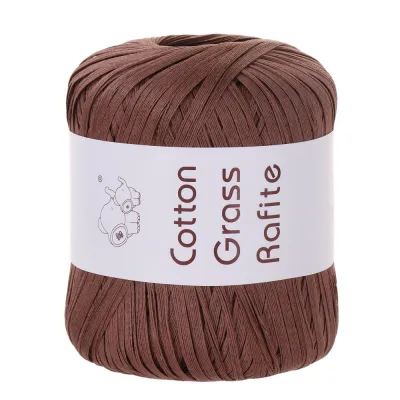
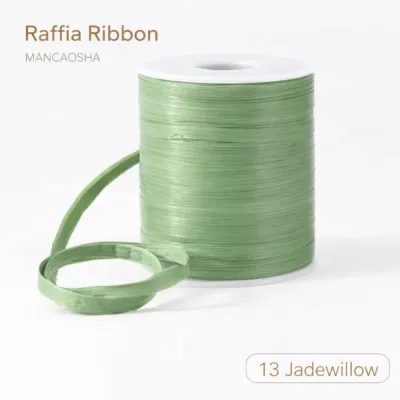
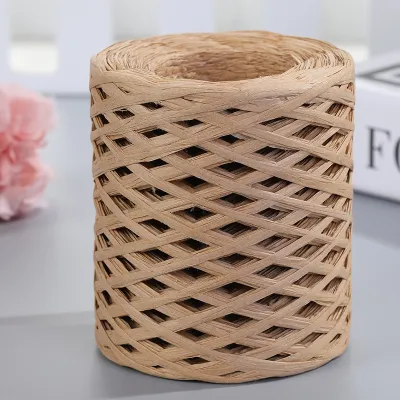
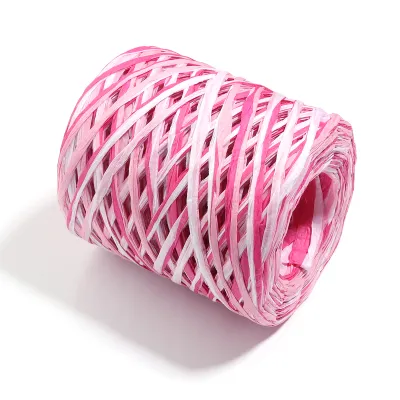
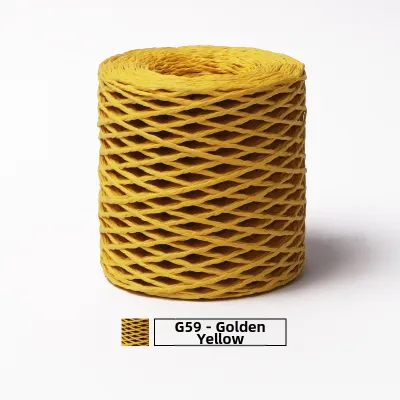
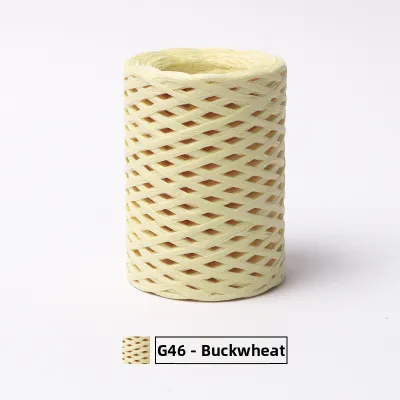
Prices are valid at publication and may change. Please refer to the product page for the latest price.
Before starting a project, always inspect the manufacturer’s product label to verify the exact material composition. Natural palm raffia, paper-based raffia, and viscose-based yarns behave very differently under tension and react uniquely to moisture. Checking these specifications ensures you do not accidentally expose a delicate paper-based yarn to heavy rain or wash cycles that could compromise its structural integrity.
Key Properties of Rafia Yarn for Crochet
The primary appeal of rafia yarn lies in its exceptional stiffness and structural integrity. Unlike wool or acrylic, which yield a soft, conforming fabric, rafia produces a sturdy, self-supporting material when crocheted. This rigidity allows you to create wide hat brims that do not flop over your eyes, and tote bags that maintain their shape even when empty.

Despite this initial stiffness, rafia yarn is surprisingly malleable. As you work with the yarn, the friction and warmth from your hands soften the fibers slightly, making it easier to manipulate. Over time, finished items develop a softer feel while retaining their overall shape, resulting in a relaxed yet crisp woven aesthetic that is highly sought after for warm-weather accessories.
Moisture resistance is a critical factor, particularly in tropical climates like Singapore’s, where high humidity and sudden downpours are common. Natural palm raffia is naturally water-resistant and handles humidity well without losing its strength. In contrast, paper-based raffia can weaken or even disintegrate if fully saturated, though some high-quality paper yarns feature protective coatings to resist light splashes. Viscose-based raffia handles humidity reasonably well but may lose some of its structural stiffness when wet, making it vital to check the manufacturer’s care instructions before taking your project to the beach.
From a mechanical standpoint, rafia has high tensile strength along its length but is prone to splitting if pierced by a sharp crochet hook. Because the yarn is a flat ribbon, it naturally twists as you work off the skein. Managing this twist is essential, as a twisted strand reduces the coverage of your stitches and alters the texture of the finished fabric.
Rafia vs. Cotton Yarn for Crochet Projects
When deciding between rafia and cotton yarn, the choice typically comes down to the intended use of the finished item, specifically regarding skin contact and structure. Cotton is a spun fiber known for its exceptional softness, breathability, and comfort against the skin. This makes cotton the undisputed choice for garments, baby blankets, and items worn close to the body, whereas rafia’s rougher, paper-like texture is better suited for external accessories and homewares.
The difference in drape and structure between these two fibers is stark. Cotton yarn has a fluid, heavy drape that conforms to the body’s movements, which is perfect for summer tops or flowing shawls. Rafia, conversely, has almost no drape; it resists bending and holds its form under tension. If you attempt to crochet a beach bag out of standard cotton, the bag will stretch and sag under the weight of its contents, whereas a rafia bag will remain taut and structured.
Moisture management and washing requirements also differ significantly. Cotton is highly absorbent, retains water, and can easily be machine-washed and dried, which actually enhances its softness over time. Rafia yarn requires a much more delicate touch. Most manufactured rafia yarns cannot tolerate a washing machine and must be gently spot-cleaned with a damp cloth. If you require a highly washable item, cotton is the superior choice, while rafia is preferred for items where shape retention outweighs the need for frequent washing.
Rafia vs. Jute and Other Natural Fibers
Jute, hemp, and linen are other popular natural fibers used in crochet, but they offer a very different crafting experience compared to rafia. Jute and hemp are notorious for their coarse, abrasive texture, which can cause significant hand fatigue and skin irritation during long crochet sessions. Rafia—especially manufactured paper or viscose varieties—is significantly smoother to work with, gliding over the hook with far less friction and reducing the strain on your hands.
Durability and the tendency to shed also set these materials apart. Jute is incredibly strong and excellent for rugged utility items, but it tends to shed tiny, fibrous particles as you work, leaving a dusty residue on your lap. Rafia yarn offers a much cleaner crocheting experience; it does not shed fibers and provides clean, uniform edges that give finished items a polished, professional look rather than a rustic, hairy appearance.
Aesthetically, jute and hemp possess a very matte, earthy, and sometimes uneven color profile, often smelling faintly of oil or earth due to the processing methods. Manufactured rafia yarn, on the other hand, is available in a vast array of vibrant, evenly dyed colors and often features a clean, subtle sheen. This allows for more modern, refined designs that elevate your crochet projects beyond traditional rustic crafts.
Best Crochet Projects for Rafia Yarn
To get the most out of rafia’s unique physical properties, focus on projects that demand structure and durability. Wide-brimmed sun hats are perhaps the most popular application, as the stiffness of the yarn keeps the brim extended to block the sun without requiring wire inserts. Tote bags, market bags, and beach clutches also excel when made from rafia, holding their shape beautifully and resisting the stretching that plagues softer yarns.
For home decor, rafia is excellent for items that sit flat or need to protect surfaces. Crocheted coasters, placemats, and sturdy storage baskets benefit from the flat, dense stitch pattern that rafia creates. These items add a natural, textured element to your living space while remaining highly functional and durable.
To prolong the lifespan of your rafia creations, consider incorporating non-yarn materials. Adding a fabric lining to the interior of a crocheted rafia bag prevents small items from slipping through the stitches and protects the yarn from internal friction. For hats, sewing a soft sweatband or ribbon along the inner brim prevents the slightly scratchy fiber from rubbing against your forehead, significantly increasing wearing comfort.
Conversely, you should avoid using rafia for garments like sweaters, cardigans, or socks, where flexibility and softness are paramount. It is also unsuitable for baby items, washcloths, or any project that requires frequent, high-temperature machine washing.
Practical Tips for Crocheting with Rafia
Working with a flat, ribbon-like yarn requires a few adjustments to your standard crochet technique. To maintain a smooth, uniform appearance in your stitches, try to keep the rafia ribbon flat as you wrap it around your hook. If the yarn begins to twist tightly, let your hook dangle freely for a few seconds to untwist the strand, or manually flatten the ribbon as you feed it through your tensioning fingers.
Joining a new skein of rafia requires care, as standard knots can be bulky, unsightly, and prone to slipping loose due to the yarn’s flat profile. Instead of tying knots, use a seamless join such as the Russian join, or leave long tails and crochet over them for several stitches before weaving the ends securely in opposite directions. This distributes the bulk and ensures the join does not unravel under tension.
Blocking is a transformative step for rafia projects, helping to smooth out uneven stitches and mold items into their final shapes. After finishing a hat or basket, place it over a mold (such as a bowl or a hat form) and apply gentle steam from an iron or steamer, ensuring you do not touch the iron directly to the yarn. Always verify the yarn’s care label first, as excessive heat can melt viscose or weaken paper fibers.
The choice of crochet hook can also dramatically affect your comfort and tension. Wooden or bamboo hooks are highly recommended for rafia, as they provide a slight natural grip that helps control the slippery ribbon. Metal hooks can sometimes cause the yarn to slide too quickly, leading to uneven tension. Choose a hook size slightly larger than you would typically use for a yarn of equivalent thickness to prevent your stitches from becoming too tight and stiff.
Frequently Asked Questions (FAQ)
Can You Wash Crochet Items Made of Rafia Yarn?
Whether you can wash your project depends entirely on the fiber composition listed on the yarn label. Natural palm raffia and high-quality viscose raffia can typically handle gentle hand-washing in cool water with a mild detergent, followed by reshaping and air-drying away from direct sunlight. Paper-based raffia, however, is highly sensitive to water and may dissolve or lose its structure if submerged, meaning it should only be spot-cleaned with a barely damp cloth when absolutely necessary.
Does Rafia Yarn Stretch Over Time?
Rafia yarn has very little natural elasticity, meaning it does not stretch or spring back like wool or acrylic. While this low stretch helps finished items maintain their precise dimensions, heavy use can cause minor sagging in large, unlined bags over time. To prevent this, reinforce the bottoms of bags with plastic canvas or leather bases, and line them with a sturdy cotton fabric to bear the weight of your belongings.

Community discussion
Share your experience or ask a question. Comments are reviewed before publication.