
In the packaging and shipping industries, a carton box is generally classified as “large” when any single dimension exceeds 50 centimeters, or when its total volume is designed to accommodate bulky household goods. Common standard dimensions for large boxes include 60 × 40 × 50 centimeters and 70 × 50 × 50 centimeters. Because there is no universal regulatory standard defining “large,” sizes can vary significantly between local suppliers in Singapore. Relying on exact centimeter measurements rather than vague labels like “large” or “extra-large” is essential to ensure your items fit securely and you avoid unexpected shipping surcharges.
What Size Is Considered a Large Carton Box?
While “large” is a helpful shorthand, it is a relative industry term rather than a strict universal standard. Packaging suppliers categorize boxes based on common consumer use cases, meaning a box labeled “large” by one manufacturer might be classified as “medium” or “extra-large” by another. Generally, any box that features at least one dimension over 50 centimeters or offers a volume suited for bulky household items falls into the large category.
To give you a tangible sense of scale, standard large dimensions often include formats such as 60 × 40 × 50 centimeters (with a volume of approximately 120 liters) or 70 × 50 × 50 centimeters (approximately 175 liters). Specialized large cartons, such as wardrobe boxes designed with built-in hanging rails for clothing, can easily exceed 100 centimeters in height. These dimensions are optimized to hold substantial volumes while still fitting through standard doorways and into passenger vehicles.
Products mentioned in this guide
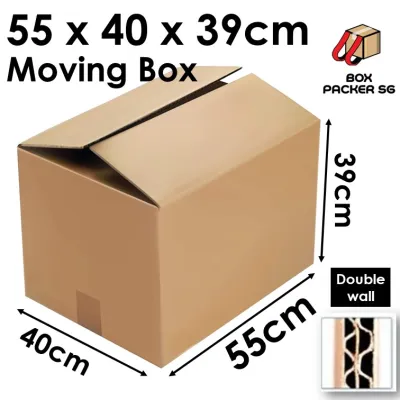
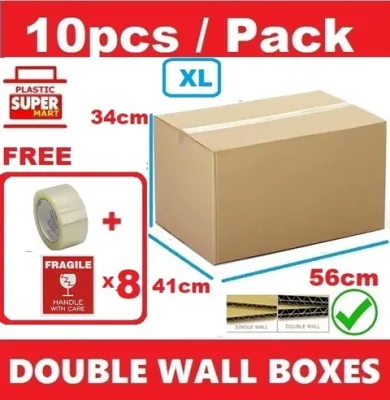
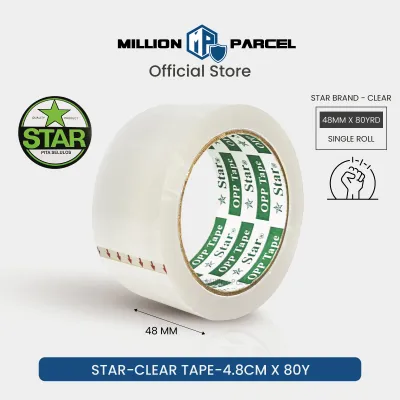
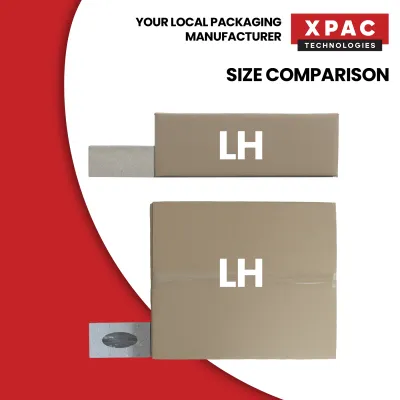
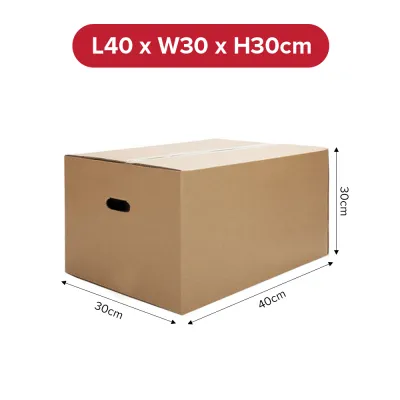
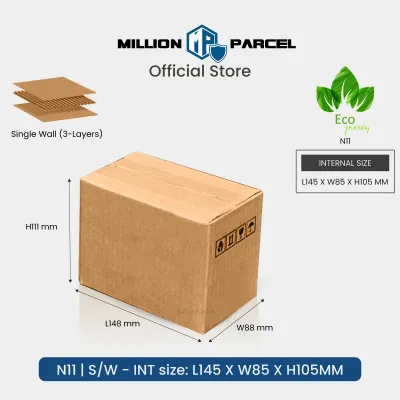
Prices are valid at publication and may change. Please refer to the product page for the latest price.
Because naming conventions are highly subjective, relying on size labels alone when ordering packaging materials online can lead to costly mistakes. A box described as “large” on an online marketplace might turn out to be too small for your specific items, or conversely, too large for your courier’s maximum physical limits. Always prioritize checking the exact centimeter or millimeter specifications provided by the manufacturer before completing a purchase.
Decoding Carton Dimensions: Length, Width, and Height
Understanding how to read carton specifications is critical to selecting the right box shape. Box dimensions are universally listed in the sequence of Length × Width × Height (L × W × H). Length is always the longest side of the opening when looking at the top of an assembled box; width is the shorter side of the opening; height is the vertical distance measured from the top opening down to the base of the box.

When evaluating these measurements, you must distinguish between internal and external dimensions. Internal dimensions dictate the actual usable space available for your items and protective packaging. External dimensions represent the outer physical boundaries of the box, which are used by shipping couriers to calculate transit space and volumetric limits.
Cardboard thickness directly impacts the difference between these two sets of measurements. Large carton boxes are typically constructed from corrugated fiberboard, which comes in single-wall or double-wall configurations. Single-wall corrugated board is usually around 3 to 4 millimeters thick, whereas heavy-duty double-wall board is typically 6 to 7 millimeters thick. This extra layer of fluting provides the structural strength needed to support heavy loads, but it also reduces the internal usable space by up to 1.5 centimeters across all sides compared to the external measurements. If your items require a precise fit, always check the internal specifications to ensure you do not run out of room.
How to Match Box Dimensions to Your Items
Selecting the ideal box size requires a systematic approach to measuring your items and accounting for protective packaging. By following a structured process, you can protect your items from damage and keep shipping costs manageable.
First, measure the maximum physical dimensions of the item you plan to pack. Use a standard measuring tape to find the absolute longest, widest, and tallest points of the object. Be sure to measure any irregular protrusions, handles, or permanently attached parts, as these protruding features will dictate the minimum box size required.
Next, apply the clearance rule for protective packaging. To protect your items from physical shocks during transit, you must wrap them in cushioning materials. Add at least 5 to 10 centimeters to each of your item’s measured dimensions. This extra space creates a protective buffer zone to accommodate void fill, such as bubble wrap, foam corners, packing paper, or packing peanuts.
Choosing a box that is too large carries distinct risks:
- Item Shifting: If the box contains excessive empty space that is not completely filled with packing material, your items will slide and shift during transit, which increases the likelihood of breakage.
- Higher Shipping Costs: Courier services calculate shipping fees based on volumetric weight rather than actual weight. An unnecessarily large box will result in higher shipping costs, meaning you pay to transport empty air.
- Structural Collapse: Large, underfilled boxes lack internal structural support, making them highly susceptible to collapsing when stacked under heavier packages in a delivery truck.
Choosing a box that is too small also presents serious issues:
- Insufficient Padding: Forcing an item into a tight box leaves zero room for cushioning, meaning any external impact on the box will be directly transferred to the item inside.
- Structural Stress: An oversized item will stretch the cardboard, putting immense pressure on the seams and packing tape, which can cause the box to burst open during handling.
Finally, decide whether to use a single large box or multiple medium boxes. While packing everything into one massive container seems convenient, it can quickly become too heavy to lift safely. If you are packing dense or heavy items, it is far safer to distribute them across several smaller, manageable boxes to maintain structural integrity and prevent physical strain during lifting.
Adjusting Box Size for Moving vs. Shipping
The definition of the “right” box size shifts depending on whether you are moving house or shipping a package via a commercial courier service. Each scenario demands a different approach to weight distribution and volume management.
House Moving Scenarios
During a residential move, large carton boxes are highly efficient but must be packed strategically. They are ideal for bulky, low-density items such as bedsheets, blankets, pillows, winter clothing, and plush toys. Avoid the common mistake of packing large boxes full of heavy items like books, kitchenware, or hand tools. A large box filled with books can easily exceed 30 kilograms, making it hazardous to lift and highly likely to break open at the bottom seams during transport. Keep heavy items in smaller boxes and reserve large boxes for light, voluminous goods.
Courier and Postal Shipping
When sending packages via international or local courier services, pricing is heavily influenced by volumetric weight. To calculate this, couriers multiply the external length, width, and height of the box and divide by a standard routing factor (often 5000). To keep shipping costs manageable, select the smallest possible large carton box that safely accommodates your item and its protective padding.
Verifying Box Strength
Before packing, always inspect the manufacturer’s stamp on the bottom or side flaps of the carton box. This stamp often indicates the box’s weight limit or its Edge Crush Test (ECT) rating, which measures the box’s resistance to crushing when stacked. A standard single-wall box may only support up to 10 to 15 kilograms, whereas a heavy-duty double-wall large box can often support 30 kilograms or more. Always ensure your packed weight remains well within these certified limits to guarantee safe handling throughout the journey.

Community discussion
Share your experience or ask a question. Comments are reviewed before publication.