
When preparing items for shipping, storage, or relocation, choosing the right packaging is essential for protecting your goods and managing costs. Many people assume that carton box size codes follow a universal standard, but these codes are actually manufacturer-specific designations. Selecting the wrong box can lead to damaged contents, wasted space, or unexpected shipping fees.
To find the perfect fit, you must understand how to read standard carton box dimensions, accurately measure your items, and account for protective cushioning. This guide breaks down standard size conventions, provides a step-by-step measurement framework, and highlights common sizing mistakes to help you select the ideal packaging for your needs.
Understanding Standard Carton Box Size Codes and Naming Conventions
In the packaging industry, carton box dimensions are always listed in a specific, standardized order: Length (L) x Width (W) x Height (H). This sequence is universal, regardless of the manufacturer or country.
Products mentioned in this guide
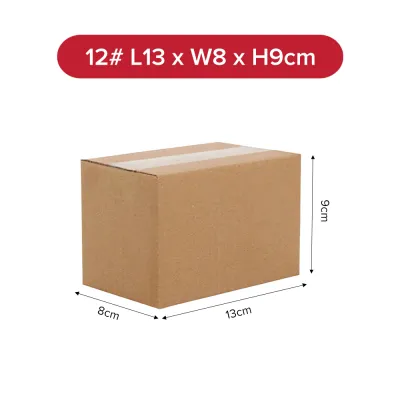
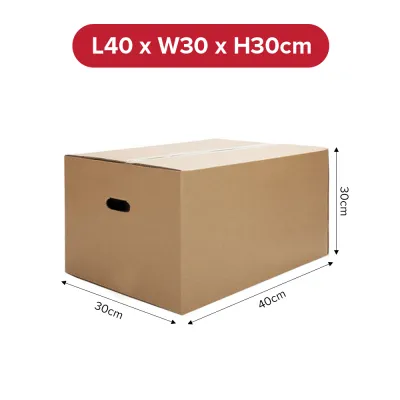
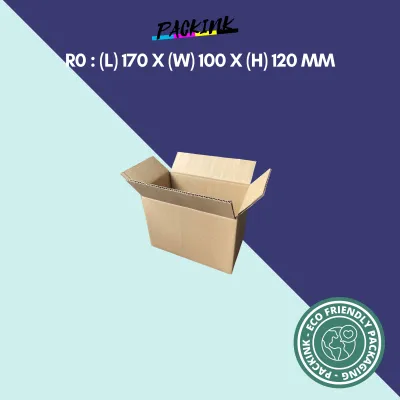
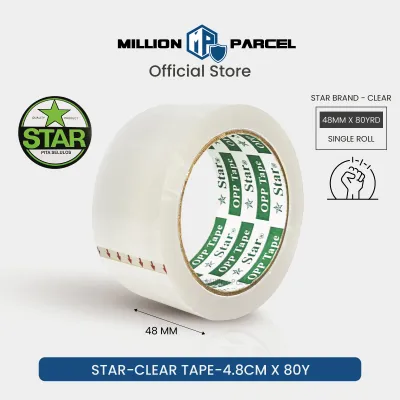
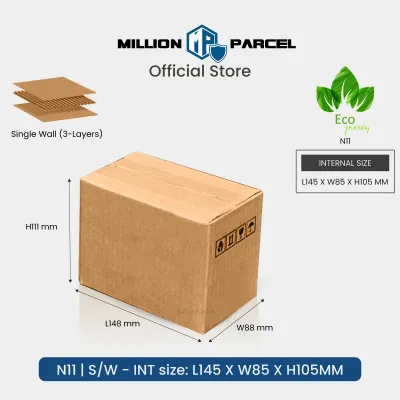
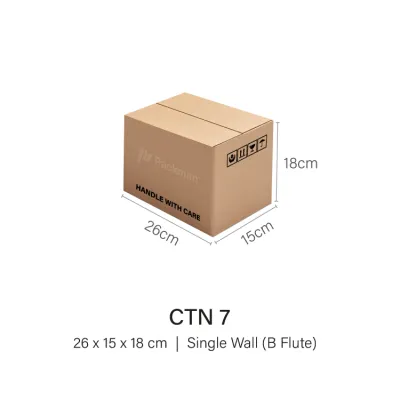
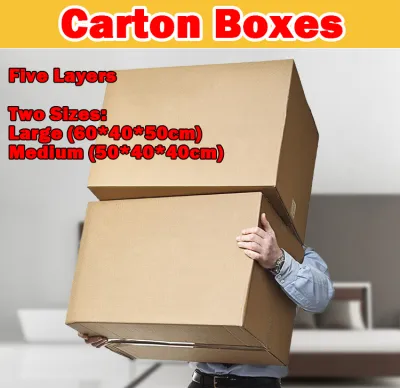
Prices are valid at publication and may change. Please refer to the product page for the latest price.
- Length (L): This is the longest dimension of the box's open top.
- Width (W): This is the shorter dimension of the box's open top.
- Height (H): This is the depth of the box, measured from the top opening to the bottom panel.
A common misconception is that alphanumeric codes or names like “Carton 05,” “Size A,” or “Medium Box” refer to industry-wide standards. In reality, these are proprietary stock-keeping units (SKUs) created by individual manufacturers. A “Size 3” box from one supplier in Singapore might have completely different dimensions than a “Size 3” box from another. To avoid purchasing errors, always ignore the generic name and verify the exact measurements in millimeters (mm) or centimeters (cm).
Another crucial distinction is the difference between inside and outside dimensions. Inside dimensions measure the actual usable space available for your items. Outside dimensions measure the total physical footprint of the box, which is used to calculate shipping volumes and storage space. Because the walls of a corrugated carton have physical thickness, the inside dimensions are always smaller than the outside dimensions. When checking if your items will fit, always rely on the manufacturer’s specified internal dimensions.
How to Measure Your Items and Calculate Required Box Dimensions
Selecting the right carton box requires precise measurements of the items you intend to pack. Guessing or estimating often leads to boxes that are either too small to close or too large to secure properly.

Measuring Regular and Irregular Items
For regular, rectangular items like books, board games, or manufactured goods in rectangular retail boxes, measuring is straightforward. Use a reliable measuring tape to find the maximum length, width, and height of the object.
For irregularly shaped items, such as desk lamps, artistic ceramics, or soft goods, use the “bounding box” method. Imagine the item placed inside a tight, perfect rectangular box. Measure the absolute longest, widest, and tallest points of the item to determine its maximum physical boundaries.
Always measure the item itself rather than its original retail packaging if you plan to discard that packaging before shipping. However, if you intend to ship the item inside its original retail box, make sure to measure the retail box’s external dimensions, as this will act as the “item” inside your shipping carton.
Factoring in Cushioning and Wall Thickness
Once you have the base measurements of your items, you must calculate the necessary buffer for protective packaging. Placing an item directly against the walls of a carton box leaves it highly vulnerable to impact damage during transit.
As a general rule, add a buffer of 2 to 5 cm to each side of your item’s measurements to accommodate protective dunnage like bubble wrap, packing paper, or foam inserts. For highly fragile items like glassware or electronics, a larger buffer of 5 cm or more is recommended to ensure adequate shock absorption.
Additionally, the physical thickness of the corrugated cardboard walls must be factored into your calculations. Corrugated board is constructed with flutes (wavy paper layers) sandwiched between flat linerboards. Single-wall boxes typically have a thickness of 3 mm to 4 mm, while double-wall boxes can range from 6 mm to 7 mm. This thickness reduces the internal usable space. To ensure accuracy, always check the manufacturer’s official internal dimensions rather than trying to calculate them manually from external dimensions, as flute profiles and manufacturing tolerances vary.
Matching Box Dimensions to Common Packing Scenarios
The ideal carton box size depends heavily on your specific use case. Different scenarios require different balances between space efficiency, protection, and handling weight.
E-commerce Shipping and Mailing
For online businesses, optimizing carton box dimensions is directly tied to profitability. Most courier services calculate shipping fees using volumetric weight rather than physical weight. If you use a box that is larger than necessary, you will end up paying higher shipping rates for transporting empty air.
To minimize these costs, select a box that closely matches your product’s dimensions plus the minimum required cushioning. Many e-commerce sellers utilize specialized flat mailing boxes designed to fit within standard HDB letterboxes or meet specific postal service size tiers. These standardized mailers help keep delivery fees predictable and affordable.
Avoid the temptation to use oversized boxes filled with excessive crumpled paper or air pillows. Not only does this increase your material costs, but it also increases the risk of the product shifting during transit, which can lead to damaged goods and customer returns.
House Moving and Long-Term Storage
When preparing for a residential relocation or putting items into a self-storage unit, your priorities shift toward structural integrity and ease of handling.
For heavy items like books, files, kitchenware, and canned goods, always choose small to medium-sized carton boxes. Packing dense, heavy items into a large box makes it incredibly difficult to lift safely and increases the risk of the box bottom tearing open.
Save large carton boxes for lightweight, bulky items such as pillows, blankets, winter clothing, and soft toys. These items fill the volume of a large box without making it too heavy to carry.
For long-term storage, using uniform box sizes is highly recommended. Standardized dimensions allow you to stack boxes safely and efficiently, maximizing the vertical space in your storage unit or moving truck. When planning to stack boxes several layers high, ensure you check the manufacturer’s weight limits and opt for sturdy double-wall corrugated boxes to prevent the bottom cartons from collapsing under the load.
Common Sizing Mistakes and How to Avoid Them
Avoiding simple packaging errors can save you significant time, money, and frustration. Below are the most common sizing mistakes consumers and businesses make:
- Relying on generic size names: Assuming a "Medium" box from one supplier matches a "Medium" box from another is a frequent mistake. Always look for the exact L x W x H measurements in millimeters to ensure a proper fit.
- Ignoring wall thickness differences: Double-wall boxes offer superior protection for heavy or fragile items, but their thicker walls significantly reduce internal space. If you buy a double-wall box based solely on its external dimensions, your items may not fit inside.
- Over-boxing: Using a carton box that is far too large for the item creates unnecessary void space. This empty space makes the box highly susceptible to crushing when other packages are stacked on top of it during transit.
- Underestimating irregular shapes: Failing to measure the widest projections of an oddly shaped item often results in a box that bulges. A bulging box cannot be sealed securely, which compromises its structural strength and makes it difficult to stack.
Frequently Asked Questions (FAQ)
Does the flute type or wall thickness change the internal dimensions?
Yes. The internal dimensions of a carton box are directly affected by the thickness of the corrugated board, which is determined by its flute type. For example, a single-wall B-flute box has a wall thickness of about 3 mm, while a heavy-duty BC double-wall box has a wall thickness of around 6 mm to 7 mm. This means a double-wall box will have less internal usable space than a single-wall box with the same external dimensions. Always refer to the manufacturer’s specified internal dimensions when planning your packing layout.
How do courier services use carton dimensions to calculate shipping costs?
Courier services use a pricing method called volumetric (or dimensional) weight to charge for the space a package occupies in their transport vehicles. The formula typically multiplies the external Length x Width x Height of the box in centimeters and divides the result by a standard courier divisor (usually 5000). If the calculated volumetric weight is higher than the actual physical weight of the package, the courier will bill you based on the volumetric weight. Choosing a right-sized carton box is essential to avoid these inflated shipping fees.
Community discussion
Share your experience or ask a question. Comments are reviewed before publication.