
Choosing the right envelope size is a matter of matching the dimensions of your document to the standard paper sizing system and deciding how many times you plan to fold the paper. By understanding how standard envelopes correspond directly to common paper sizes, you can ensure your mail looks professional, fits perfectly without forcing, and complies with postal guidelines. Whether you are sending a single-page business letter, a thick annual report, or a custom greeting card, selecting the correct envelope prevents damage to your contents and helps you avoid unnecessary postage fees.
Understanding ISO Standard Envelope Sizes (C-Series and DL)
The international standard for envelope sizes relies on the ISO 269 system, which is designed to work in perfect harmony with the standard ISO 216 A-series paper sizes. This system uses a simple mathematical relationship where each envelope size is slightly larger than its corresponding paper size. This intentional design ensures that documents can slide into their envelopes smoothly without needing to be trimmed or tightly squeezed.
To understand this relationship, it helps to look at the C-series nomenclature. A C4 envelope is designed to hold an unfolded sheet of A4 paper. Similarly, a C5 envelope is sized to fit an unfolded sheet of A5 paper, and a C6 envelope fits an unfolded sheet of A6 paper. Because folding a sheet of paper in half reduces its size to the next step down in the A-series, this system makes matching folded documents incredibly straightforward. For example, if you fold a standard A4 sheet of paper in half once, it becomes A5 size, which fits perfectly into a C5 envelope. If you fold that same A4 sheet in half a second time, it becomes A6 size, which fits into a C6 envelope.
Products mentioned in this guide
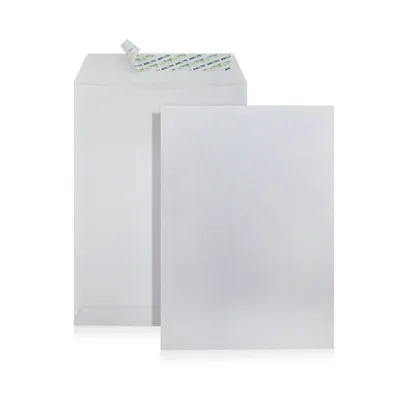
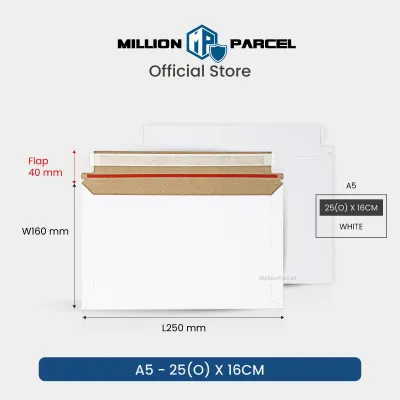
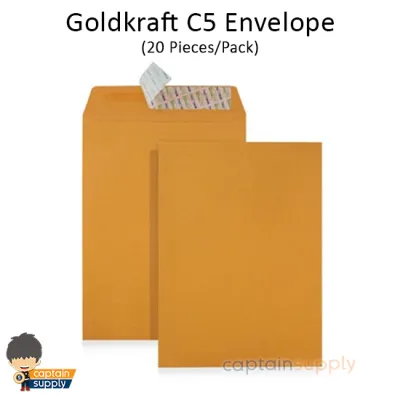
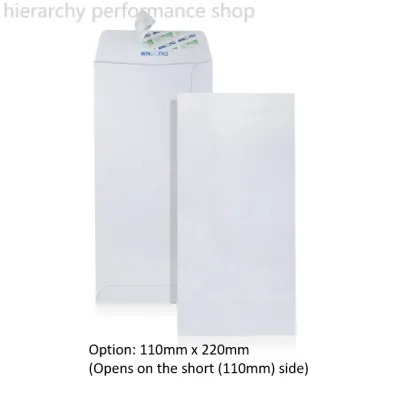
Prices are valid at publication and may change. Please refer to the product page for the latest price.
The DL (Dimension Lengthwise) envelope is the primary exception to the standard C-series progression, serving a highly specific and popular purpose in business correspondence. Instead of matching an unfolded A-series sheet, the DL envelope is designed to accommodate a standard A4 sheet that has been folded horizontally into three equal parts. This creates a long, narrow presentation that fits neatly into standard office mailboxes and automated sorting systems. By keeping this simple mental model in mind—matching the envelope number to the final folded size of your paper—you can quickly identify the correct envelope format for any standard mailing task.
Common Envelope Dimensions and What Fits Inside
Standard envelopes are categorized to serve distinct mailing needs, ranging from flat, professional documents to folded personal letters. Understanding the specific dimensions and capacities of each common size allows you to choose the most efficient option for your contents.

C4 envelopes typically measure 229 mm by 324 mm. They are specifically designed to hold unfolded A4 documents, making them the ideal choice for official certificates, contracts, legal documents, magazines, and thick reports that must remain flat and uncreased. Using a C4 envelope preserves the professional presentation of your documents, ensuring they arrive in pristine condition without any fold lines.
C5 envelopes measure 162 mm by 229 mm. This size is highly versatile, accommodating either an unfolded A5 document or a standard A4 sheet folded once in half. C5 envelopes are commonly used for mailing booklets, catalogs, greeting cards, and medium-sized promotional materials. They offer a balanced middle ground, providing ample space for multi-page documents without requiring the larger footprint of a C4 envelope.
C6 envelopes measure 114 mm by 162 mm. This compact size is designed to hold an A4 sheet folded twice (first in half, then in half again to A6 size), an unfolded A6 sheet, or standard physical greeting cards and personal letters. Because of their smaller dimensions, C6 envelopes are highly efficient for personal correspondence, invitations, and small items that do not require a formal business presentation.
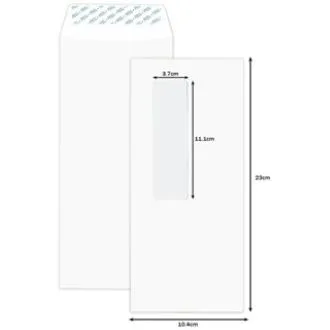
DL envelopes measure 110 mm by 220 mm. As the standard format for corporate mailings, the DL envelope is specifically tailored for A4 sheets folded horizontally into thirds. This format is the standard choice for invoices, monthly statements, utility bills, and formal business letters. The elongated shape allows for a clean, professional look that is highly compatible with automated folding and inserting machinery used in high-volume mailrooms.
How to Measure and Select the Right Envelope for Non-Standard Items
When you need to mail items that do not conform to standard paper sizes—such as books, promotional merchandise, thick catalogs, or handcrafted invitations—you must use a different approach to select the correct envelope. Simply matching the length and width of a flat item is often insufficient when dealing with three-dimensional objects.
To find the correct size, begin by measuring the maximum length, width, and thickness of the item you plan to enclose. As a general rule of thumb, you should add a practical margin of at least 1 to 2 cm to both the length and the width of your measurements. This extra space provides the necessary clearance to slide the item into the envelope easily without tearing the paper or forcing the seams.
It is crucial to understand that the thickness of an item directly reduces the effective usable width and length of a flat envelope. When a flat envelope expands to accommodate a thick object, the front and back panels are pulled inward, shortening the overall internal dimensions. For bulky or rigid items, you will need to choose an envelope that is significantly larger than the item’s flat dimensions, or opt for a gusset envelope, which features expandable sides designed specifically to handle three-dimensional depth.
Additionally, pay close attention to the envelope’s sealing mechanism and flap design when mailing non-standard or heavy items. Self-adhesive options like Peel & Seal envelopes offer a strong, reliable bond that is highly convenient for quick packing, while gummed envelopes require moisture to activate the adhesive and are often preferred for high-volume automated sealing. Ensure that the flap design provides adequate coverage over the opening and that the adhesive seam is strong enough to withstand the outward pressure of bulky contents without popping open during transit.
Mailing Considerations and Postage Guidelines
Selecting the right envelope size is not just about physical compatibility; it also has a direct impact on your mailing costs and delivery efficiency. Postal services categorize mail based on physical dimensions, weight, and thickness, meaning that an incorrect envelope choice can lead to unexpected surcharges or delivery delays.
Before sending your mail, it is highly recommended to check local postal service guidelines, such as those provided by Singapore Post. Postal operators typically enforce strict dimensional and thickness thresholds that separate standard letters from large letters or packages. For instance, exceeding a specific thickness limit (often around 6 mm for standard mail) or a certain weight threshold can instantly reclassify your envelope, resulting in higher postage rates calculated in S$. Keeping your mail as flat and light as possible within standard limits is the most effective way to manage mailing expenses.
Another critical factor is compliance with automated sorting machinery. Postal sorting facilities use high-speed optical character readers and sorting belts that require envelopes to meet specific size ranges and aspect ratios. Envelopes that are too small, too large, or have unusual shapes (such as square envelopes) often cannot be processed automatically. These non-standard envelopes require manual sorting, which frequently incurs additional handling surcharges and can extend transit times.
If you are using window envelopes, you must also ensure that your internal document formatting aligns perfectly with the transparent window cutout. The recipient’s address must remain fully visible through the window, even if the document shifts slightly inside the envelope during transit. Proper alignment prevents delivery failures and ensures that automated postal scanners can read the address accurately, facilitating smooth and rapid delivery.
Frequently Asked Questions (FAQ)
Can I use a C5 envelope for an unfolded A4 document?
No, an unfolded A4 document will not fit inside a C5 envelope. A C5 envelope is designed to fit A5-sized items. To use a C5 envelope, you must fold the A4 document in half once. If your document must remain completely flat and unfolded, you will need to use a larger C4 envelope instead.
What is the main difference between C-series and DL envelopes?
The main difference lies in their physical proportions and intended folding methods. C-series envelopes feature more rectangular or square proportions designed to match standard paper sizes unfolded or folded in half. In contrast, the DL envelope is an elongated, narrow format designed specifically to hold a standard A4 sheet that has been folded horizontally into thirds, making it the preferred choice for standard business letters.
How does envelope paper weight (GSM) affect my choice?
Envelope paper weight, measured in grams per square meter (GSM), affects the durability, opacity, and professional feel of your mail. Higher GSM paper (such as 100 GSM or 120 GSM) provides a more premium texture, prevents the contents from showing through the paper, and offers better protection for important documents. However, heavier envelopes add to the overall weight of your mail, which can potentially increase postage costs if the total weight crosses local postal thresholds.

Community discussion
Share your experience or ask a question. Comments are reviewed before publication.