
Finding the right bubble mailer size is the key to secure, cost-effective shipping. To choose the correct size, you must measure your item’s length, width, and thickness, then add a safety margin of at least 15 to 20 millimetres to both the width and length. This extra space accounts for the internal bubble lining and the natural bulge that occurs when a three-dimensional object is placed inside a flat envelope. Selecting a mailer that is too small risks seam failure, while an oversized mailer can lead to items shifting during transit and higher shipping fees.
How to Measure Your Items for a Bubble Mailer
To determine the exact inner usable space you need, start by laying your item on a flat surface. Use a standard ruler or measuring tape to record the maximum length, width, and height (thickness) at the absolute bulkiest points. Do not assume an item is flat; even a seemingly thin book or a stack of documents has a measurable thickness that will expand the mailer.
For three-dimensional or rigid items, you must use a simple calculation to find the minimum required dimensions. Add the thickness of the item to its width to find the minimum required width of the mailer. Similarly, add the thickness to the length to find the minimum required length. For example, if you are shipping a book that is 150 millimetres wide, 200 millimetres long, and 20 millimetres thick, your mailer’s inner dimensions must be at least 170 millimetres wide and 220 millimetres long.
Products mentioned in this guide
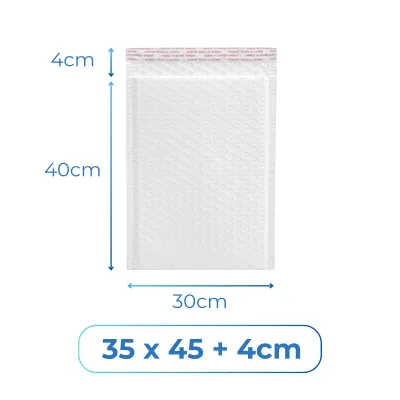
![[SG SELLER] Matte Bubble Mailer Poly Mailer Self-Seal Adhesive Padded Envelope Water Resistant Shipping Bags for Mailing](https://img.lazcdn.com/g/p/a61faf78eab8d6675425500915db76e8.png_400x400q80.png_.webp)
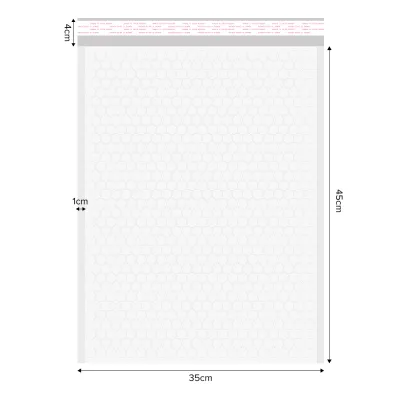
![[SG] ⭐CHEAPEST BUNDLE⭐ Bubble Polymailer | Bubble Envelope | Bubble Mailer | Padded Envelope | Bulk Purchase](https://img.lazcdn.com/g/p/d1f9b06ebe577dd9b0f70feb1fa794ad.jpg_400x400q80.jpg_.webp)
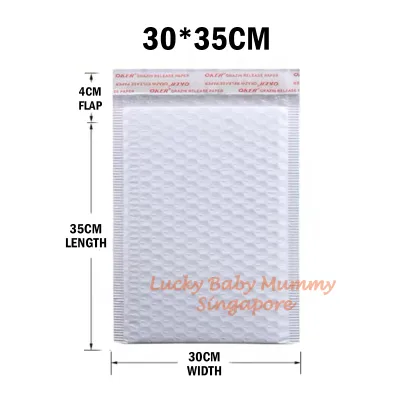
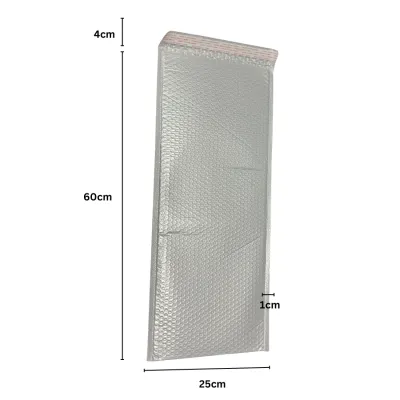
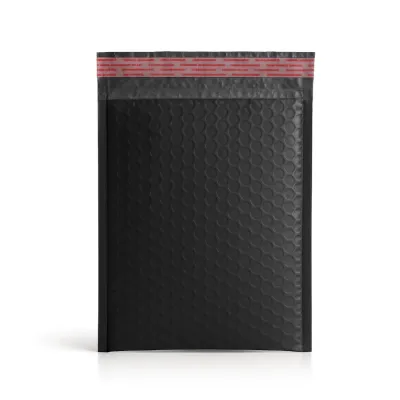
Prices are valid at publication and may change. Please refer to the product page for the latest price.
Next, you must account for the internal bubble lining itself. The protective air bubbles take up physical space inside the envelope, typically reducing the usable width and length by about 5 to 10 millimetres on each side. Therefore, always add an extra safety margin of 15 to 20 millimetres to your calculated minimum dimensions to ensure the item slides in smoothly without forcing the seams.
Your measurement approach should also vary based on whether your goods are rigid or flexible. Rigid items, such as plastic cases, hardback books, or wooden stationery items, have no flexibility and require highly precise, generous measurements. Flexible or compressible goods, like t-shirts, soft fabrics, or plush items, can conform to the shape of the mailer. While you can be slightly more conservative with flexible items, overpacking still puts pressure on the adhesive seal and side seams, which can burst under transit pressure.
Understanding Standard Bubble Mailer Sizes and Dimensions
One of the most common mistakes when purchasing shipping supplies is confusing the outer dimensions of a bubble mailer with its inner usable space. Manufacturers list the outer dimensions on the packaging to help you understand how much physical space the envelope occupies. However, the actual space available for your item is always smaller due to the side seams, the bottom fold, and the thickness of the bubble lining.

The side seams of a standard mailer typically consume about 10 millimetres of width on each side. Additionally, the adhesive seal flap at the top is not included in the usable length measurement. When reviewing product specifications, always look specifically for the “inner dimensions” or “usable dimensions” rather than the overall outer size. If a product listing only provides outer dimensions, a safe rule of thumb is to subtract at least 20 millimetres from both the width and the length to estimate the usable space.
Bubble mailers are often categorized by standard industry numbers, ranging from small sizes (often used for jewelry or small electronic components) up to large sizes designed for documents or clothing. While these numbers offer a general guide, sizing standards can vary significantly between different manufacturers and regions. Instead of relying solely on a generic size number, always verify the exact millimetre measurements provided on the product label.
Matching Item Types to the Correct Mailer Size
Selecting the right mailer size also depends heavily on the fragility of your item and how it needs to be packed. If you are shipping delicate stationery, handmade crafts, or small cosmetics, you may want to wrap the item in an additional layer of loose bubble wrap or tissue paper first. This extra protective layer increases the item’s overall thickness, meaning you will need to step up to a larger mailer size than originally calculated.
You must also evaluate the weight and material thickness of the mailer itself. Heavy items, such as thick catalogs, metal tools, or dense stationery bundles, require a mailer with high tear resistance and strong seams. A lightweight plastic mailer might stretch or puncture under the weight of a heavy, sharp-edged item. For these shipments, a heavy-duty kraft paper mailer or a reinforced co-extruded polyethylene mailer is a more secure choice.
To avoid common sizing mistakes, always visualize how the mailer will bulge once the item is inside. A flat envelope shortens in both length and width as it expands to accommodate a thick object. If you do not account for this bulging effect, you may find that the adhesive flap cannot fold over far enough to seal securely, leaving your shipment vulnerable to moisture and dust during transit.
Quick Sizing Checklist Before You Order
Before placing an order for bubble mailers, run through this quick verification checklist to ensure your packaging meets all shipping and protection requirements:
- Verify Inner Dimensions: Double-check your item's measurements against the manufacturer's listed usable inner dimensions, ensuring you have included the safety margin for thickness and bubble lining.
- Check Courier Restrictions: Review the size and weight limits set by your local courier or postal service. In Singapore, exceeding specific thickness thresholds (such as 50 millimetres) can reclassify your shipment from a budget-friendly letterbox rate to a more expensive standard parcel rate.
- Inspect the Adhesive Strip: Ensure the mailer features a high-quality, self-seal adhesive strip. The adhesive must be strong enough to resist peeling, especially in warm and humid tropical climates where standard glues can soften.
- Assess Tear Resistance: Choose an outer material (such as water-resistant polyethylene or thick kraft paper) that matches the durability needs of your specific shipping route.
Frequently Asked Questions (FAQ)
Can I use a bubble mailer for fragile items like glass or ceramics?
Standard bubble mailers are designed to protect against light scratches, minor impacts, and moisture, but they offer very little protection against crushing, bending, or heavy drops. Because the outer walls of a mailer are flexible, they cannot absorb the force of a heavy package stacked on top of them during transit.
For highly fragile items like glass, ceramics, delicate electronics, or intricate collectibles, you should use a rigid corrugated cardboard box instead. Pack the item inside the box with ample void-fill materials, such as packing peanuts, crumpled paper, or thick bubble wrap, to ensure it cannot move or touch the outer walls of the box.
Do bubble mailers add significant weight to my shipment?
One of the primary benefits of bubble mailers is their lightweight design, which helps keep shipping costs low. However, the total weight can vary slightly depending on the outer material. Polyethylene mailers are generally the lightest option and offer excellent water resistance, while kraft paper mailers are slightly heavier and stiffer.
While a single mailer adds very little weight, even a few extra grams can sometimes push your package into a higher postage tier. To avoid unexpected shipping fees, always weigh your fully packed and sealed mailer on a digital scale before purchasing postage, keeping your courier’s specific weight brackets in mind.

Community discussion
Share your experience or ask a question. Comments are reviewed before publication.