
When shopping for office supplies, you will frequently encounter the term 80gsm on reams of copier paper. This specification represents the standard weight for everyday office printing, balancing durability, print quality, and cost-effectiveness. Understanding what this rating means in practice helps you select the right paper for your documents, prevent printer jams, and ensure your printed materials look professional.
What "80gsm" Actually Measures
GSM stands for grams per square meter. It is a metric measurement of paper density and weight, rather than physical thickness. Specifically, if you were to cut a sheet of this paper to measure exactly one square meter, that single sheet would weigh exactly 80 grams.
It is a common misconception that a higher GSM automatically translates to a thicker sheet of paper. In reality, the physical thickness (often called caliper) and stiffness of the paper are determined by several manufacturing factors. These include the type of wood pulp used, the presence of mineral fillers, and the calendering process—where the paper is pressed between heavy rollers to smooth it out. Consequently, two different brands of 80gsm paper may have slightly different tactile thicknesses and stiffness levels.
Products mentioned in this guide
![[2 REAMS] A4 PaperOne Copier Papers 80gsm Printing Papers - Plain - Office Supplies](https://img.lazcdn.com/g/p/4423a9fbe2ff198d8701511f17f420ad.png_400x400q80.png_.webp)
![PaperOne™ Copier Paper 80gsm Copy Paper A4 [2 Reams]](https://img.lazcdn.com/g/p/0eb80601f7c5c82b1f75200b439c7562.jpg_400x400q80.jpg_.webp)
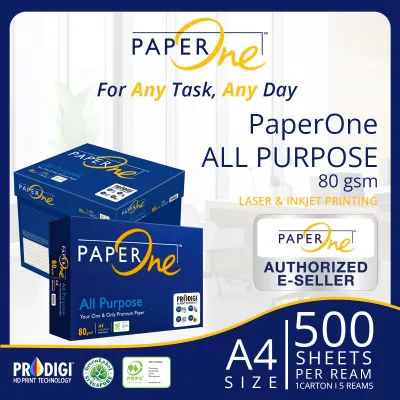
![PaperOne™ All Purpose Premium Quality 80gsm Copy Paper A4 [2 Reams]](https://img.lazcdn.com/g/p/6fe22f63efd1aeac13600887dc29a7da.jpg_400x400q80.jpg_.webp)
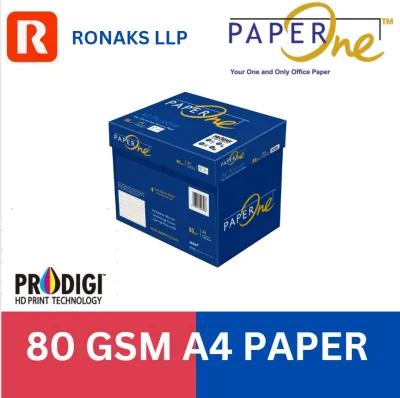
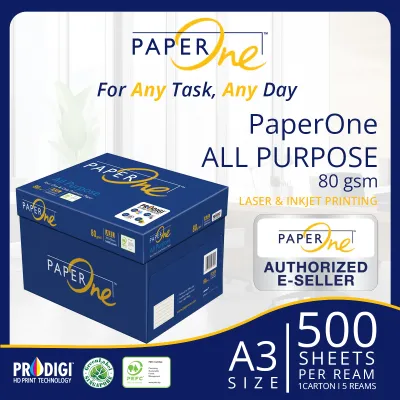
![PaperOne™ Digital Premium Quality 85gsm / 80gsm Carbon Neutral Copy Paper A4 [1 Box]](https://img.lazcdn.com/g/p/314e28db684b5a59446140a7a613d0c3.jpg_400x400q80.jpg_.webp)
Prices are valid at publication and may change. Please refer to the product page for the latest price.
How 80gsm Paper Performs in Everyday Printing
In standard home and office environments, 80gsm paper serves as the baseline standard. It offers a reliable balance of performance across various printing technologies, making it highly versatile for daily tasks.

Print Quality and Ink Handling
For everyday text documents and standard color graphics, 80gsm paper delivers crisp, legible results. However, because different printing methods interact uniquely with paper fibers, you should check the paper packaging for specific inkjet or laser optimization labels. These labels indicate that the paper has received specialized surface sizing to control how ink or toner is absorbed. If you are printing documents with heavy ink coverage or large, solid color blocks, the moisture can cause standard-weight paper to curl. To prevent this, you can adjust your printer’s settings to a draft mode or lower the ink density.
Paper Feel and Professionalism
When handing a document to a client or colleague, the tactile feel of the paper influences their first impression. An 80gsm sheet feels noticeably sturdier and more substantial than lighter alternatives, such as 70gsm paper, which can feel flimsy. However, weight is not the sole factor in professional presentation. The perceived quality of your document also depends heavily on the paper’s brightness, whiteness, and surface finish. A smooth, high-brightness sheet will often look and feel more premium than a textured or dull sheet of the same weight.
Printer Feed and Jam Resistance
One of the primary operational benefits of 80gsm paper is its excellent compatibility with standard home and office printers. Because it has sufficient stiffness, it is less prone to tearing or folding as it travels through the printer’s internal rollers. To ensure trouble-free operation, always verify that your printer’s supported weight range—listed in the user manual—accommodates 80gsm paper. Additionally, a simple best practice is to fan the paper stack before loading it into the tray. This action breaks any static cling between the sheets, significantly reducing the risk of multi-sheet feeds and paper jams.
Is 80gsm Right for Double-Sided Printing?
Double-sided (duplex) printing is an excellent way to save paper and reduce document bulk, but it requires sufficient paper opacity to prevent distracting show-through. Opacity is not determined by GSM alone; it also depends on the specific manufacturing process and the fillers used to make the paper fibers more opaque.
Generally, 80gsm paper is more opaque than lighter 70gsm options, making it the standard choice for double-sided text documents. However, before committing to a large duplex print job, it is highly recommended to run a test print on a single sheet. Print heavy text or dark images on both sides and inspect the sheet under normal lighting.
If your document features heavy inkjet saturation or dark laser toner coverage, you may still experience visible bleed-through or show-through. In these cases, you can adjust your printer’s settings to reduce ink density, or consider switching to a specialized, high-opacity duplex paper designed specifically to handle heavy double-sided printing.
When to Choose 80gsm Over Lighter or Heavier Options
Selecting the right paper weight requires a clear decision framework based on your document’s purpose, print volume, and budget.
You should choose 80gsm paper for formal reports, resumes, contracts, and double-sided documents. In these scenarios, the reduced show-through and premium feel are essential for maintaining a professional image.
For high-volume, internal, or draft printing, lighter weights like 70gsm are often more appropriate. Lighter paper reduces the physical bulk of large archives, saves storage space, and typically lowers your overall paper costs.
Conversely, for certificates, document covers, or photo-heavy presentations, heavier weights such as 100gsm or above are preferred. These heavier sheets provide a luxurious, card-like feel and superior ink holdout. Before purchasing heavier paper, always check your printer’s specifications to ensure it does not exceed the maximum supported weight capacity.
Ultimately, the best choice involves balancing your need for a professional presentation against the practical limits of your printing hardware and your target cost per page.
Frequently Asked Questions (FAQ)
Can I use 80gsm paper in any standard printer?
Yes, the vast majority of modern home and office inkjet and laser printers are designed to handle 80gsm paper as their standard media. However, to prevent feed jams or potential roller damage, it is always wise to verify the minimum and maximum weight limits specified in your printer’s user manual.
Does 80gsm paper cost significantly more than lighter options?
Generally, 80gsm paper costs slightly more per ream than lighter options like 70gsm because it contains more raw wood pulp and materials per sheet. When budgeting, compare the price per sheet and evaluate whether your specific documents require the extra sturdiness and professional feel of 80gsm, or if a lighter draft paper is sufficient for your daily internal needs.

Community discussion
Share your experience or ask a question. Comments are reviewed before publication.