
When setting up a print job for an important business proposal, a resume, or a double-sided report, the physical feel of the paper makes a lasting impression. If you have ever handled a sheet of paper that felt unusually substantial, smooth, and professional, you were likely holding 100gsm paper. This specific paper weight offers a noticeable step up in quality compared to standard office copy paper, providing excellent opacity and a premium texture. Understanding what this measurement means and how it behaves in your printer is key to choosing the right medium for your documents.
What Does "100gsm" Actually Mean?
To understand 100gsm paper, it helps to break down the acronym “GSM,” which stands for grams per square meter. This is the standard metric unit used globally to measure paper density and weight, rather than its literal physical thickness or caliper. If you were to take a single sheet of this paper cut to exactly one square meter, it would weigh precisely 100 grams. In comparison, standard office printer paper in Singapore typically ranges between 70gsm and 80gsm, making 100gsm paper significantly heavier and denser.
Despite its heavier weight, 100gsm paper is still classified as a text-weight or heavy copy paper rather than a rigid cardstock. When you hold a sheet, it feels noticeably stiffer and smoother than everyday copy paper, and it resists bending under its own weight. This density also directly translates to higher opacity, meaning light does not pass through the sheet as easily. While it provides a premium tactile experience, it remains flexible enough to feed through standard office machinery without requiring specialized heavy-media settings.
Products mentioned in this guide
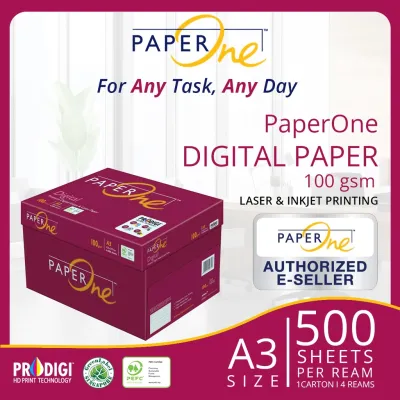
![[SG Stock] PaperOne 100gsm A3 printing paper 【1 ream/ 2 reams option】](https://img.lazcdn.com/g/p/c4d6e3524f08fea1fcedfe6d7923fafe.jpg_400x400q80.jpg_.webp)
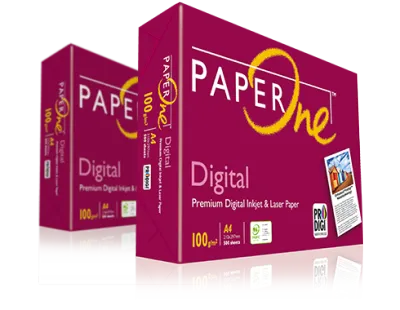
![PaperOne™ Digital Premium Quality 100gsm Copy Paper A4 [1 Box]](https://img.lazcdn.com/g/p/cc3315af7a8ec432cf97c57313deec75.jpg_400x400q80.jpg_.webp)
![IK Signature Digital A4 100GSM Copier Paper [CARTON]](https://img.lazcdn.com/g/p/b45ab6cf82b8dc81ed7553cc5c52cd91.jpg_400x400q80.jpg_.webp)
![[SG Stock] PaperOne 100gsm A4 White Printing Paper [1 ream/ 2 reams]](https://img.lazcdn.com/g/p/75912ece6378fab5457ea2ce99fd76d9.jpg_400x400q80.jpg_.webp)
Prices are valid at publication and may change. Please refer to the product page for the latest price.
Printer Compatibility and Performance
Before purchasing a large quantity of 100gsm paper, it is essential to verify how it interacts with your specific printing equipment. Most modern office laser printers and home inkjet printers can handle 100gsm paper with ease, but some basic or compact home models may find this weight closer to their mechanical limits. Because the paper is thicker and stiffer than standard 80gsm sheets, it requires slightly more effort for the printer’s rollers to pull and bend through the internal paper path.

To prevent paper jams and feed errors, always check your printer’s user manual to find the maximum supported paper weight, which is typically listed in gsm or pounds (lbs). If your printer features a tight, highly curved paper path, loading a thick stack of 100gsm paper in the main cassette might occasionally result in misfeeds or multi-sheet pulling. In such cases, utilizing the printer’s manual feed tray or bypass slot is an excellent solution. These alternative slots usually offer a much straighter paper path, minimizing the bending required and ensuring a smooth feed.
Inkjet printer users should also pay attention to ink drying times when working with heavier paper. Because 100gsm paper is denser and often features a smoother surface finish, the liquid ink from an inkjet cartridge may take slightly longer to dry and set completely. To prevent smudging or ink transfer, allow printed sheets to sit undisturbed for a few moments after they exit the machine, especially when printing high-density graphics or full-color charts.
Ideal Use Cases for 100gsm Paper
Upgrading to 100gsm paper provides a clear, professional advantage for specific printing tasks where presentation quality and durability are paramount. One of the primary benefits of this paper weight is its superior opacity, which makes it the ideal choice for double-sided (duplex) printing. When you print text or graphics on both sides of standard 80gsm paper, you often experience “show-through” or “shadowing,” where the print from the reverse side muddies the front. The extra density of 100gsm paper keeps both sides clean, crisp, and highly legible.
This paper weight is also highly recommended for external-facing professional documents where tactile feedback influences the recipient’s perception. Resumes, formal contracts, client proposals, and official correspondence printed on 100gsm paper immediately convey a sense of care, attention to detail, and premium quality. The physical weight of the document in a client’s hand subtly reinforces the value of the information written on it, distinguishing your work from standard, flimsy office printouts.
Furthermore, 100gsm paper is perfect for everyday premium needs within a business or home office. It is excellent for printing internal presentations, important office notices, training manuals, or simple promotional flyers. It provides a noticeable upgrade in durability and appearance without the high cost, feeding difficulties, or bulkiness associated with true cardstock, making it a highly versatile middle-ground option.
When to Choose a Different Paper Weight
While 100gsm paper offers exceptional quality, it is not always the most practical or cost-effective choice for every printing task. For high-volume drafting, everyday internal memos, or simple single-sided black-and-white copies, sticking to standard 70gsm or 80gsm paper is highly recommended. Using premium paper for temporary documents unnecessarily increases operational costs and can lead to faster depletion of your paper supply, especially in busy office environments.
If your project involves high-quality photo printing, standard 100gsm copy paper will not deliver the results you expect. Even at a heavier weight, uncoated paper lacks the specialized barrier coatings required to keep liquid inkjet dyes or pigments from spreading and soaking deep into the paper fibers. For vibrant colors, sharp details, and deep blacks, you should use dedicated photo paper, which typically starts at 180gsm and features a glossy, satin, or matte photographic coating.
Additionally, 100gsm paper is too flexible and flimsy for structural applications like document covers, postcards, or business cards. For these projects, you need the rigidity of true cardstock, which generally ranges from 160gsm to 300gsm or higher. Attempting to use 100gsm paper for a postcard, for example, may result in the item bending or tearing easily during transit, so always match the structural needs of your project to the appropriate paper classification.
Quick Guide to Matching Paper Weight to Your Task
To help you quickly determine which paper weight is best suited for your current project, consider this general reference framework:
- 70gsm – 80gsm: Best for high-volume copying, rough drafts, internal memos, and standard single-sided office printing. It is cost-effective and highly compatible with almost all printers.
- 100gsm: Ideal for premium double-sided documents, professional resumes, official contracts, business proposals, and high-quality presentations.
- 120gsm – 150gsm: Suitable for premium marketing flyers, brochures, presentation handouts, and lightweight document covers.
- 160gsm – 300gsm+: Best for rigid document covers, postcards, business cards, and heavy crafting projects.
Before purchasing a large quantity or a full carton of 100gsm paper, it is always wise to buy a single small pack first. This allows you to perform a quick trial run on your office or home printer to verify compatibility, observe ink drying times, and ensure the paper feeds smoothly through your machine’s rollers. Taking this simple step helps you avoid potential printing issues and ensures your final documents look exactly as intended.
Frequently Asked Questions (FAQ)
Is 100gsm paper good for double-sided printing?
Yes, 100gsm paper is highly recommended for double-sided printing. Its higher density and thickness provide excellent opacity, which significantly reduces ink show-through or shadowing from the reverse side, ensuring that text and images on both sides remain clean and easy to read.
Will 100gsm paper jam my home printer?
Most modern home and office printers can handle 100gsm paper without any issues. However, some older or very basic home printer models with tight, curved feed rollers might experience occasional jams. To prevent this, check your printer’s manual for its maximum weight capacity and consider using the manual feed tray for a straighter paper path.
What is the main difference between 80gsm and 100gsm paper?
The main difference lies in their density, thickness, and intended use. Standard 80gsm paper is a lightweight, cost-effective choice designed for everyday, high-volume, single-sided printing. In contrast, 100gsm paper is thicker, heavier, more opaque, and feels more premium, making it ideal for double-sided printing and professional, external-facing documents.

Community discussion
Share your experience or ask a question. Comments are reviewed before publication.