
Giving a monetary gift at a wedding is a time-honoured tradition, but presenting your well-wishes in an ill-fitting envelope can detract from the gesture. To choose the perfect wedding money envelope, you must match the physical dimensions and thickness of your cash stack to the internal usable space of the envelope. A well-selected envelope keeps the banknotes flat, secure, and pristine, ensuring a polished presentation when handed over at the reception desk.
Decoding Envelope Dimensions and Bill Sizes
When shopping for a wedding money envelope, the dimensions printed on the packaging can be deceptive. Most manufacturers list the external dimensions of the envelope, which represent the absolute outer edges. However, the actual internal usable space is always smaller due to the paper seams, adhesive borders, and the thickness of the paper itself. For a comfortable fit, the internal space should ideally be at least 5 to 10 millimetres larger than the banknotes in both length and height.
Banknote sizes vary significantly depending on the denomination and the issuing country. In Singapore, polymer and paper banknotes increase in size as the denomination rises. For instance, a S$2 note measures 126 mm by 63 mm, a S$10 note measures 141 mm by 69 mm, while a S$50 note is larger at 156 mm by 74 mm, and a S$100 note measures 162 mm by 77 mm. If you plan to gift higher-value notes, a standard small red packet designed for lower denominations will be far too tight, forcing you to cram or damage the edges of the bills.
Products mentioned in this guide
![[SG READY STOCK] Premium Wedding Red Packet | Double Happiness Angbao | Angpao/Angpow/Hongbao | 6pcs/Pack 结婚红包 双喜 喜字红包](https://img.lazcdn.com/g/p/ec9df034dec8ee51e6a720c9cd3b9fb9.jpg_400x400q80.jpg_.webp)
![[SG READY STOCK] Premium Modern Wedding Red Packet | Double Happiness Angbao | Angpao/Angpow | 6pcs/Pack 结婚红包 双喜 喜字红包](https://img.lazcdn.com/g/p/3b28671f765822875b1072ead07d3353.jpg_400x400q80.jpg_.webp)
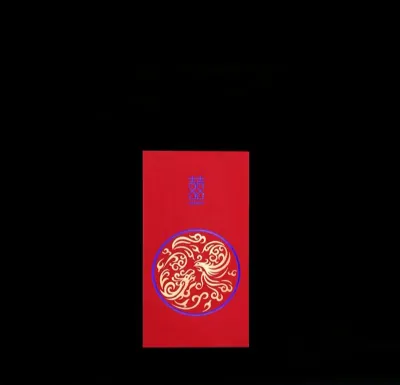
![[SG READY STOCK] Chinese Wedding Cartoon Red Packet | Double Happiness Angbao | Angpao/Angpow | 6pcs 结婚红包 双喜 喜字 卡通红包](https://img.lazcdn.com/g/p/d45f7d0f20bb3172c20937e0b062eb39.jpg_400x400q80.jpg_.webp)
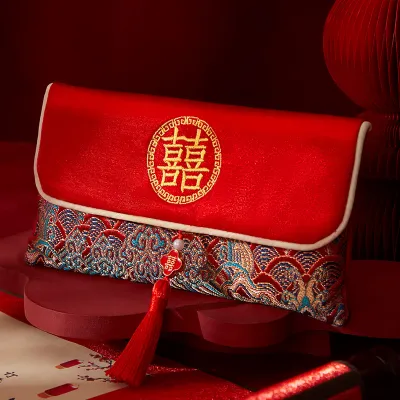
Prices are valid at publication and may change. Please refer to the product page for the latest price.
Relying on generic terms like “standard,” “medium,” or “large” on envelope packaging is a common pitfall. There is no universal standard for wedding envelopes; a “medium” envelope from one stationery brand might be designed for folded bills, while another brand’s “medium” is meant for flat notes. Always carry a small ruler or check the exact millimeter specifications on the product label before purchasing to ensure your specific banknotes will slide in effortlessly.
Sizing Guide: Matching Envelopes to Cash Volume
The number of bills you plan to present is just as important as their physical dimensions. A single banknote behaves very differently inside an envelope compared to a thick stack of ten or twenty notes. Matching the envelope’s structure to the volume of your cash gift prevents unsightly bulging, torn seams, and awkward handling at the wedding reception.

For low-volume gifts containing one to five banknotes, standard flat money envelopes or traditional red packets are ideal. These envelopes keep the bills neatly aligned without allowing excessive sliding, which can cause the cash to shift and bunch up at one end. When inserting only a few notes, look for a slim, non-gusseted envelope that matches the length of your largest bill, ensuring the presentation remains crisp, flat, and elegant.
Medium-volume gifts, typically consisting of six to fifteen banknotes, require careful consideration of thickness tolerance. As you stack bills, they occupy vertical space, which pulls the front and back of the envelope inward and reduces the effective width and length. For these moderate stacks, select an envelope that offers a generous margin—at least 10 to 15 millimetres of clearance beyond the banknote dimensions. This extra space prevents the paper from stretching, bowing, or putting undue stress on the glued side seams.
High-volume gifts containing thick stacks of fifteen or more banknotes demand specialized packaging. Standard paper envelopes will bulge severely, crease, or even split at the seams under this pressure. In these cases, upgrade to an oversized envelope, a gusseted money packet that expands along the sides, or a rigid box-style presentation envelope. These options are specifically engineered to accommodate depth, ensuring that a substantial gift is presented securely and professionally without risking a structural failure.
Essential Specs to Check Before Buying
Beyond basic dimensions, several structural specifications dictate how well an envelope will perform on the wedding day. The first critical specification to verify is the paper weight, measured in grams per square metre (GSM). Standard mailing envelopes are often thin (around 80 GSM), which can make them translucent under bright event lighting. To ensure complete privacy and prevent the cash denominations or colors from showing through, choose a premium paper weight of at least 120 GSM, or opt for envelopes with an opaque inner lining.
The flap design and closure mechanism are equally vital for secure transport. Wedding money envelopes generally feature tuck-in flaps, peel-and-seal adhesive strips, or decorative string-and-button closures. For a wedding, a clean tuck-in flap or a gentle, residue-free adhesive is preferred. Avoid heavy-duty industrial adhesives or metal clasps that can make opening the envelope difficult for the couple, and steer clear of wet-and-seal gummed flaps if you want to avoid moisture warping the paper.
Finally, pay close attention to the interior texture and lining of the envelope. High-quality wedding stationery often features smooth, uncoated inner surfaces or silk linings. These materials allow banknotes—especially polymer notes, which tend to cling to plastic or glossy surfaces due to static electricity—to slide in and out smoothly. Avoid envelopes with rough interior seams or exposed adhesive residue inside, as these can catch on the edges of the bills, causing them to crumple or tear during insertion or retrieval.
Frequently Asked Questions (FAQ)
Is it acceptable to fold bills to fit a smaller envelope?
While folding banknotes is sometimes necessary for very small, decorative packets, it is generally best avoided for formal wedding gifts. Folding creates permanent creases in the bills, which can make them difficult to count and process, and it can detract from the elegant, pristine presentation expected at a formal celebration. If you must fold the cash due to envelope limitations, make a single, neat fold in half rather than multiple complex folds, and ensure the envelope is sturdy enough to handle the doubled thickness without springing open.
What should I do if my cash gift is too thick for standard envelopes?
If your cash gift exceeds the capacity of standard wedding envelopes, do not attempt to force the stack inside. Instead, consider upgrading to a rigid gift box designed specifically for monetary gifts, or use a decorative fabric red packet, which naturally stretches and accommodates thicker stacks. Alternatively, you can consolidate the gift by exchanging smaller denominations for larger bills, such as using S$100 notes instead of multiple S$10 or S$50 notes, which significantly reduces the physical volume of the stack while maintaining the same generous value.

Community discussion
Share your experience or ask a question. Comments are reviewed before publication.