
Choosing your first watercolor starter set is about finding a balance between paint quality, format convenience, and functional accessories. For absolute beginners, the ideal kit provides a reliable introduction to color mixing without the high cost of professional-grade pigments. A well-designed starter set should feature a curated selection of essential colors, a durable mixing palette, and a versatile brush, allowing you to learn foundational techniques immediately.
Many beginners mistakenly attribute poor results to their skills when the culprit is actually low-quality, chalky paint or unsuitable paper. By focusing on key selection criteria—such as paint format, pigment labels, and accessory quality—you can confidently choose a kit that supports your learning journey. For those painting in compact urban apartments or humid tropical climates like Singapore’s, specific considerations for storage, drying times, and workspace footprint will also influence your choice.
Choosing the Paint Format: Pans vs. Tubes for Your Workspace
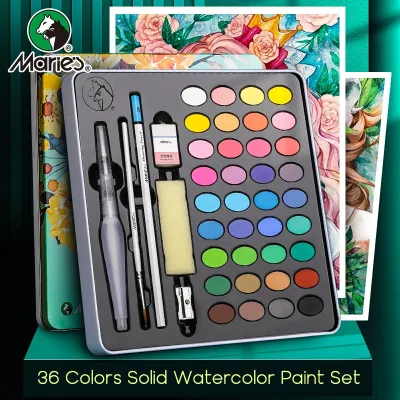
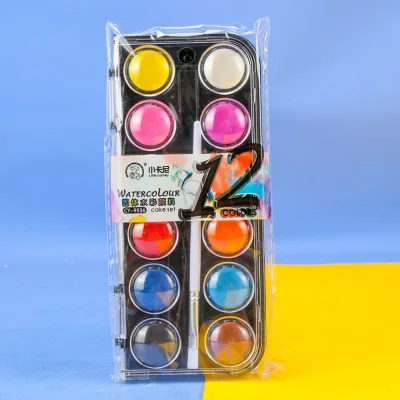
Watercolor pans are small, dry blocks of paint housed in plastic cups, typically sold as half-pans or full pans. They are highly portable, require minimal setup time, and take up very little space on a small desk or dining table. To use them, you simply wet your brush and lift the color directly from the pan. This format is excellent for quick sketching sessions and keeps your workspace tidy, making it a popular choice for those with limited space.
Products mentioned in this guide
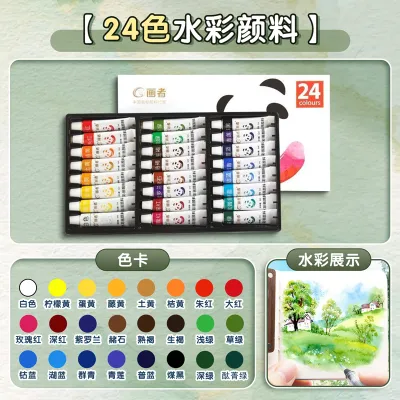
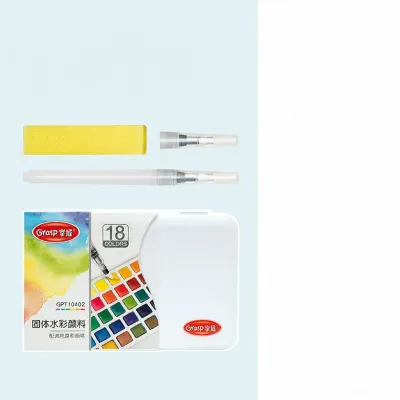
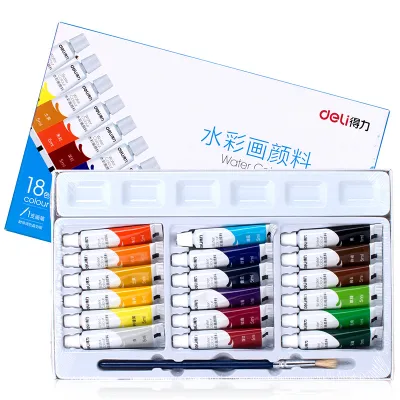
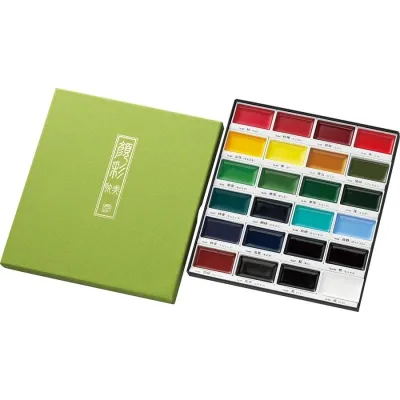
Prices are valid at publication and may change. Please refer to the product page for the latest price.
Watercolor tubes contain moist, paste-like paint that you squeeze onto a palette. Tubes are ideal for mixing larger volumes of wash, which is necessary when working on larger paper sizes or painting broad backgrounds. While they require a bit more setup and cleanup time, they allow you to access rich, highly concentrated color instantly without wearing down your brush tips.
Both formats can be reactivated with water once dry, but pans are designed specifically for this purpose. Tube paint squeezed onto a palette will also dry over time, and while most brands reactivate smoothly, some student-grade tube paints may become crumbly or difficult to re-wet if left exposed for too long. Misting dry pans with water from a spray bottle a few minutes before painting softens the paint, making it easy to lift color efficiently.
Pans are incredibly easy to clean; you simply wipe the plastic dividers with a damp cloth or sponge and let the set air-dry before closing the lid. Tubes require you to clean your mixing palette thoroughly after each session to prevent colors from muddying, and the tube caps must be screwed on tightly to prevent the paint inside from drying out. In humid climates, letting your pan set air-dry completely in a well-ventilated room before snapping the lid shut prevents mold growth, while tightly sealed tubes remain stable for years.
Decoding Student-Grade Labels and Pigment Quality
Student-grade watercolor paints are formulated to be affordable while maintaining acceptable working properties. They achieve this by using a higher ratio of binders and fillers relative to actual pigment. Professional-grade paints, by contrast, contain pure pigments with minimal fillers, resulting in intense color strength and superior mixing clarity. For beginners, student-grade kits from reputable manufacturers offer an excellent balance of performance and value.

To keep costs low, manufacturers often use synthetic alternatives or “hues” to mimic expensive or toxic pigments. These are indicated by the word “Hue” on the label, such as “Cadmium Red Hue.” While fillers make the paint affordable, they reduce the tinting strength, meaning you need to use more paint to achieve the same intensity. When you mix multiple student-grade colors, they can quickly turn muddy because of the high number of different pigments and fillers interacting.
When examining a watercolor set, look at the packaging or the manufacturer’s color chart for specific symbols and codes. Pigments are often identified by a standard index name, such as PB29 for Ultramarine or PY150 for Nickel Azo Yellow. If a paint tube lists multiple pigments, it is a convenience blend, which can sometimes lead to muddy mixtures when combined with other colors. Single-pigment paints will mix much more cleanly than multi-pigment blends.
Lightfastness refers to a paint’s resistance to fading when exposed to light over time. This is usually rated on a scale, such as the ASTM standard (where Category I is excellent and Category V is poor) or a star rating system (where three or four stars indicate high permanence). While absolute permanence is less critical for practice sketches, choosing paints with decent lightfastness ensures your early work does not fade away on your wall.
Watercolors are inherently transparent, allowing the white of the paper to shine through the layers of wash. Labels often use small squares or circles to indicate transparency: an open shape represents fully transparent paint, a diagonal line indicates semi-transparent, and a filled shape means opaque. Beginners should look for a set dominated by transparent or semi-transparent colors, as opaque paints can easily look chalky or heavy on the paper.
Granulation occurs when heavy pigment particles settle into the texture of the paper, creating a textured, mottled effect. Some student-grade paints use synthetic substitutes that do not granulate in the same way as traditional minerals. Additionally, because student-grade paints contain more fillers, they may appear slightly less vibrant when dry compared to their wet state, a phenomenon known as the drying shift.
Assessing Included Brushes and Mixing Palettes
Many starter kits include one or two brushes, but their quality varies significantly. Synthetic brush hairs, typically made of nylon or polyester, have improved dramatically and are highly recommended for beginners. They offer excellent spring, hold their shape well, and are highly durable. Natural hair brushes, such as sable or squirrel, hold more water but are more expensive and require delicate care.
A versatile starter kit should include at least one medium-sized round brush, such as a Size 6 or Size 8. Round brushes are the workhorses of watercolor painting, as their pointed tips allow for fine detail work, while their full bellies hold enough water for broad washes. Check the ferrule—the metal band connecting the hair to the handle; it should be seamless and securely crimped to prevent shedding hairs onto your wet painting.
The mixing palette is where you blend colors and control the water-to-paint ratio. Look for a kit with a palette that offers deep wells to keep individual colors pure, alongside flat, spacious mixing areas. Plastic palettes are lightweight and common in starter kits, but they can cause water to bead up initially, making it difficult to see the exact color and consistency of your mix. You can overcome this by gently scrubbing a new plastic palette with a mild abrasive like baking soda to roughen the surface slightly.
If you plan to paint outdoors or travel, the case itself serves as your workspace. A sturdy metal tin or a high-impact plastic case with a secure latch protects your paints from dust and damage. Ensure the mixing trays can be detached or wiped clean easily without water leaking into the dry paint compartments. Metal palettes with a white enamel coating do not bead and offer a superior mixing experience, though they are heavier and more expensive.
Verifying Paper Compatibility and Refill Options
Watercolor paint behaves entirely differently depending on the surface it is applied to. Standard drawing paper or thin sketchbooks will buckle, pill, and tear when exposed to water. For the best results, pair your starter set with paper specifically rated for watercolor, ideally with a weight of at least 300 gsm (grams per square meter) or 140 lb.
Watercolor paper is made from either wood pulp (cellulose), cotton, or a blend of both. Cellulose paper is affordable and great for practice, but it absorbs water quickly and does not allow for smooth blending or lifting. Cotton paper is the gold standard; it absorbs water evenly, remains wet longer, and can withstand heavy scrubbing without pilling. Cold-press paper has a slightly textured surface that holds water well and is highly forgiving for beginners, while hot-press paper is completely smooth and excellent for fine detail work.
Before starting a painting, perform a simple swatch test on your chosen paper. Apply a wet wash of color and observe how the paint spreads. If the paper fibers begin to pill or if the paint feathers uncontrollably along the edges, the paper is likely made of low-quality wood pulp without sufficient sizing. High-quality paper absorbs water evenly, allowing you to blend colors smoothly without harsh edges or buckling.
As you practice, you will inevitably run out of popular colors like blue or yellow faster than others. Before purchasing a starter set, check if the manufacturer sells individual replacement pans or tubes. Choosing a brand that offers open-stock refills saves you from having to buy an entirely new kit just to replace one or two empty colors. You can also buy a tube of your favorite color and squeeze it into an empty pan, letting it dry to create your own custom refill.
Building a Reliable Shortlist on E-Commerce Platforms
When browsing online marketplaces, the sheer volume of watercolor kits can be overwhelming. To narrow down your choices, focus on established art supply brands that have a long history of manufacturing student and professional paints. Look for official brand stores or authorized distributors on these platforms to ensure you are purchasing genuine products rather than counterfeit goods.
Do not rely solely on overall star ratings. Filter reviews to look for specific feedback regarding packaging quality, dried-out paints, or missing components. In humid climates, check if buyers have reported mold issues upon delivery or if the paint tubes arrived split or leaking. Reviews written by experienced artists or art students often provide detailed feedback on pigment load and mixing capability.
To evaluate the value of a kit, divide the total price by the number of colors included. However, remember that a smaller set of high-quality paints is always better than a massive palette of cheap, chalky colors. A 12-color set of reputable student-grade paint will teach you far more about color mixing and color theory than a 48-color set of low-grade paints. A solid starter set from a respected brand typically ranges from S$25 to S$50, offering excellent value for the quality provided.
Some starter kits come bundled with useful accessories like a refillable water brush, a small sponge for lifting excess water, or a compact water cup. While these extras add value, ensure they do not come at the expense of paint quality. A high-quality paint set with fewer accessories is always a wiser investment than a poorly formulated paint set packed with cheap plastic tools.
Frequently Asked Questions (FAQ)
Do I need to buy separate watercolor paper for a starter set?
Yes, purchasing dedicated watercolor paper is highly recommended. Most starter sets do not include paper, or if they do, it is often a small sample pad of basic quality. Standard printer paper or general sketchbooks cannot handle the water volume required for watercolor painting, leading to severe buckling, tearing, and uneven color pooling. Look for watercolor paper with a weight of 300 gsm. While 100% cotton paper offers the best performance and blending capabilities, budget-friendly cellulose sheets are perfectly suitable for initial practice and color swatching.
How should I clean and store my watercolor brushes after use?
Proper maintenance is essential to keep your brushes in good condition. After each painting session, rinse your brushes thoroughly in clean, lukewarm water until the water runs clear. Avoid using hot water, as it can melt the glue holding the bristles inside the ferrule. Gently reshape the brush tip into a point using your fingers. Always dry your brushes by laying them flat on a clean towel or hanging them upside down. Never store wet brushes upright in a cup, as water will seep into the ferrule, dissolving the glue and causing the wooden handle to swell and crack. Once completely dry, you can store them upright or in a protective brush roll.
Can I mix student-grade paints with professional paints later?
Absolutely. Student-grade and professional-grade watercolor paints from reputable brands use compatible binders, typically gum arabic, which means they can be mixed together seamlessly on your palette. This compatibility allows for a cost-effective upgrade path. As you run out of colors in your student-grade starter set, you can gradually replace them with professional-grade tubes or pans. Mixing a highly pigmented professional color with a student-grade paint can actually improve the overall vibrancy and handling of your mixture, making it an excellent way to transition your palette over time.

Community discussion
Share your experience or ask a question. Comments are reviewed before publication.