
Padded envelopes are an essential packaging solution for protecting fragile items during transit, but choosing the correct size is often more challenging than it appears. The primary source of confusion lies in the difference between the dimensions printed on the packaging and the actual space available inside the mailer. If you select an envelope based solely on its external measurements, you run a high risk of receiving a product that is too small to fit your item, potentially leading to torn seams, damaged goods, or wasted shipping materials.
To find the perfect fit, you must understand how the thickness of the padding and the physical dimensions of your item interact. This guide explains how to read envelope labels, how to measure your items accurately—including accounting for three-dimensional depth—and how to translate those measurements into the correct envelope size for secure shipping.
Understanding Padded Envelope Dimensions and Labels
When shopping for padded envelopes, you will encounter two sets of measurements: external and internal (or usable) dimensions. External dimensions represent the absolute outer boundaries of the envelope when laid flat, including the sealed side seams, bottom fold, and top flap. While useful for calculating postage rates, they do not represent the actual space available for your item.
Products mentioned in this guide
![[SG] ⭐CHEAPEST BUNDLE⭐ Bubble Polymailer | Bubble Envelope | Bubble Mailer | Padded Envelope | Bulk Purchase](https://img.lazcdn.com/g/p/36288e6d5c9f9ac480e77bf88495d447.jpg_400x400q80.jpg_.webp)
![[SG] ⭐CHEAPEST BUNDLE⭐ Bubble Polymailer | Bubble Envelope | Bubble Mailer | Padded Envelope | Bulk Purchase](https://img.lazcdn.com/g/p/d1f9b06ebe577dd9b0f70feb1fa794ad.jpg_400x400q80.jpg_.webp)
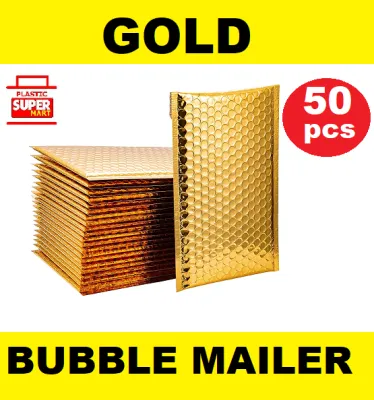
![[SG SELLER] Matte Bubble Mailer Poly Mailer Self-Seal Adhesive Padded Envelope Water Resistant Shipping Bags for Mailing](https://img.lazcdn.com/g/p/a61faf78eab8d6675425500915db76e8.png_400x400q80.png_.webp)
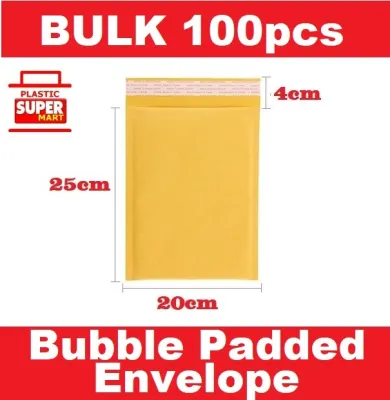
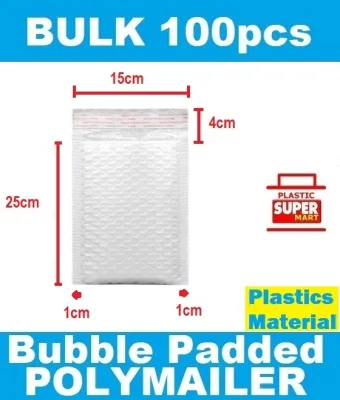
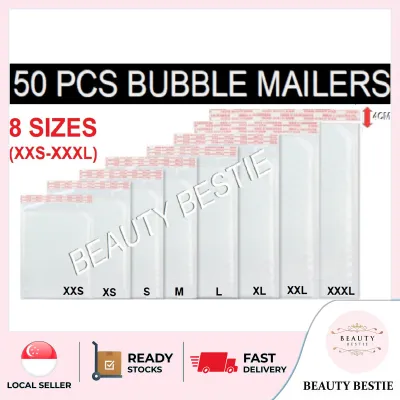
Prices are valid at publication and may change. Please refer to the product page for the latest price.
Internal dimensions represent the true usable space. Because padded envelopes are lined with protective materials like plastic bubble wrap, cohesive foam, or shredded paper fibers, this cushioning layer occupies physical space inside the envelope. Additionally, the heat-sealed or glued seams along the edges further restrict the opening width. Consequently, the internal width and length are always smaller than the external measurements, often by 10 to 25 millimeters depending on the padding thickness. Relying on external dimensions alone is a common mistake that leads to purchasing envelopes that are too small.
How to Measure Your Item Accurately
Before you can select the right padded envelope, you must obtain precise measurements of the item you plan to ship. Using a standard ruler or tape measure, place your item on a flat surface. Measure the maximum length, width, and thickness at its bulkiest point. It is vital to measure the thickest point of the item rather than an average section. For example, if you are shipping a paperback book, the spine is often thicker than the outer edges; if you are shipping a cosmetic item, the cap or pump mechanism may protrude further than the main bottle.

Next, consider the rigidity of the item. Rigid objects, such as wooden picture frames, hardback books, or plastic electronic cases, do not bend or flex. These items require a larger opening because they cannot conform to the shape of the envelope as it is being sealed. Flexible items, such as clothing, textiles, or soft plush toys, can compress slightly, allowing for a tighter fit. However, you should still avoid forcing any item into an envelope, as excessive pressure can pop bubble linings or split paper seams.
If your shipment consists of multiple small items, arrange them together in the configuration you intend to pack them. Measure the total length, width, and height of the combined bundle. Keeping the items bound together during measurement can help ensure your dimensions remain accurate and do not shift during the packing process.
Translating Item Measurements to Envelope Sizes
Once you have the exact dimensions of your item, you must translate them into the required internal dimensions of the envelope. This step requires accounting for the “thickness penalty.” When a flat envelope is filled with a three-dimensional object, the front and back walls of the envelope are pulled outward to wrap around the item’s depth. This expansion reduces the effective flat width and length of the envelope.
To calculate the minimum internal width you need, use a simple formula: add the width of your item to its thickness, then add an additional 10 to 15 millimeters for clearance. For example, if your item is 140 millimeters wide and 30 millimeters thick, your minimum required internal envelope width is 180 to 185 millimeters. To calculate the minimum internal length, add the length of your item to its thickness, plus an additional 15 to 20 millimeters. This extra length ensures that the item sits fully below the sealing line, allowing the self-adhesive flap to fold over flat and create a secure, tamper-evident seal.
If the manufacturer provides a maximum expansion or gusset capacity, compare your item’s thickness against those specifications. When your calculated dimensions are close to the maximum limit of a particular envelope size, always choose the next size up. Sizing up prevents the envelope from becoming overly taut, which can compromise the shock-absorbing properties of the padding and make the package more susceptible to punctures or tears during transit.
General Size Categories and Common Use Cases
Padded envelopes are generally grouped into small, medium, and large categories, which can help narrow down your options during the initial selection process. Small padded envelopes are ideal for flat, lightweight, and delicate items. Common use cases include shipping jewelry boxes, keys, memory cards, USB flash drives, and small cosmetics. These compact mailers provide excellent protection while keeping shipping costs low, as they easily fit within standard letterbox delivery limits.
Medium padded envelopes are highly popular for everyday shipping needs. They are commonly used for standard novels, optical discs, small electronic accessories like chargers and cables, and folded documents that require extra protection against bending. These envelopes offer a practical balance of space and structural integrity, making them a staple for home offices and e-commerce sellers.
Large padded envelopes are designed for bulkier or multiple items. They are suitable for shipping clothing items like t-shirts and sweaters, larger softcover books, bundled stationery sets, or lightweight, non-fragile home goods. However, because sizing terminology and numbering systems (such as Size 000 to Size 7) vary widely between different manufacturers, you should never rely solely on these generic category names. Always cross-reference the manufacturer’s detailed specification sheet to verify the exact internal millimeter measurements before purchasing a batch of envelopes.
Frequently Asked Questions (FAQ)
How much extra space should I leave inside the envelope?
For most standard shipments, you should aim to leave a clearance margin of approximately 10 to 20 millimeters beyond your item’s calculated dimensions (including its thickness). This extra space allows the item to slide in easily without catching on the inner lining and ensures the self-adhesive flap can seal flat. However, avoid choosing an envelope that is excessively large. If there is too much empty space, the item will shift and slide during transit, which can lead to internal damage, bent corners, or a higher risk of the envelope folding and tearing under heavier packages.
Does the padding material affect the internal size?
Yes, the specific type of padding material used inside the envelope significantly affects the available internal space and how the envelope behaves when filled. Bubble-lined envelopes use air-filled plastic bubbles, which are relatively uniform in thickness but do not compress easily. Envelopes padded with shredded paper fibers or recycled pulp are often thicker and heavier, providing excellent rigidity and eco-friendly disposal, but they may offer slightly less flexibility around bulky corners. Because of these material differences, always check the product description for the exact internal dimensions of the specific mailer model you are purchasing rather than assuming all padded envelopes of the same external size are identical.

Community discussion
Share your experience or ask a question. Comments are reviewed before publication.