
Poly mailers with widths starting around 30 to 35 centimeters (approximately 12 to 14 inches) and lengths extending up to 48 to 60 centimeters (approximately 19 to 24 inches) or larger are generally classified as large poly mailers. These dimensions are designed to accommodate bulky, non-fragile items such as winter coats, multiple apparel pieces, shoe boxes, or soft home goods. Selecting the correct size requires understanding how three-dimensional products fit into a flat, two-dimensional pouch, as well as how material thickness and courier limits affect your shipping costs.
Because poly mailers are lightweight and flexible, they are highly efficient for ecommerce shipping. However, ordering the wrong size can lead to split seams, wasted material, or unexpected shipping surcharges. By understanding standard sizing conventions and material specifications, you can streamline your packaging process and protect your items during transit.
How Poly Mailer Dimensions Are Measured and Labeled
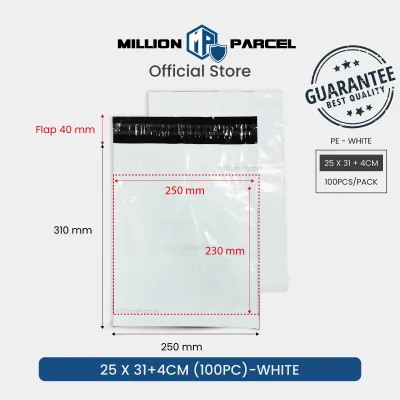
When browsing packaging supplies, dimensions are almost universally listed as Width x Length (W x L). For example, a mailer labeled as 350 mm x 450 mm indicates a width of 350 millimeters across the opening and a length of 450 millimeters from the bottom seam to the opening edge. However, this measurement often excludes the adhesive flap, which typically adds another 40 to 50 millimeters of material beyond the opening.
Products mentioned in this guide
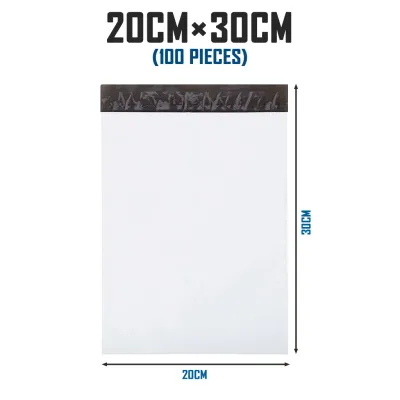
![[SG SELLER] 100 pcs Polymailer Plastic Mailers Packaging Courier Bag Storage Self-Adhesive Glossy Mailing Waterproof](https://img.lazcdn.com/g/p/05adb6ece2ae50bc64aa493b6fbe756d.png_400x400q80.png_.webp)
![[100pcs] White Polymailer Bags – Waterproof Tear-Resistant Courier Shipping Bags for eCommerce & Mailing](https://img.lazcdn.com/g/p/5ac19457619c8d71b03e006291511e2b.png_400x400q80.png_.webp)
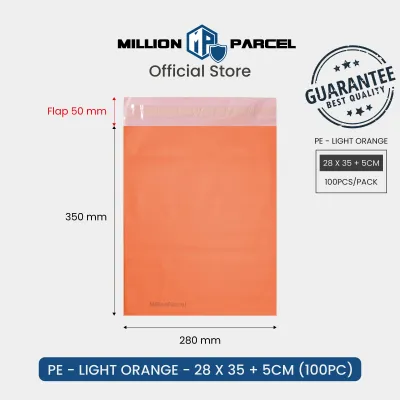
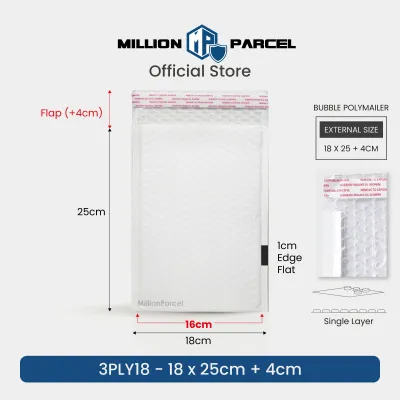
![[SG] ⭐CHEAPEST⭐ {100PCS) Polymailers / Polymailer / Courier Bag / Mailer bag /Orange/ Pink/ Black/ Blue](https://img.lazcdn.com/g/p/6ccb549d5751919e4b6f38c870d6b862.png_400x400q80.png_.webp)
Prices are valid at publication and may change. Please refer to the product page for the latest price.
It is critical to verify whether a supplier’s listed dimensions represent the total exterior footprint or the actual interior usable area. Some manufacturers include the side seals in their width measurements, which can reduce the usable interior width by a few millimeters on each side. Always review the product specification sheet or request a sample to measure the interior space yourself before committing to a bulk order.
Additionally, because water resistance and adhesive bonding depend on the exact material combination of the polyethylene and the glue, you should perform a quick trial on your samples. Splash a few drops of water on the surface to verify it beads off without penetrating the seams, and test the adhesive flap by sealing it and attempting to peel it open after five minutes. A secure, tamper-evident seal should tear the plastic rather than peeling away cleanly.
Defining "Large" Based on Item Size and Carrier Limits
A flat poly mailer must stretch and conform around a three-dimensional object. When you place a thick item, such as a folded puffer jacket or a shoe box, inside a mailer, the bag’s usable width and length shrink as the material wraps around the item’s depth. To accommodate this volume, you must calculate the item’s girth and add a generous allowance to prevent the seams from splitting during transit.

In Singapore, local couriers and postal services categorize shipments based on strict volumetric and weight tiers. Exceeding standard parcel dimensions can instantly push your shipment into a premium delivery tier, significantly increasing your postage fees. Before finalizing your mailer size, cross-reference your packed dimensions with local courier guidelines to ensure your large mailers still qualify for standard domestic parcel rates, saving you from paying premium delivery surcharges of several S$ per package.
Ultimately, “large” is a relative term that depends entirely on your product catalog. For a boutique selling delicate jewelry, a 250 mm x 350 mm mailer might be considered large, whereas an online bedding retailer would view that same size as small. Define your own baseline by measuring your largest standard inventory items and selecting a mailer size that comfortably accommodates them with room to spare.
Choosing the Right Thickness for Larger Shipments
The physical dimensions of a poly mailer are only half the equation; material thickness determines whether your shipment arrives intact. Poly mailer thickness is typically measured in microns (micrometers) or mils (one-thousandth of an inch). Standard mailers often range from 50 to 60 microns (approximately 2 to 2.4 mils), which is suitable for lightweight clothing, but larger shipments require heavier-duty protection.
When shipping bulkier or heavier items, look for mailers with a thickness of 75 microns (approximately 3 mils) or higher. Thicker polyethylene provides the necessary tensile strength to resist punctures from boxed corners and prevents the bottom and side seams from bursting under pressure when handled by automated sorting machines.
To choose the right thickness, evaluate the physical characteristics of your products. Soft, lightweight items like t-shirts can safely use standard 50-micron mailers. Medium-weight goods with soft edges, such as hoodies or plush toys, perform best in 60 to 70-micron bags. For heavy, dense, or sharp-edged items like boxed footwear, books, or hardware, always opt for heavy-duty mailers of 75 to 100 microns to ensure maximum tear resistance.
Step-by-Step Sizing Checklist for Your Orders
To avoid ordering the wrong size, follow this systematic checklist before purchasing your next batch of large poly mailers:
- Measure the fully packaged product: Place your item in any inner packaging (such as a clear poly bag or tissue paper) and measure its maximum width, length, and thickness using a standard ruler.
- Calculate the minimum mailer width: Add the item's width and its thickness together, then add an extra 20 to 30 millimeters as a safety margin. This ensures the item can easily slide through the opening without catching or tearing the side seams.
- Calculate the minimum mailer length: Add the item's length and its thickness together, then add another 50 millimeters to account for the adhesive flap and the fold-over seal.
- Verify against courier limits: Compare your calculated dimensions with the maximum size limits of your preferred Singapore courier service to avoid unexpected surcharges.
- Perform a physical test: Order a small sample pack first. Insert your largest product, seal the bag, and inspect the seams for tension or stretching before committing to a bulk order.
Frequently Asked Questions (FAQ)
Do poly mailer dimensions include the adhesive flap?
Sizing practices vary across packaging manufacturers. Some suppliers list the total length of the plastic sheet, which includes the adhesive flap, while others only list the usable pouch length from the bottom seam to the opening. To prevent under-ordering, always check the detailed product specifications or contact the supplier directly to confirm whether the listed length represents the usable interior space.
What is the maximum weight a large poly mailer can hold?
There is no universal weight limit for large poly mailers, as capacity depends heavily on material thickness, seam construction, and the shape of the contents. While a high-quality, 75-micron mailer can comfortably hold several kilograms of soft goods, heavy or sharp-edged items can easily puncture the plastic. Always check the manufacturer’s recommended weight rating, and transition to corrugated cardboard boxes for dense, fragile, or highly structured items.

Community discussion
Share your experience or ask a question. Comments are reviewed before publication.