
Crystal curtain fabric is a highly translucent, shimmering synthetic textile engineered to mimic the light-refracting properties of glass crystal. Unlike literal crystal or glass bead curtains, this material is a woven fabric made from ultra-fine synthetic fibers that catch, reflect, and scatter light across their surface. It provides a unique combination of high transparency, a subtle metallic or glass-like luster, and a crisp, structured drape that sets it apart from traditional sheer textiles.
When selecting this fabric for home decor or sewing projects, understanding its material composition and performance characteristics is essential. Because the market features various grades of synthetic sheers, knowing how to conduct hands-on quality checks ensures you invest in a durable material that behaves beautifully under different lighting conditions. From evaluating the weave density to adjusting your sewing machine settings, choosing and handling crystal curtain fabric requires a careful, informed approach.
Defining Crystal Curtain Fabric: Beyond the Name
To choose the right material for your space, it is important to clarify what “crystal” means in the context of textile manufacturing. The term does not refer to the chemical presence of mineral crystals or glass beads woven into the threads. Instead, it is a visual and tactile descriptor for a fabric that exhibits a glass-like sheen, high light transmission, and a clean, crisp drape. The fabric is designed to interact dynamically with both natural and artificial light, creating a shimmering effect that shifts as you move through the room.
Products mentioned in this guide
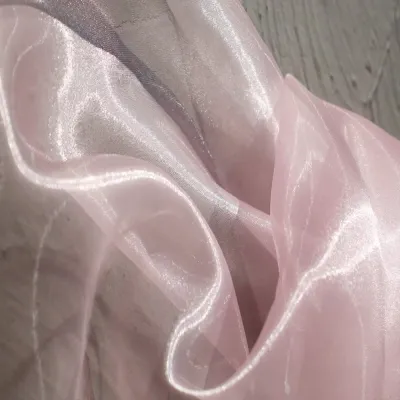
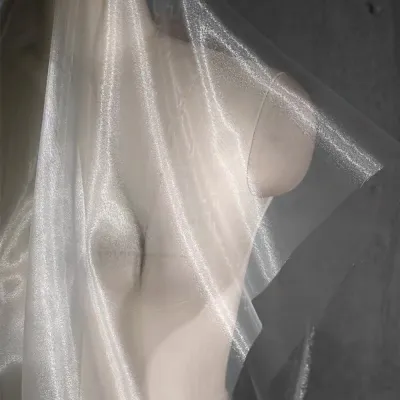
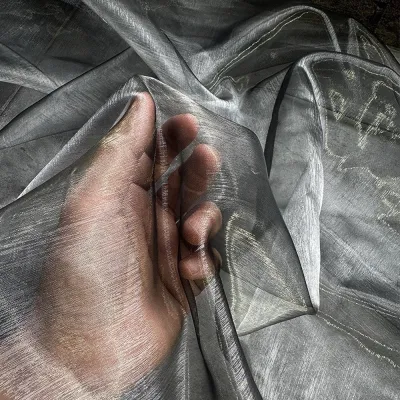
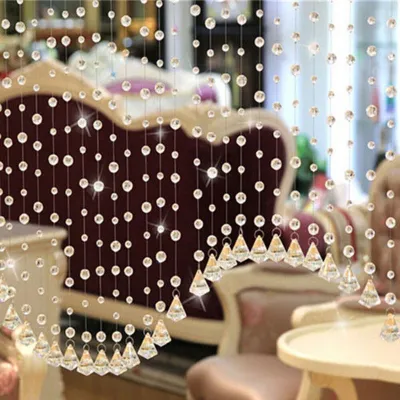
Prices are valid at publication and may change. Please refer to the product page for the latest price.
The unique optical properties of crystal curtain fabric are achieved through the engineering of its base fibers. Typically woven from fine synthetic polymers such as polyester or nylon, these fibers are extruded with non-round cross-sections—often triangular or trilobal. This specific geometric shape allows the individual threads to act like miniature prisms, refracting and reflecting light rather than letting it pass through flatly or absorbing it. This specialized fiber structure is what gives the fabric its characteristic sparkle and depth.
It is also important to distinguish crystal curtain fabric from other common window treatments and sheer textiles:
- Crystal Bead Curtains: These are hard home accessories composed of individual glass, acrylic, or plastic beads strung together on vertical cords. They do not feature a woven textile structure and serve a decorative, partition-like purpose rather than functioning as a soft, draping window treatment.
- Organza: While organza is also transparent and crisp, it typically has a stiffer, more wire-like hand feel and is highly prone to deep, stubborn creasing. Organza often exhibits a uniform, metallic luster rather than the multi-dimensional, refractive shimmer found in high-quality crystal sheers.
- Voile: Voile is a soft, lightweight, and usually matte fabric. It drapes in limp, fluid folds and is designed to diffuse light softly without any reflective sparkle or structured crispness.
Observable Properties and Performance in Home Decor
The physical structure of crystal curtain fabric directly dictates how it behaves when hung as a window treatment, room divider, or decorative canopy. Understanding these performance characteristics helps you determine if the material aligns with the functional needs of your living space.

Light Transmission and Visual Effects Crystal curtain fabric excels at filtering light while maintaining a bright, open atmosphere. When natural sunlight passes through the sheer weave, the engineered fibers scatter the rays, reducing harsh glare without darkening the room. This creates a soft, luminous glow that fills the space. In evening settings, the fabric interacts beautifully with indoor artificial lighting; overhead lamps or accent spotlights catch the reflective fibers, highlighting the fabric’s drape with a subtle, sophisticated shimmer.
Drape and Structural Crispness Unlike limp sheers that hang completely flat, crystal fabric possesses a built-in structural memory and a moderate degree of crispness. This characteristic allows the fabric to hold structured pleats, such as pinch pleats, goblet pleats, or modern ripple folds, exceptionally well. When drawn open or closed, the fabric moves with a graceful, fluid motion but retains its defined folds, preventing the window treatment from looking messy or losing its shape over time.
Privacy and Shading Limitations Because of its high transparency, crystal curtain fabric cannot serve as a standalone solution for rooms that require complete privacy or light exclusion. During the day, the reflective surface provides moderate privacy by making it difficult for outsiders to see into a brightly lit interior. However, at night, when the interior lights are switched on and the outside is dark, the fabric becomes highly transparent. For bedrooms, media rooms, or street-facing windows, it is highly recommended to layer crystal sheers with an independent opaque backing, blackout lining, or secondary drapery.
Durability and Environmental Resilience Woven from robust synthetic polymers like polyester, high-quality crystal curtain fabrics are highly resistant to stretching, shrinking, and sagging, even in humid tropical climates like Singapore. They do not absorb moisture from the air, which helps prevent the growth of mildew and keeps the fabric looking fresh. However, because the weave is incredibly fine and lightweight, the fabric is delicate and susceptible to snags. It must be handled with care around sharp objects, jewelry, and pets with sharp claws, as a single pulled thread can disrupt the uniform refraction of the weave.
Actionable Quality Checks Before You Buy or Cut
Before purchasing a large bolt of fabric or making your first cut, performing a series of hands-on inspections will help you verify the quality of the material. Since synthetic sheers can vary widely in manufacturing standards, these observable checks will ensure you select a durable, high-performing product.
Weave Density and Yarn Uniformity To check the structural integrity of the fabric, hold a generous sample up against a clean, bright light source or a well-lit window. Examine the grid of the warp and weft threads closely. High-quality crystal curtain fabric exhibits a perfectly consistent weave density with uniform spacing between the threads. Avoid fabrics that show visible slubs (thick, irregular lumps in the yarn), gaps, or uneven thread tension, as these manufacturing defects will be highly visible once the curtain is hung and backlit by the sun.
Edge Finishing and Selvedge Integrity Inspect the selvedge—the self-finished edge of the fabric roll—very carefully. The selvedge should lie completely flat, smooth, and tension-free. If the edge appears puckered, wavy, or tightly bound, it indicates that the loom tension was uneven during weaving. A distorted selvedge makes it incredibly difficult to sew straight, flat side hems, often causing the finished curtain edges to flare outward or pucker. Additionally, gently rub the cut edge of the fabric; while all sheers fray to some extent, high-quality weaves should hold their structure reasonably well without immediately unraveling into loose threads.
Tactile and Visual Refraction Tests Run the palms of your hands over the surface of the fabric to assess its hand feel. While crystal fabric is naturally crisp, it should still feel smooth, cool, and pleasant to the touch. Avoid fabrics that feel excessively scratchy, stiff, or papery, as these are often treated with cheap chemical sizing agents that will wash out, leaving the fabric limp and dull after its first cleaning. Next, drape the fabric over your arm and move it under different angles of light. The shimmer should be elegant, continuous, and multi-dimensional; if the reflection looks patchy, overly metallic, or plastic-like, the fibers may be of a lower grade.
Width and Measurement Verification Always check the manufacturer’s label or product specifications for the exact bolt width. Curtains require significant fabric width to achieve proper fullness. Many high-quality curtain fabrics are produced in extra-wide rolls, such as 280 cm (approx. 110 inches) or 300 cm (approx. 118 inches), which allow you to create seamless, continuous panels for standard and tall windows. If you are purchasing standard 137 cm (54-inch) wide fabric, keep in mind that you will need to join multiple panels vertically, requiring precise pattern matching and extra seam allowances.
Sewing, Handling, and Maintenance Guidelines
Working with delicate, slippery, and highly reflective synthetic fabrics requires specialized techniques to prevent damage and ensure a professional finish. Whether you are sewing the curtains yourself or handing the material over to a professional tailor, adhering to these guidelines will preserve the fabric’s beauty.
Sewing Machine Adaptations Before you begin sewing, always consult your sewing machine’s manual for specific tension adjustments and feed dog settings. Because crystal curtain fabric is fine and synthetic, using the wrong sewing parameters can ruin the material.
- Needle Selection: Use a brand-new, sharp needle designed specifically for delicate synthetics, such as a Microtex or fine sharp needle in size 60/8 or 70/10. Standard universal needles are too blunt and will punch holes or pull threads in the delicate weave.
- Thread Choice: Select a high-quality, fine polyester thread. Avoid heavy cotton or thick all-purpose threads, which can cause the seams to pucker and bunch.
- Stitch Settings: Set your machine to a straight stitch with a slightly shorter length, typically between 2.0 mm and 2.5 mm. Test the stitch on a scrap piece of the same fabric first to ensure the seam lies completely flat without puckering or gathering. Keep a light, even tension on the fabric as it feeds through the machine; do not pull or stretch the material.
Washing and Drying Boundaries To maintain the pristine shimmer and structural crispness of your crystal curtains, proper laundering is vital. Always check the fabric care label or the manufacturer’s specific instructions first. If the instructions conflict, the fabric blend is unidentified, or the care use is not covered, stop and consult the manufacturer or a professional dry cleaner.
For general maintenance of washable synthetic sheers, follow these steps:
- Preparation: Remove all hooks, rings, and weights from the curtains before washing to prevent snagging.
- Washing: Place the curtains inside a large, protective mesh laundry bag. Wash them using a gentle or delicates cycle with cold water (not exceeding 30°C) and a mild, liquid detergent. Avoid harsh powder detergents or bleach, which can degrade the synthetic fibers and dull the crystal sheen.
- Drying: Skip the machine spin cycle or set it to the lowest speed to prevent deep, stubborn wrinkles. Do not tumble dry the fabric, as high heat can easily warp, shrink, or melt synthetic fibers. Instead, remove the curtains from the machine while they are still damp and hang them directly back onto their tracks. The natural weight of the damp fabric will help pull out minor wrinkles as it air-dries.
Ironing and Pressing Precautions Synthetic fibers like polyester and nylon are highly heat-sensitive. If your curtains require pressing to remove persistent creases, always proceed with extreme caution. Set your iron to the lowest synthetic setting (typically below 110°C) and turn off the steam function, as water droplets can sometimes leave spot marks on sheer fabrics. Always place a clean, dry, white cotton pressing cloth between the soleplate of the iron and the crystal fabric. Never allow the bare iron to make direct contact with the sheer material, as this can instantly scorch, melt, or leave permanent, highly visible shiny marks on the reflective surface.
Frequently Asked Questions (FAQ)
Is crystal curtain fabric suitable for outdoor or high-sunlight use?
Standard synthetic crystal curtain fabric is designed primarily for indoor residential spaces. While polyester has a reasonable natural resistance to sunlight compared to natural fibers like silk or cotton, prolonged and uninterrupted exposure to intense, direct UV rays can eventually degrade the synthetic polymers. Over time, this can lead to fiber yellowing, loss of the characteristic crystal shimmer, and brittleness that makes the fabric prone to tearing. If you plan to install sheers in areas with high sunlight exposure, such as unshaded west-facing windows or covered balconies, verify with the manufacturer that the fabric has been specifically treated with UV inhibitors or is explicitly rated for outdoor use.
How do I calculate the right amount of fabric for pleated crystal curtains?
To achieve a rich, elegant appearance where the light-reflecting properties of the crystal fabric are fully displayed, sheer curtains require a higher fullness multiplier than heavy, opaque drapes. A standard fullness multiplier of 2.5x to 3x the width of your window track is recommended. For example, if your window track measures 2 meters in width, you will need between 5 and 6 meters of fabric width. This ensures that even when the curtains are drawn completely closed across the window, they retain soft, deep, and graceful folds that catch the light beautifully, rather than stretching flat and looking sparse. Always add extra fabric allowances for side hems (typically 2 cm to 5 cm per side) and bottom hems (typically 10 cm to 20 cm for a double-fold hem) to achieve a professional finish.

Community discussion
Share your experience or ask a question. Comments are reviewed before publication.