
A complete back-to-school stationery haul is never truly finished without a touch of personalization, and Snoopy stickers offer the perfect blend of nostalgic charm and practical utility. To build an effective checklist, you must balance decorative appeal with functional durability across different academic stages. Primary school students require robust, highly visible name labels that can survive the playground, while secondary school students benefit from minimalist, low-profile planner icons that streamline busy schedules. By matching the right sticker formats, materials, and designs to your specific school supplies, you can transform standard notebooks, files, and writing instruments into highly organized, inspiring learning tools.
Selecting the right stickers involves understanding how different materials interact with your daily school gear. A sticker that looks beautiful on a matte paper notebook cover might quickly peel off a textured plastic pencil case or disintegrate when applied to a reusable water bottle. Therefore, a successful back-to-school haul requires a systematic approach to choosing materials, sizes, and adhesive types that align with your academic workload and organizational habits.
How to Match Sticker Materials to Your School Supplies
Before adding any Snoopy designs to your cart, it is essential to evaluate the physical properties of the stickers and how they match the surfaces of your stationery. Standard paper stickers are highly cost-effective and widely available, making them an excellent choice for low-friction, dry environments. They are particularly well-suited for the inside pages of notebooks, diaries, and study planners where they will not be subjected to constant handling or moisture. Because paper stickers have a natural, uncoated texture, they are also incredibly easy to write on using standard ballpoint pens, gel pens, or colored markers without worrying about ink smudging.
Products mentioned in this guide
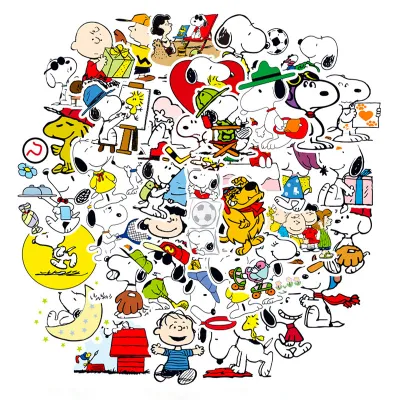
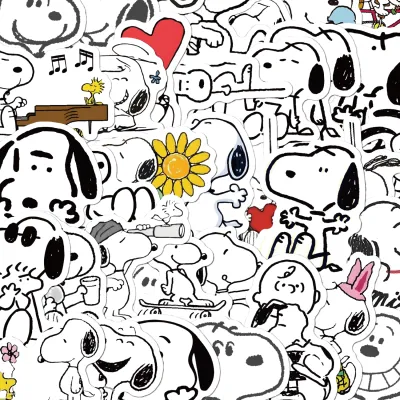
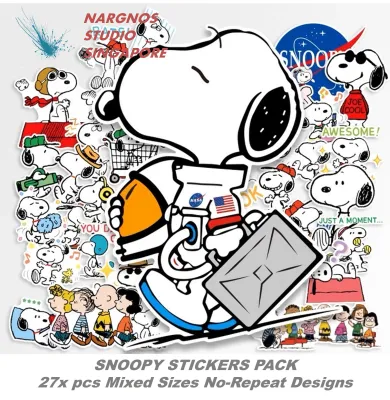
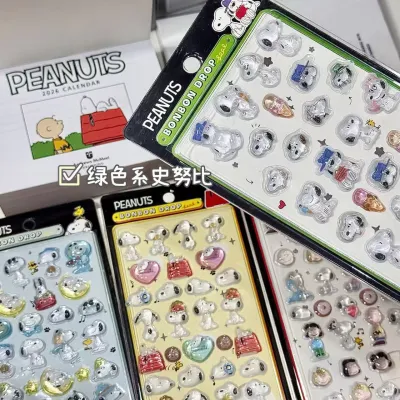
Prices are valid at publication and may change. Please refer to the product page for the latest price.
However, standard paper lacks the resilience needed for external surfaces that experience constant wear-and-tear. For items like the outer covers of ring binders, plastic folders, laptop lids, and pencil cases, vinyl stickers (often labeled as PVC or PET) are highly recommended. Vinyl is a synthetic plastic material that offers excellent tear resistance, flexibility, and durability. These stickers can withstand being repeatedly slid into and out of crowded backpacks without fraying at the edges or losing their color vibrancy.
Adhesive strength is another critical factor to verify, as it determines how permanent the sticker will be on your school supplies. Removable or low-tack adhesives are designed to peel off cleanly without tearing the underlying paper or leaving a sticky residue. This is an invaluable feature for rented school textbooks, shared library books, or expensive reference guides that must be returned in pristine condition at the end of the academic year. Conversely, permanent adhesives form a strong, long-lasting bond over time, making them ideal for personal items like calculator covers, ruler cases, and storage boxes where you want the label to remain securely in place for the entire school term.
Finally, pay close attention to the size and scaling of the stickers relative to your stationery. A large, detailed die-cut illustration of Snoopy resting on his doghouse looks fantastic on the broad cover of an A4 folder, but it will not fit on the narrow barrel of a mechanical pen or the slim spine of a notebook. For writing instruments and small accessories, look for micro-stickers or thin strip labels, which are typically 5mm to 10mm wide. These smaller dimensions allow the sticker to wrap cleanly around curved surfaces without lifting or peeling at the corners over time.
Primary School Checklist: Durable, Fun, and Easy to Apply
For primary school students, stationery is highly prone to getting lost, swapped, or damaged during busy school days. Therefore, the primary school Snoopy sticker checklist should prioritize high durability, clear identification, and engaging designs that make organizing fun. Parents and younger students should look for dedicated name and property label formats. These sheets typically feature pre-cut writable areas alongside playful illustrations of Snoopy and his friends. When preparing these labels, write the student’s name and class using a permanent marker, and allow the ink to dry completely to prevent smudging before applying the sticker to textbooks, folders, and pencil cases.

Waterproof and water-resistant ratings are absolutely essential for any stickers intended for lunchboxes, snack containers, and reusable water bottles. Because these items undergo daily washing and are exposed to condensation in school bags, standard paper stickers will quickly turn soggy and peel away. When shopping, check the product packaging or online descriptions for explicit waterproof or dishwasher-safe certifications. These durable vinyl options feature a protective laminate layer that shields the printed design from water, dish soap, and physical scrubbing, ensuring the name label remains legible throughout the entire school year.
In addition to functional labeling, primary school students benefit greatly from larger, brightly colored reward and motivation stickers. Parents and teachers can use these sheets to provide positive reinforcement for homework completion, reading milestones, or good behavior. Look for sheets featuring Snoopy in celebratory poses, such as his iconic happy dance, accompanied by encouraging phrases like “Great Job!” or “Keep It Up!” These larger, eye-catching designs can be placed on progress charts, homework diaries, or test papers, turning routine academic tasks into a rewarding and visually stimulating experience.
Secondary School Checklist: Aesthetic, Functional, and Planner-Friendly
As students transition into secondary school, their organizational needs become more complex, requiring a shift toward subtle, functional, and highly structured sticker styles. Managing multiple subjects, exam schedules, and extracurricular activities demands a dedicated study planner or bullet journal. For this grade level, look for small-scale planner icons and trackers specifically designed to fit within tight calendar grids. These micro-stickers—featuring tiny illustrations of Snoopy reading, writing, or playing sports—allow students to mark assignment deadlines, exam dates, and club meetings clearly without cluttering their writing space.
The overall aesthetic of secondary school stationery often leans toward a more mature, cohesive look. Instead of the bright, high-contrast colors favored in primary school, older students should explore minimalist, monochrome, or vintage line-art Snoopy designs. These classic black-and-white illustrations or muted pastel color palettes blend seamlessly with modern study tools, such as pastel highlighters, neutral-toned notebooks, and professional gel pens. This approach allows students to express their personal style and love for the character while maintaining a clean, professional, and distraction-free study environment.
Material choice also plays a significant role in planner organization, where transparent PET or washi paper stickers are highly advantageous. Washi paper stickers are semi-transparent, matte, and easy to tear by hand, mimicking the texture of traditional Japanese masking tape. They allow you to layer decorative elements over handwritten notes or printed grid lines without completely blocking the text underneath. Transparent PET stickers offer a sleek, borderless finish that makes the Snoopy illustrations appear as if they were printed directly onto the page, providing a clean and integrated look that is perfect for decorating margins, headers, and page dividers.
Organizing Your Cart: Functional Labels vs. Decorative Accents
To ensure your back-to-school shopping cart is well-balanced, it is helpful to categorize your sticker selection into functional organizational tools and decorative personal accents. Start by planning your subject categorization tags. You can use specific shapes or color-coded Snoopy themes to visually separate different academic subjects. For instance, you might assign a blue-themed Snoopy sheet to Mathematics, a green-themed sheet to Science, and a yellow-themed sheet to Languages. Applying these consistent color cues to the spines of your folders and notebooks makes it incredibly easy to identify and grab the correct materials from your locker or backpack in a hurry.
Once your functional labeling needs are met, you can select decorative journaling accents to add personality to creative writing diaries, project covers, or presentation folders. Look for sheets that feature speech bubbles, thought clouds, and dynamic character poses. These elements allow you to create custom, comic-strip-style layouts on your dividers or title pages, making school projects stand out. These decorative accents provide a creative outlet during study breaks, allowing students to personalize their learning materials in a way that reflects their unique personality.
Before heading to the checkout, estimate the total quantity of sticker sheets required to last through the upcoming school term. Over-purchasing can lead to cluttered drawers, while under-purchasing might leave you without essential labels mid-semester. As a general guideline, a standard school term with six subjects can be comfortably managed with a budget of approximately S$10 to S$15 allocated to stickers. This typically covers two sheets of durable name labels for primary school items, three sheets of small planner icons for daily tracking, and one or two sheets of decorative vinyl decals for personalizing larger items like laptops or binders.
Smart Shopping: What to Verify Before You Checkout
With countless stationery options available online and in physical stores, taking a few moments to verify product details before checking out can save you from purchasing low-quality or unsuitable sticker sheets. Always read the product descriptions carefully to confirm the exact sheet dimensions, material composition, and adhesive properties. Do not rely solely on promotional images, which can sometimes use digital mockups that make small sticker sheets appear much larger than they are in reality. Checking the physical dimensions (such as A5, A6, or specific centimeter measurements) ensures the stickers will fit your intended stationery perfectly.
To guarantee high print resolution, accurate color reproduction, and safe, non-toxic materials, prioritize authorized stationery retailers, official brand stores, or reputable physical shops. Official Snoopy merchandise undergoes quality control to ensure that the die-cut lines align perfectly with the illustrations, preventing frustrating tears when peeling the stickers off the sheet. Furthermore, authorized products use safe, acid-free adhesives that will not discolor your notebook pages or emit strong chemical odors, which is particularly important for younger children who handle these items daily.
Finally, when shopping on online marketplaces or ecommerce platforms, make it a habit to scroll down to the customer review section. Look for user-uploaded photos and honest feedback to verify the actual quality of the physical product. Pay close attention to comments regarding the cutting precision of the stickers and how closely the physical colors match the online listing. If multiple reviews mention that the stickers are difficult to peel, have blurry printing, or lift at the edges quickly, it is best to remove those items from your cart and look for a more reliable alternative.
Frequently Asked Questions (FAQ)
Can I use standard paper Snoopy stickers on a reusable water bottle?
Standard paper stickers are not suitable for reusable water bottles because they lack resistance to moisture and physical wear. When exposed to water during washing or condensation from cold drinks, the paper fibers will quickly absorb moisture, causing the ink to smear and the paper to disintegrate. Additionally, standard adhesives will dissolve, leaving a messy, peeling residue on your bottle. If you want to decorate drinkware, always look for stickers explicitly labeled as waterproof, vinyl, or dishwasher-safe. These options feature a protective plastic barrier and water-resistant adhesives that can withstand regular washing without losing their grip or color.
What is the best way to remove sticker residue from a plastic folder?
To remove sticky residue from a plastic folder without damaging the surface, start with the gentlest, most reversible methods. Rubbing a soft vinyl eraser over the residue is often highly effective, as the friction rolls the adhesive into small, easily removable clumps. If that does not work, apply a small amount of mild soapy water to a microfiber cloth and gently rub the area in a circular motion. For stubborn adhesive, you can use a dedicated, mild adhesive remover, but always test a tiny drop on an inconspicuous corner of the folder first to ensure it does not warp, discolor, or melt the plastic. Avoid using harsh solvents like acetone, sharp metal blades, or excessive heat from a hairdryer, as these can easily scratch, warp, or permanently ruin plastic school supplies.

Community discussion
Share your experience or ask a question. Comments are reviewed before publication.