
A functional starter crochet set does not require an overwhelming array of gadgets or a massive box of twenty different hook sizes. Instead, a complete and practical beginner kit relies on five core items: a small range of medium-sized ergonomic hooks, a highly visible worsted or double-knitting (DK) weight yarn, a pair of sharp craft scissors, a blunt tapestry needle, and a few locking stitch markers. By focusing on these high-quality essentials, you can master basic stitches and complete your first projects without overspending on unnecessary tools.
The Core Essentials of a Beginner Crochet Set
When starting your crochet journey, the sheer volume of tools available in craft stores and online marketplaces can be intimidating. Many commercial kits bundle dozens of items to make the package appear more valuable, but most of these tools will sit unused for months. A truly complete beginner set is defined by tool compatibility and quality rather than the total item count.
To begin learning without frustration, your starter set should contain the following non-negotiable basics:
Products mentioned in this guide
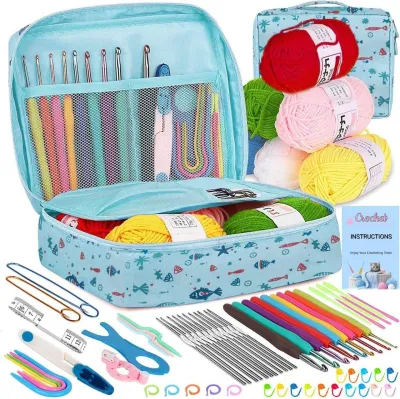
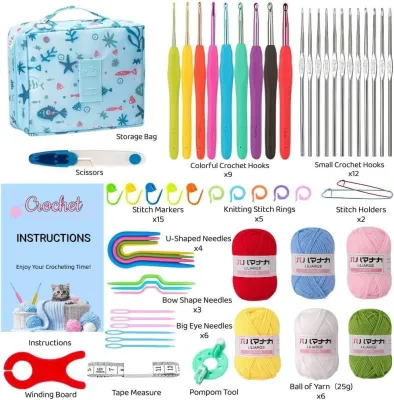
![🇸🇬 [In Stock]Adult Beginner Crochet Kits Knitting Starter Kits Kids Crochet Kits Wool Hooks and Knitting Accessories DIY Knitting Tools](https://img.lazcdn.com/g/p/985580b5e00451665da443451887f5a9.png_400x400q80.png_.webp)
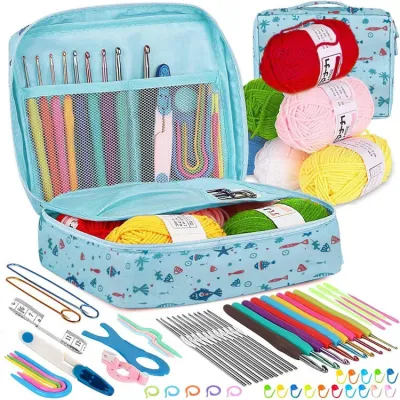
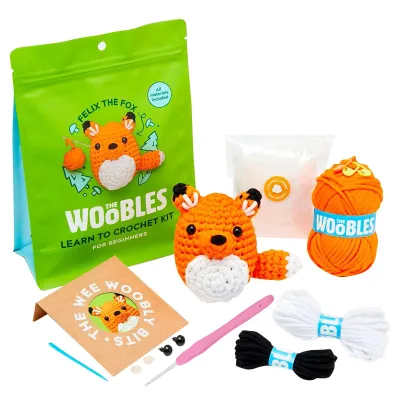
Prices are valid at publication and may change. Please refer to the product page for the latest price.
- Medium-Sized Crochet Hooks: A small selection of hooks, specifically in the 4.0mm to 6.0mm range, which are the easiest to hold and control.
- Worsted or DK Weight Yarn: A smooth, medium-thickness yarn that allows you to see individual loops and stitches clearly.
- Locking Stitch Markers: Small plastic clips that secure your place, mark the beginning of rounds, and prevent your work from unravelling.
- Blunt Tapestry Needle: A large-eyed, blunt-tipped needle used to weave loose yarn tails into your finished fabric.
- Sharp Craft Scissors: A compact pair of scissors dedicated to cutting yarn cleanly without causing the fibers to fray.
Each of these items plays a specific role in your early practice sessions. The hook and yarn must work in harmony; using a hook that is too small for your yarn weight will cause the hook to split the fibers, while a hook that is too large will produce loose, unstructured loops. Stitch markers and tapestry needles ensure your finished pieces do not fall apart, while sharp scissors prevent messy, frayed ends that are difficult to weave in. By restricting your first kit to these five items, you reduce physical clutter and can focus entirely on training your hands to maintain consistent stitch tension.
Choosing the Right Crochet Hooks for Your First Kit
The crochet hook is the primary tool of the craft, acting as an extension of your fingers. Selecting the right hook size, material, and handle shape directly impacts how quickly you learn and how comfortable you remain during long practice sessions.

Hook Sizes for Beginners
For your first crochet set, focus on medium-sized hooks, specifically 4.0mm (US G/6), 5.0mm (US H/8), and 6.0mm (US J/10). These sizes are considered the sweet spot for beginners because they are large enough to hold comfortably in your hand, yet small enough to create neat, cohesive stitches with standard retail yarns.
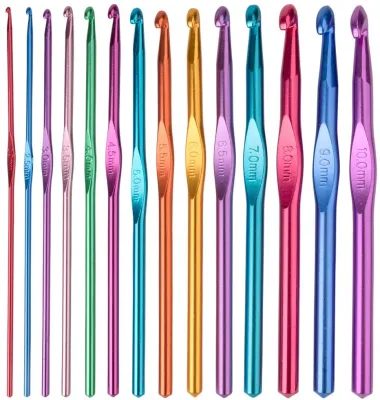
You should avoid extremely small steel lace hooks (0.5mm to 3.0mm) in your initial kit. These fine hooks require thin thread, high tension, and excellent eyesight, which quickly leads to hand cramping and eye strain for novices. Conversely, jumbo hooks (9.0mm and larger) require thick, heavy yarns that can be physically exhausting to manipulate and make it difficult to understand the basic anatomy of a stitch. Stick to the middle range to ensure a smooth, forgiving learning curve.
Hook Materials and Ergonomic Grips
Hooks are manufactured from several different materials, each offering a distinct tactile experience and level of friction:
- Aluminum: These are highly recommended for beginners. Aluminum hooks are exceptionally smooth, durable, and allow yarn to glide effortlessly over the shaft. However, bare aluminum can feel cold to the touch in air-conditioned indoor spaces and can become slippery if your hands sweat in Singapore's warm, humid climate.
- Plastic/Acrylic: These are lightweight and very inexpensive, but they often feature rough manufacturing seams (flashing) along the sides that snag yarn fibers. They also tend to bend or flex under tight tension, which can disrupt your stitch consistency.
- Wood and Bamboo: These materials are warm in the hand and offer a natural grip (higher friction). While this grip helps keep slippery yarns from sliding off the hook, it can slow down your rhythm and make tight stitches harder to manipulate. Bamboo hooks can also warp in high-humidity environments or snap if stored incorrectly.
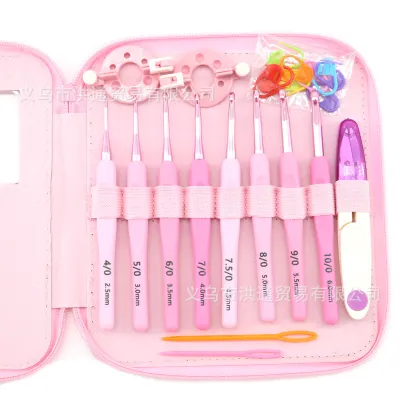
To combat hand fatigue, prioritize hooks with ergonomic soft-grip handles. These handles typically feature a wider, contoured sleeve made of silicone or thermoplastic rubber built over an aluminum shaft. The wider grip prevents you from pinching the hook too tightly, reducing the risk of hand cramps. Basic inline or tapered metal shafts without handles are much thinner, requiring more grip force and often causing discomfort during extended practice sessions.
Selecting Starter Yarn: Weight, Fiber, and Visibility
Your choice of yarn is just as critical as your choice of hook. The wrong yarn can split, snag, or hide your stitches, turning a relaxing hobby into a stressful chore.
Yarn Weight and Fiber Content
Yarn thickness is categorized by standardized weights. For a beginner, Worsted weight (Medium / Category 4) or DK weight (Light Worsted / Category 3) yarns are the absolute standards. These medium-thickness yarns are highly manageable, allowing you to clearly see the loops you need to insert your hook into.
When evaluating fiber content, look for acrylic or cotton-acrylic blends (frequently sold in local craft shops as “milk cotton”). These fibers are affordable, highly durable, and do not split easily. More importantly, they are incredibly forgiving when you make a mistake and need to “frog” (unravel) your work to start over.
Avoid pure wool for your first projects, as the fibers can cling together and felt, making it very difficult to undo mistakes. Pure wool can also feel uncomfortably warm to work with in Singapore’s tropical climate. You should also skip slippery silk, bamboo-only yarns, and highly textured novelty yarns (such as chenille, eyelash, or boucle). These textured yarns hide the structural “V” shape of your stitches, making it nearly impossible to know where to insert your hook next.
Color Choices for Stitch Visibility
When selecting yarn colors for your starter set, choose light, solid, and bright pastel shades such as mint green, soft yellow, cream, light pink, or sky blue. These colors reflect light well, making the front loops, back loops, and posts of your stitches highly visible.
Avoid dark colors like black, navy blue, deep forest green, or dark charcoal. Dark fibers absorb light, making it incredibly difficult to distinguish one stitch from the next, which leads to missed stitches and uneven edges. Similarly, avoid variegated (multi-colored) or heavily speckled yarns. While they look attractive in the skein, the shifting colors create visual noise that obscures your stitch definition and makes it hard to spot mistakes.
Essential Accessories vs. Unnecessary Gadgets
Commercial beginner kits are often packed with dozens of plastic accessories to inflate the perceived value of the set. Understanding which accessories are genuinely useful will save you money and keep your workspace organized.
Essential Accessories
These four accessories are genuinely required to complete almost any basic crochet project:
- Locking Stitch Markers: Unlike solid rings used in knitting, crochet stitch markers must open and close like safety pins. They are placed directly into active loops to prevent your work from unravelling when you put it down, or to mark the first stitch of a round in popular projects like amigurumi (crocheted stuffed toys).
- Blunt Tapestry Needles: Also known as yarn needles, these have a large eye to accommodate thick yarn and a blunt tip. The blunt tip is crucial because a sharp sewing needle will pierce and split the yarn fibers, whereas a blunt needle glides smoothly between the stitches to secure your loose ends.
- Small Sharp Scissors: You need a clean, sharp cut to prevent your yarn plies from untwisting and fraying. Safety note: Always keep your scissors capped or stored in a protective sheath when not in use, and keep them out of reach of young children.
- Flexible Measuring Tape: Essential for checking your gauge (the number of stitches per inch) to ensure your finished project matches the intended dimensions.
Unnecessary Gadgets to Skip
You do not need to purchase the following items when first starting out:
- Yarn Bowls: While they prevent yarn balls from rolling across the floor, they are heavy, breakable, and can easily be replaced by a clean household bowl or a small plastic container.
- Mechanical Row Counters: These digital or clicker counters are fun but unnecessary. You can easily track your rows using a piece of contrasting scrap yarn placed across your work as a running stitch marker, or by using a free note-taking app on your phone.
- Specialized Blocking Mats and Pins: Blocking is the process of wetting and pinning acrylic or wool pieces to shape them. This is only necessary for advanced garments or lace; simple beginner coasters, scarves, and toys do not require blocking.
- Pom-Pom Makers: These plastic templates are highly specific and completely unnecessary for learning the fundamental stitches.
- Massive Multi-Layer Organizers: A simple zippered pencil case or pouch is more than enough to hold your hooks and small accessories.
Avoiding these extra gadgets can easily save you S$20 to S$40 on your initial setup, allowing you to invest that budget into higher-quality hooks or better yarn.
Pre-Packaged Crochet Sets vs. Building Your Own Kit
As a beginner, you must decide whether to buy a ready-made, pre-packaged set or assemble your own custom kit from scratch. Both approaches have distinct advantages and drawbacks.
Pre-Packaged Sets
Pre-packaged beginner sets are highly convenient and widely available on online marketplaces, often priced between S$10 and S$25. They provide an all-in-one solution that saves you the time of sourcing items individually. However, these budget kits often suffer from poor quality control. The included yarn is frequently thin, scratchy, and prone to splitting, while the hooks may have rough metallic edges that snag your yarn.
If you choose to purchase a pre-packaged set online, verify the following details on the product label or listing before buying:
- Ensure the hooks have soft, ergonomic rubber handles rather than bare, flat metal.
- Check that the stitch markers are the locking/clipping type, not solid rings.
- Confirm that the kit includes standard yarn weights (DK or Worsted) rather than thin lace threads.
- Look for reviews mentioning whether the hook heads are smooth and free of sharp manufacturing seams.
Building Your Own Kit
Building your own kit requires a bit more effort, as you will need to visit a local craft shop or select individual items from specialty online storefronts. However, this approach guarantees a vastly superior crafting experience. Instead of buying ten cheap hooks you do not need, you can buy a single, premium-brand 5.0mm ergonomic hook (such as Clover Amour or Tulip Etimo, which typically cost S$8 to S$12 each) and one high-quality 100g skein of soft milk cotton yarn (around S$3 to S$6).
Starting with a high-quality hook and smooth yarn drastically reduces your frustration. The hook will glide effortlessly through the loops, the yarn will not split, and your hands will not cramp, making your early practice sessions far more enjoyable.
Comparison: Pre-Packaged Kits vs. Custom-Built Sets
| Comparison Dimension | Pre-Packaged Beginner Kits | Custom-Built Sets |
|---|---|---|
| Initial Cost | Low to moderate (typically S$10 to S$25 for a complete bundle) | Moderate to high (individually priced items add up quickly) |
| Tool Quality | Variable; hooks may have rough seams; accessories are often cheap plastic | High; you select durable, smooth, premium ergonomic hooks |
| Yarn Quality | Often low; small, scratchy skeins that split easily | High; you choose soft, splittless, highly visible beginner fibers |
| Convenience | High; everything arrives in a single package | Low; requires researching and sourcing items from different aisles or shops |
| Customization | Low; fixed hook sizes and predetermined yarn colors | High; you choose the exact hook size and your favorite bright colors |
Frequently Asked Questions (FAQ)
Do I need a full set of hook sizes to start?
No, you do not need a massive set of fifteen or twenty hooks to begin. Buying a large set is a common waste of money for beginners, as you will likely only use one or two sizes for your first few months. Starting with just three medium-sized hooks—4.0mm, 5.0mm, and 6.0mm—is more than enough to learn all the basic stitches and complete common beginner projects like dishcloths, scarves, and simple amigurumi. You can easily expand your hook collection individually as your project requirements grow.
Can I use any knitting yarn for crochet?
Yes, almost all standard yarns can be used for both knitting and crochet, as yarn is not inherently craft-specific. However, some yarns are structurally easier to crochet with than others. For crochet, look for highly plied, tightly twisted, smooth yarns. Because crochet involves inserting a hook into active loops, loosely spun or single-ply knitting yarns are highly prone to splitting, where the hook accidentally pierces through the middle of the yarn strand rather than catching the whole loop. Smooth, tightly twisted yarns prevent this frustration.
How much yarn should a beginner set include?
Your starter set should ideally include two to four skeins of practice yarn, with each skein weighing approximately 50g to 100g. This quantity provides ample material for practicing basic stitches, making test swatches, and completing two or three small projects like coasters, a basic beanie, or a small amigurumi toy. Purchasing this moderate amount allows you to practice extensively without committing to the high cost or storage space of a massive yarn stash before you are certain you want to pursue the hobby long-term.

Community discussion
Share your experience or ask a question. Comments are reviewed before publication.