
A high-quality beginner crochet kit must contain five non-negotiable items: ergonomic or smooth aluminum crochet hooks in medium sizes (specifically 4.0mm to 5.5mm), a skein of light-colored, worsted-weight or DK-weight yarn, blunt tapestry needles, sharp embroidery scissors, and locking stitch markers. A well-designed kit prioritizes the usability of these core components and provides clear, step-by-step instructions rather than overloading you with a massive quantity of low-grade accessories.
While many kits on the market boast high piece counts, they often fill their boxes with flimsy tools that cause hand fatigue or yarn that splits easily. Focusing on a few high-quality, reliable tools ensures a smooth learning curve and helps you build muscle memory without unnecessary frustration. Understanding what makes each tool suitable for a beginner will help you select a kit that supports your learning journey from your very first stitch.
The Core Foundation: Selecting Beginner-Friendly Hooks and Yarn
The hook and the yarn are the most critical components of any crochet kit. Because these are the tools you will hold and manipulate for hours, their physical properties directly impact your comfort, your speed, and your ability to see and correct mistakes. Selecting the wrong combination can lead to hand cramping, split yarn, and dropped stitches.
Products mentioned in this guide
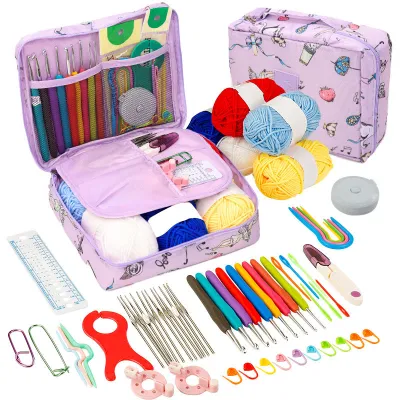
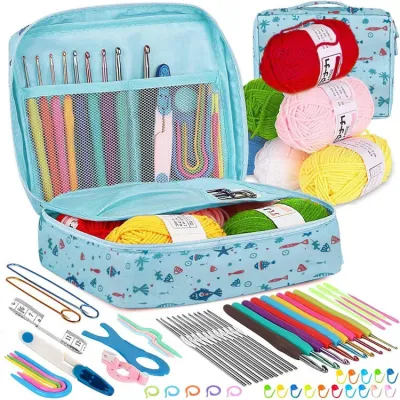
![[✅SG Ready Stock] 70Pcs DIYI Crochet Kit for Beginners Complete Crochet Knitting Kit Adorable Animal Crochet Starter Pack](https://img.lazcdn.com/g/p/a380aa0b11a66090a934a7aba8b99342.png_400x400q80.png_.webp)
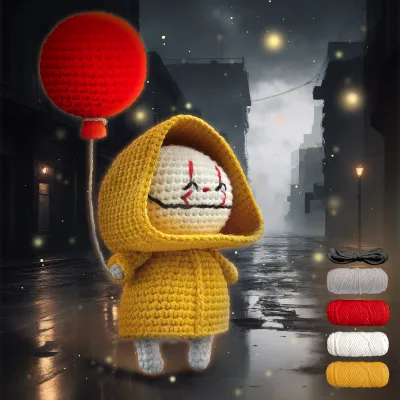
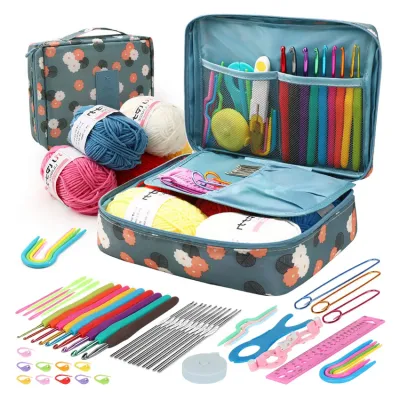
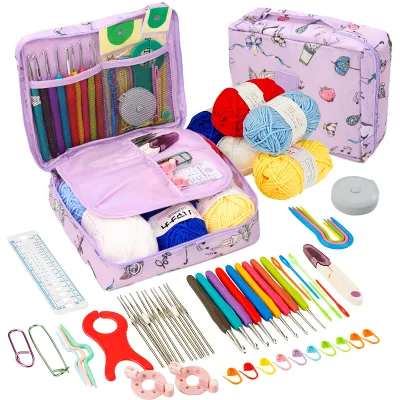
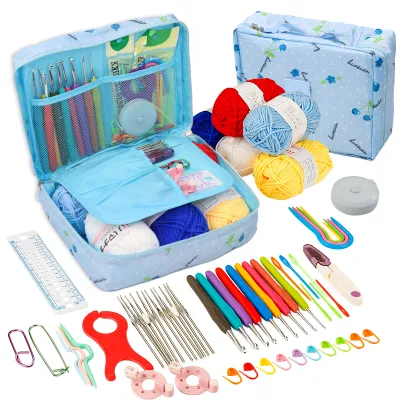
Prices are valid at publication and may change. Please refer to the product page for the latest price.
Crochet Hooks: Grip, Material, and Sizing
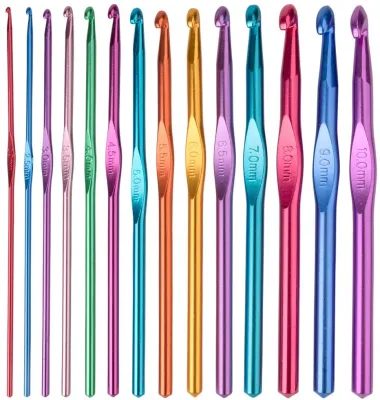
Crochet hooks are manufactured from various materials, including aluminum, plastic, wood, and bamboo. For beginners, smooth aluminum hooks are highly recommended because the yarn glides effortlessly over the metal surface without catching. However, bare metal hooks can feel cold and slippery, which often causes beginners to grip them too tightly. To prevent hand fatigue and cramping, look for hooks featuring ergonomic, soft-grip handles made of rubber or silicone. These handles provide a wider gripping surface, which relaxes your hand muscles and allows for longer, more comfortable crafting sessions.
Sizing is another crucial factor when choosing your first hook. Beginner kits should feature medium-sized hooks, typically ranging from 4.0mm (US G-6) to 5.5mm (US I-9). Smaller hooks (under 3.5mm) require thin yarn and tight tension, which are incredibly difficult for beginners to manage. Conversely, oversized hooks (above 6.0mm) can feel bulky and awkward in untrained hands. A medium hook paired with a matching yarn weight offers the perfect balance, allowing you to clearly see your stitches while maintaining comfortable control over your movements.
Before purchasing a kit, verify that the hook sizes are clearly marked. High-quality hooks feature deeply engraved or molded metric (millimeter) and US letter sizes directly on the shaft or handle. Avoid kits with cheaply printed ink markings, as these quickly rub off from the friction and sweat of your hands, leaving you unable to identify the hook size for future projects.
Yarn Selection: Weight, Fiber, and Visibility
The yarn included in a beginner kit must be easy to handle and highly visible. Yarn thickness, or weight, is standardized globally using a numbering system from 0 (Lace) to 7 (Jumbo). For your first project, look for kits containing Worsted weight (Category 4) or DK weight (Category 3) yarn. These medium-weight yarns are thick enough to hold easily and thin enough to maintain a flexible drape, making them the universal standard for learning basic stitches.
Fiber content significantly affects your crafting experience and the durability of your finished item. Acrylic yarn is highly popular in beginner kits because it is affordable, durable, and has a slight stretch that makes maintaining consistent tension easier. However, in warm and humid climates like Singapore, 100% acrylic can sometimes feel warm and sticky in your hands. Cotton yarn, or a cotton-acrylic blend, is an excellent alternative. Cotton is highly breathable, structured, and offers exceptional stitch definition, though it has very little stretch and can split if not spun tightly. Avoid novelty, fuzzy, or highly textured yarns (such as chenille, boucle, or eyelash yarn) in your first kit, as their textured fibers obscure the stitches and make it nearly impossible to see where to insert your hook.
Color choice is the final element of yarn selection. A quality beginner kit should only include light, solid colors such as cream, pastel yellow, mint green, or sky blue. Dark colors like black, navy, and deep forest green absorb light and hide the shadows that define individual stitches. Similarly, highly variegated or multi-colored yarns create a busy visual pattern that masks your stitches. Solid, light-colored yarns allow you to clearly see the “V” shape at the top of each stitch, making it simple to count your rows and identify mistakes.
Must-Have Accessories to Complete Your Projects
While the hook and yarn do the heavy lifting, several small accessories are absolutely essential for finishing your work and maintaining accuracy. Low-cost kits often cut corners on these items, but having the right accessories prevents your projects from unraveling and ensures clean, professional results.

- Tapestry Needles: Also known as darning needles, these are used to weave the loose yarn tails into your finished fabric so they do not unravel. A good kit should include blunt-tipped, large-eye needles made of metal or sturdy plastic. The blunt tip is crucial because it glides smoothly between the yarn strands rather than splitting the fibers. Metal needles are generally preferred over plastic as they slide through stitches with less resistance and do not bend under pressure.
- Scissors: You will need to cut your yarn frequently. While standard household scissors can work, they are often too dull, which crushes and frays the yarn ends, making them incredibly difficult to thread through a tapestry needle. Look for kits that include small, sharp embroidery scissors or spring-loaded thread snips. These tools provide clean, precise cuts and are compact enough to store easily in your kit.
- Stitch Markers: These small clips are indispensable for keeping track of your progress. In crochet, you must use locking (clip-style or safety-pin style) stitch markers that can open and close. These are hooked directly into a specific stitch—such as the first stitch of a round or row—and locked in place to prevent them from falling out. Avoid solid ring markers, as these are designed to slide along knitting needles and will simply slip off your crochet stitches.
- Measuring Tape: A flexible, retractable measuring tape is essential for checking your gauge and measuring your progress. Crochet tension varies naturally from person to person; measuring your work ensures your finished project matches the dimensions specified in your pattern. A flexible tape conforms easily to curved or folded fabric, providing much more accurate measurements than a rigid ruler.
Nice-to-Have Extras: What Adds Real Value?
Premium beginner kits often include extra tools that are not strictly necessary for your first day of crocheting but can significantly improve your experience as you progress to more complex patterns. Understanding which extras add genuine utility helps you decide if a higher-priced kit is worth the investment.
Manual row counters or digital finger-ring counters are helpful for tracking your progress through long patterns, though they can easily be replaced by a pencil and paper or a free smartphone app. Zippered storage cases or canvas roll-up organizers add excellent value by keeping your hooks, needles, and stitch markers neatly organized and protected from getting lost in couch cushions.
Perhaps the most valuable extra in any kit is the instructional material. A high-quality kit includes clear, professionally printed booklets with large color photographs demonstrating basic stitches, or QR codes that link to slow-paced, high-definition video tutorials. These videos are incredibly helpful for visual learners, especially when they offer separate demonstrations for right-handed and left-handed crafters.
Be cautious of massive “100-piece” kits sold on online marketplaces. These packages often pad their item counts with dozens of cheap, unusable plastic accessories—such as knitting needle point protectors, cable needles, and tiny safety pins—that have no application in crochet. Instead of buying into high piece counts, look for kits that focus on the quality and durability of the essential tools.
How to Evaluate Pre-Made Kits in Craft Stores and Online
When browsing local craft stores in Singapore or searching online marketplaces, you will encounter hundreds of beginner crochet kits. To make an informed purchase, you must look beyond the cover photo and evaluate the technical specifications of the materials included.
First, inspect the yarn label pictured in the product description. A reputable kit will clearly state the yarn’s fiber content, weight category, and total yardage or meterage. Avoid kits that contain unbranded yarn with no specifications, as this yarn is often prone to splitting, shedding, or breaking under tension. Additionally, check the total yardage provided. Some low-cost kits include tiny, 10-gram yarn samples that contain barely enough yardage to complete a single small coaster, leaving you stranded halfway through your project.
Next, evaluate the instructional support. The best beginner kits do not expect you to decode complex written patterns immediately. Instead, they provide a structured learning path, starting with basic techniques like the slip knot, chain stitch, and single crochet, before moving on to a simple project. Look for kits that explicitly mention video support, as watching a professional hand movement in real-time is often the fastest way to master the physical coordination required for crochet.
Finally, perform a quick cost-benefit analysis. A pre-made beginner kit offers immense convenience, providing a curated selection of matching tools and materials in one package, typically ranging from S$25 to S$50. However, if you prefer a customized experience, you can easily assemble your own starter bundle. Purchasing a single high-quality ergonomic hook from a reputable brand (approximately S$8 to S$12) and one skein of premium cotton or acrylic yarn (approximately S$6 to S$10) from a local craft shop, combined with basic household scissors and safety pins as stitch markers, can often provide superior comfort and durability at a similar or lower price point.
Frequently Asked Questions (FAQ)
Is it cheaper to buy a pre-made kit or gather tools individually?
For absolute beginners, a pre-made kit is often more economical because it eliminates the upfront cost of buying full packs of accessories, such as a multi-pack of hooks or a large box of stitch markers. Kits typically cost between S$25 and S$50 and provide exactly what you need for one project. However, if you are committed to pursuing crochet as a long-term hobby, purchasing tools individually can offer better value. Investing in one or two premium ergonomic hooks from established brands and buying high-quality, split-resistant yarn individually ensures maximum physical comfort and durability, saving you money on replacements down the road.
What is the best first project to make with a new crochet kit?
The best first project is a simple, flat, rectangular item with straight edges, such as a dishcloth, coaster, or basic scarf. These projects are ideal because they do not require complex shaping, increasing, or decreasing. Making a flat piece allows you to focus entirely on mastering your hand coordination, maintaining consistent stitch tension, and learning how to count your stitches accurately at the end of each row. Once you can consistently produce straight edges on a flat square, you will have the foundational skills needed to tackle circular projects and three-dimensional shapes.
Can I use a standard beginner crochet kit for amigurumi?
While you can use the basic stitches learned from a standard kit, standard beginner kits are generally not optimized for making amigurumi (stuffed yarn toys). Amigurumi requires a very tight, dense fabric to prevent the polyester stuffing from peeking through the stitches. To achieve this, you must use a much smaller hook size than what is typically recommended for the yarn weight—for example, using a 2.5mm or 3.0mm hook with DK weight yarn. Additionally, standard kits do not include the specialized materials required for toy-making, such as polyester fiberfill stuffing, plastic safety eyes, and embroidery thread for facial details. If your primary goal is to make stuffed toys, look for a dedicated amigurumi starter kit that includes these specific components.

Community discussion
Share your experience or ask a question. Comments are reviewed before publication.