
Selecting the perfect Teacher’s Day greeting card in Singapore requires balancing visual appeal, physical paper quality, and the appropriateness of the message. While a simple thank-you note is always appreciated, a well-crafted card from a reputable stationery brand elevates the gesture, showing genuine thought and respect. To find the best card, you must evaluate how different brands handle paper weights, print finishes, and design themes, ensuring the final product matches both your writing tools and the teacher’s personality.
How to Evaluate Greeting Card Brands for Teacher's Day
When assessing greeting card brands, consistency in print quality is the first major indicator of a reliable manufacturer. High-quality brands use advanced printing presses that deliver sharp, crisp text and vibrant, true-to-life colors that do not look muddy or pixelated. When inspecting cards in person or reviewing high-resolution images online, look closely at the alignment of design elements, especially where metallic foils or embossed patterns meet the printed ink. Any misalignment or smudging suggests poor quality control, which can detract from the professional presentation of your gift.
Another critical factor is the brand’s design range. Some stationery brands offer dedicated Teacher’s Day collections featuring school-themed motifs like blackboards, apples, and books. Other brands focus on general appreciation or blank cards that rely on elegant floral patterns or modern typography. While dedicated collections make your intent immediately clear, a high-quality general thank-you card often provides a more sophisticated aesthetic that appeals to secondary school teachers, junior college tutors, or university professors. Evaluating whether a brand offers this versatility allows you to tailor your choice to the specific educational level.
Products mentioned in this guide
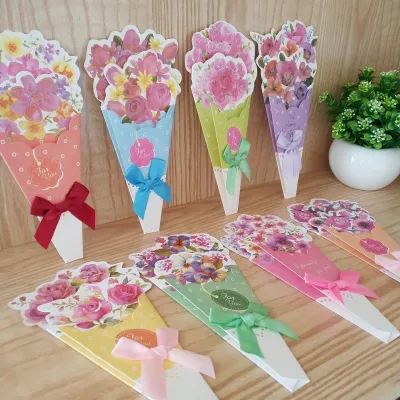
![[SG SELLER] Mini Teachers Day Cards Custom Teachers Day Gift Card Mini Card Customised Thank You Cards Tags](https://img.lazcdn.com/g/p/dd7be998920fe274da8fbcb157d37b58.jpg_400x400q80.jpg_.webp)
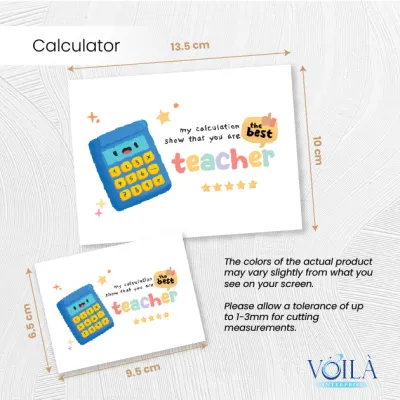
![[MIN 3 CARDS] 🇸🇬SG Punny Teacher Appreciation Card Special Editions for Graduation Greeting Thank You Heartfelt Support Message Card](https://img.lazcdn.com/g/ff/kf/S46b8562713de4564b8cea4c9945a655fF.jpg_400x400q80.jpg_.webp)
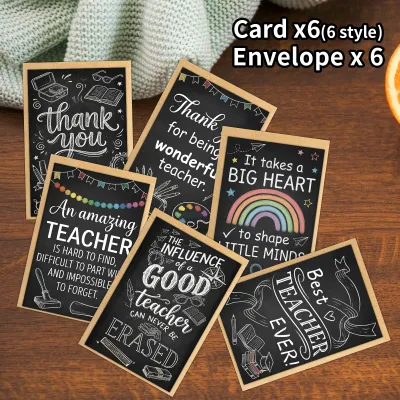
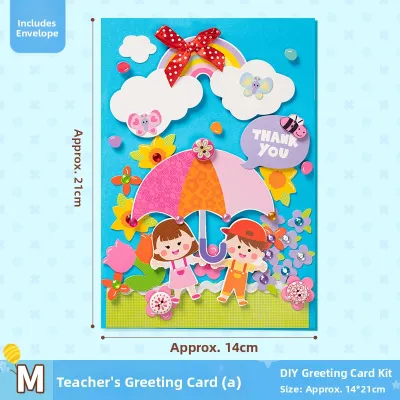
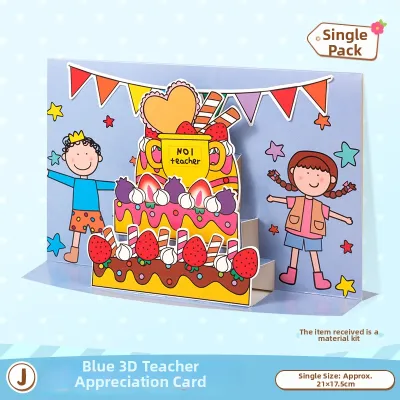
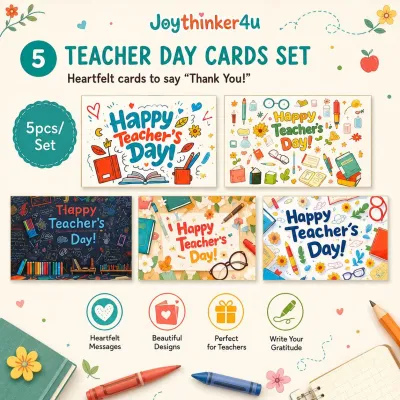
Prices are valid at publication and may change. Please refer to the product page for the latest price.
Finally, consider the tone and humor of the card’s design. Some brands specialize in lighthearted, pun-based humor, which can be incredibly charming and appropriate for a primary school teacher with whom the student has a playful, warm relationship. However, for a more formal mentor or a head of department, a brand that emphasizes respectful, minimalist, or classic designs is a safer and more appropriate choice. Assessing the brand’s editorial voice ensures that the card’s visual and written elements align perfectly with the boundaries of the student-teacher relationship.
Matching Card Designs and Themes to Your Teacher
Matching the card’s visual theme to the teacher’s personality or subject area adds a deeply personalized touch that shows you view them as an individual. Classic and elegant designs are universally well-received and are particularly suited for formal appreciation. These cards often feature delicate botanical illustrations, watercolor florals, or clean, minimalist typography on textured cream or off-white cardstock. They convey a sense of timeless respect and are ideal for senior educators, music teachers, or mentors who appreciate a traditional aesthetic.

For a more tailored approach, look for brands that offer subject-specific motifs. A card featuring vintage compasses, geometric shapes, or scientific equipment is perfect for a mathematics or science teacher. Similarly, a card adorned with classic literary quotes, typewriter keys, or elegant calligraphy will resonate deeply with an English literature or language teacher. These subtle nods to their academic discipline demonstrate that you appreciate their specific passion and dedication to their subject, making the card feel far more thoughtful than a generic, mass-produced alternative.
If the card is from a younger student, such as a preschooler or primary school pupil, handmade or illustrated craft-style aesthetics are highly effective. Brands that produce cards with whimsical, hand-drawn doodles, bright watercolor washes, or interactive elements like pop-ups or slide-out tabs capture the joyful energy of childhood. These designs pair beautifully with a child’s handwriting and can easily be integrated into a DIY gift presentation, such as attaching the card to a small potted plant or a hand-decorated jar of treats, creating a warm and memorable keepsake.
Checking Paper Quality, Sizes, and Physical Finishes
The physical feel of a greeting card is just as important as its visual design, as it immediately communicates the quality of the gesture. When evaluating cards, pay close attention to the paper weight, which is measured in grams per square meter (gsm). A premium greeting card should have a weight of at least 250 gsm, though 300 gsm to 350 gsm is ideal. Cards within this weight range feel substantial, resist bending when handled, and can stand upright on a teacher’s desk or shelf without sagging over time.
The texture and coating of the paper also dictate how well it interacts with your writing instruments. Matte, uncoated, or lightly textured papers (such as felt-finish or linen-textured cardstock) are highly desirable for handwritten messages. These surfaces absorb ink quickly, allowing you to write smoothly without worrying about smudging. Conversely, glossy or heavily coated UV surfaces, while vibrant in color, do not absorb liquid inks well. If you choose a card with a glossy interior, you must use a ballpoint pen or a permanent fine-liner, as standard gel pens or fountain pens will smear easily on the non-porous surface.
Size and envelope compatibility are practical details that should not be overlooked. Standard card sizes, such as A6 (105mm x 148mm) or A5 (148mm x 210mm), are highly practical because they fit standard C6 and C5 envelopes perfectly. If you opt for a non-standard size, such as a square card or an oversized tri-fold design, verify that the matching envelope is included in the purchase. Non-standard envelopes can be difficult to source individually and may require additional postage if you plan to mail the card rather than hand-delivering it at school.
Special finishes like foil stamping, embossing, or die-cutting add a tactile dimension that elevates a card from ordinary to extraordinary. When inspecting these finishes, check the execution carefully. Foil stamping should be crisp and completely opaque, with no flaking or bare patches. Embossing should create a distinct, raised texture on the front of the card without cracking or tearing the paper fibers on the reverse side. High-quality brands execute these techniques with precision, ensuring the card looks polished and luxurious from every angle.
Purchasing Channels and Pre-Checkout Verifications
In Singapore, you can source Teacher’s Day cards through various channels, each offering distinct advantages. Physical stationery boutiques and specialty bookstores in major shopping malls allow you to inspect the paper weight, texture, and color accuracy firsthand. This is the safest option if you are highly particular about the tactile quality of the card. However, if you are looking for unique, independent illustrator designs or need to purchase in bulk, brand official websites and online marketplaces offer a much wider selection.
When purchasing cards online, performing a few pre-checkout verifications will prevent disappointment. Always read the product description carefully to confirm that the envelope is included with the card, as some minimalist or budget listings sell cards and envelopes separately. Additionally, check the seller’s packaging specifications. Reliable stationery brands ship their cards in rigid, bend-resistant cardboard mailers or protective plastic sleeves to ensure they arrive in pristine condition without bent corners or water damage from transit.
If you are organizing a class-wide gift or buying cards for multiple teachers across different departments, look for bulk purchase options or multi-pack assortments. Many brands offer curated sets of five, ten, or twenty cards at a discounted rate, often bringing the cost per card down to under S$3 to S$5 each. When ordering online, pay close attention to shipping timelines. Because Teacher’s Day in Singapore is celebrated on the first Friday of September, you should aim to place your order at least two to three weeks in advance to allow ample buffer time for packing, shipping, and any unexpected delivery delays.
Writing a Meaningful Message and Choosing the Right Pen
A beautiful card is only the vessel; the message inside is what truly resonates with a teacher. To write a meaningful note, follow a simple, respectful structure. Begin with a formal salutation, using the teacher’s proper title and surname. In the body of the message, move beyond generic phrases like “Thank you for teaching me” and instead highlight a specific memory, a helpful explanation they gave, or a time they supported you through a challenge. Conclude with a sincere expression of gratitude and a respectful closing, such as “With warmest regards” or “Sincerely,” followed by your name and class.
The tone and length of the message should be adapted based on who is giving the card. If the card is from a parent of a younger child, the message should focus on partnership, acknowledging the teacher’s patience and the positive changes observed in the child’s development. For a group card signed by the entire class, choose a larger card format (such as A5 or a folding gatefold design) to ensure there is sufficient blank space for everyone to sign their names and write brief individual notes without crowding the layout.
To ensure your message looks neat and professional, match your pen type to the card’s paper finish. For standard matte or uncoated cardstock, a high-quality gel pen (0.5mm or 0.7mm) or a water-based fine-liner provides a smooth writing experience with rich, dark lines. If you are writing on textured paper, a ballpoint pen is often the safest choice as it does not bleed into the paper fibers. Always perform a quick ink test on a small, hidden area of the card—such as the inside back cover or the inner fold—to check the drying speed and ensure the ink does not bleed through to the front of the card.
Frequently Asked Questions (FAQ)
Is it better to buy a pre-printed message card or a blank one?
Choosing between a pre-printed message and a blank card depends on the student’s age and writing confidence. Blank cards offer the highest level of personalization, making them the preferred choice for older students who want to express detailed, heartfelt gratitude in their own words. A fully handwritten letter carries immense sentimental value and is often kept by teachers for years.
On the other hand, pre-printed cards are highly convenient and practical for younger children, such as preschool or lower primary students, who may still be developing their handwriting. A card with a beautifully printed sentiment allows the child to simply sign their name or add a short, simple drawing, reducing the pressure of writing a long message while still delivering a warm, respectful greeting.
How far in advance should I order custom or specialty cards?
When ordering custom, personalized, or specialty imported cards, timing is crucial to ensure they arrive before the school celebrations. For local Singapore-based stationery designers or custom print shops, you should place your order at least 7 to 10 working days in advance. This provides the creator with enough time to process the order, print the design, and ship it to your address.
If you are ordering from international online sellers or independent artists based overseas, you should extend this timeline to 3 to 4 weeks. International shipping can be unpredictable, and packages may experience delays during customs clearance. Ordering well in advance ensures you have a comfortable buffer to inspect the cards, perform ink tests, and write your messages without rushing before Teacher’s Day.

Community discussion
Share your experience or ask a question. Comments are reviewed before publication.