
As students progress from lower primary to secondary school, their academic workloads, organisational needs, and school regulations evolve. While Sumikko Gurashi stationery offers appealing character designs, selecting the right items requires balancing aesthetic preferences with practical functionality and institutional rules. This guide breaks down the essential criteria for choosing age-appropriate, compliant, and highly functional Sumikko Gurashi supplies for every stage of a student’s educational journey in Singapore.
Lower Primary (Primary 1 to 3): Prioritising Simplicity and Safety
For students entering the early years of primary school, stationery serves as a foundational tool for developing fine motor skills and establishing classroom routines. At this stage, parents should focus on selecting Sumikko Gurashi items that emphasise basic functionality, safety, and ease of use, rather than complex features that might distract young learners.
One of the most critical steps is verifying school restrictions on stationery size and excessive decorations. Many primary schools discourage oversized, plush, or toy-like pencil cases. A large, plush pencil case shaped like a character can easily double as a toy, leading to distractions during lessons. Instead, opt for flat, single-compartment zippered pouches featuring printed Sumikko Gurashi designs. These simple storage solutions keep writing tools secure while encouraging young children to pack and unpack their bags independently.
Products mentioned in this guide
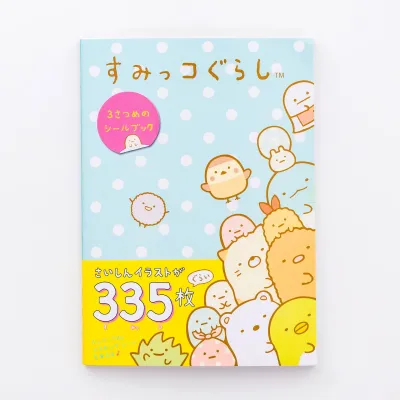
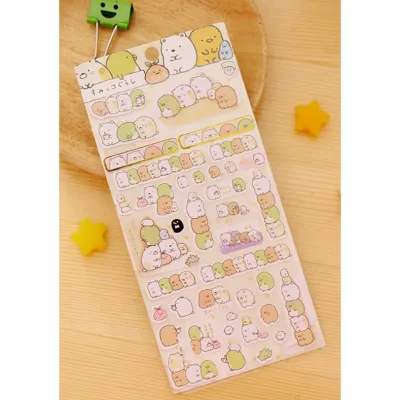
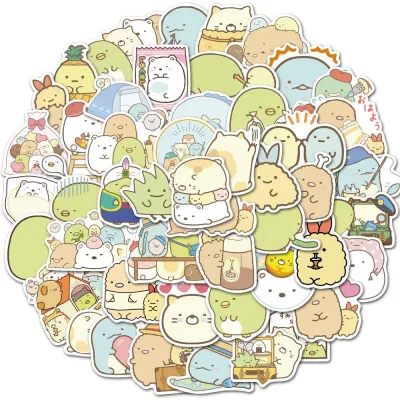
Prices are valid at publication and may change. Please refer to the product page for the latest price.
Foundational writing tools for lower primary should support early handwriting development. Look for thick-barrel triangular pencils or pencil grips featuring the characters, which help young fingers maintain a proper grip. Erasers should be easy to hold and highly effective; standard rectangular erasers with a Sumikko Gurashi paper sleeve are often more practical than complex, die-cut character shapes that can easily break or crumble under heavy pressure.
Safety is paramount for this age group. Always check product labels for small parts safety warnings, material suitability, and manufacturer age recommendations. Ensure that items like scissors or rulers do not have sharp edges and are made from non-toxic, durable plastics. By prioritising simple, safe, and low-distraction designs, parents can help their children stay focused on learning while still enjoying their favourite characters.
Upper Primary (Primary 4 to 6): Balancing Character Appeal with Functionality
As students transition into upper primary, their academic demands increase significantly. They begin handling more subjects, sitting for school-based examinations, and using a wider variety of specialised tools. Selecting Sumikko Gurashi stationery for this stage requires balancing character appeal with enhanced storage capacity and structural durability.

With the introduction of subjects like geometry and more complex science practicals, students must carry additional equipment, including compasses, protractors, highlighters, and correction tape. A simple flat pouch may no longer suffice. Evaluate multi-compartment pencil cases or double-zippered pouches that offer dedicated slots for different tools. Look for durable materials like canvas or reinforced polyester that can withstand the weight of metal geometry sets without tearing.
It is also essential to cross-reference specific school policies regarding permitted classroom tools. While some schools allow mechanical pencils in upper primary, others strictly require traditional wooden pencils for daily work and examinations. Highlighters and correction tape are highly useful for note-taking and editing drafts, but parents should verify whether the school permits correction tape or requires students to cross out mistakes neatly with a pen.
Notebook selection also becomes more specialised. Assess binding types and paper compatibility based on subject requirements. For mathematics and science, grid notebooks featuring subtle Sumikko Gurashi borders help students align numbers and draw diagrams accurately. For English and mother tongue compositions, wide-ruled or single-lined notebooks are preferred. Ensure the paper weight is sufficient to prevent ink from bleeding through to the other side, especially when students use gel pens or vibrant highlighters.
Secondary School: Subtle Designs and Advanced Organisation
Entering secondary school marks a significant shift in a student’s academic life and social environment. The volume of notes increases, subjects become highly specialised, and the classroom environment calls for a more mature aesthetic. Secondary students who still love Sumikko Gurashi can find plenty of suitable options by focusing on understated designs and advanced organisational features.
To align with a mature secondary school environment, look for items featuring muted colour palettes, minimalist collaborations, or subtle pattern variations. Many stationery brands offer special editions with minimalist line art, pastel tones, or small, embossed character logos in the corner of notebooks and folders. These designs allow students to express their personal style without their stationery looking overly childish or out of place during serious study sessions.
Advanced organisation is key to managing multiple subjects, from geography and history to advanced mathematics and sciences. Evaluate tools like loose-leaf binders, index tabs, and modular storage systems. Sumikko Gurashi multi-subject folders with individual dividers are excellent for keeping worksheets organised. Clear plastic sleeves and L-shape folders featuring subtle character prints help protect important notes and revision guides while keeping them easily accessible.
Finally, pay close attention to writing performance. Secondary school assignments and examinations require fast, continuous writing. Verify the compatibility of specific pen nibs, ink types, and refill mechanisms. Because ink smoothness, drying speed, and bleed resistance depend on the specific combination of the pen’s ink formula and the school’s paper quality, students should perform a quick trial on a sample page. Verify that the ink dries quickly to prevent smudging, especially during rapid essay writing. Opt for pens that accept standard, widely available refills to ensure the pen casing can be used long-term.
Essential School Rule Checks and Cross-Grade Compatibility
Regardless of the student’s grade level, certain universal criteria should guide every stationery purchase to ensure compliance with school regulations and long-term value.
First, review general school rules regarding distracting features. Many schools explicitly ban stationery with noisy click mechanisms, light-up elements, or oversized character plush attachments that can disrupt the classroom. Choosing quiet, functional designs ensures that the student’s stationery remains a tool for learning rather than a source of distraction for themselves or their classmates.
Second, assess the local availability and ongoing cost of consumables. A beautiful Sumikko Gurashi mechanical pencil or multi-pen is only useful as long as it has lead or ink. Before purchasing, verify that standard lead refills, ink cartridges, and correction tape replacements are readily available at local stationery shops or online marketplaces. Choosing items that are compatible with standard, non-proprietary refills ensures that the stationery remains functional throughout the school year without incurring high replacement costs.
Lastly, confirm that all selected items meet the manufacturer’s recommended age guidelines and bear appropriate safety certifications. This is particularly important for items that come into prolonged daily contact with the skin, such as pencil grips, erasers, and pen barrels. Ensuring that materials are non-toxic and certified for student use provides peace of mind for parents and a safe writing experience for students.
Frequently Asked Questions (FAQ)
How do I check if character-themed stationery is allowed in national exams?
To verify if character-themed stationery is permitted in national examinations, always consult the official guidelines issued by the relevant examination board, such as the Singapore Examinations and Assessment Board. Generally, exam regulations require all writing instruments and stationery to be kept in a completely transparent pencil case or plastic bag. While simple character-themed pens or pencils may be allowed, any items with excessive decorations, hidden compartments, or printed formulas and educational content are strictly prohibited. To avoid any risk of confiscation or distraction at the exam hall, it is highly recommended to keep a set of plain, unbranded backup pens, pencils, and erasers that strictly meet standard exam specifications.
How can I maintain Sumikko Gurashi erasers and prevent breakage?
Character-shaped erasers require careful handling to prevent damage. Before use, check the material flexibility indicated on the packaging; stiffer novelty erasers are more prone to snapping under pressure. Advise students to avoid excessive bending, twisting, or applying heavy pressure during use. To prevent chemical degradation, store these erasers in a dedicated, clean compartment of the pencil case. Prolonged direct contact with plastic rulers, plastic pen barrels, or vinyl pencil cases can cause a chemical reaction that makes the eraser sticky or causes it to melt and bond with adjacent items. Keeping the eraser in its original paper sleeve or a separate compartment helps maintain its structural integrity.

Community discussion
Share your experience or ask a question. Comments are reviewed before publication.