
Selecting the right shipping container or carton is the difference between a seamless delivery and a damaged, costly return. To pack efficiently, you must match the density of your items to the volume of your box. Dense, heavy items require small, reinforced boxes, while bulky, lightweight goods are best suited for large, spacious cartons. This guide outlines how to decode standard packaging measurements, select the correct box size for your cargo, and protect your items from transit damage.
Decoding Shipping Carton and Shipping Container Specifications
When purchasing packaging materials, dimensions are universally listed as Length x Width x Height (L x W x H). It is vital to understand that these measurements almost always refer to the internal dimensions of the box. Internal dimensions tell you exactly how much physical space you have to pack your items, excluding the thickness of the corrugated walls.
In contrast, courier services and postal networks calculate shipping costs based on external dimensions. External dimensions include the thickness of the cardboard and any bulging caused by overpacking. Couriers use these outer measurements to determine volumetric weight, which can lead to unexpected surcharges if your box exceeds standard parcel limits.
Products mentioned in this guide
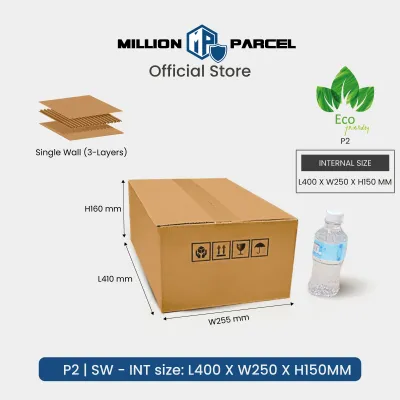
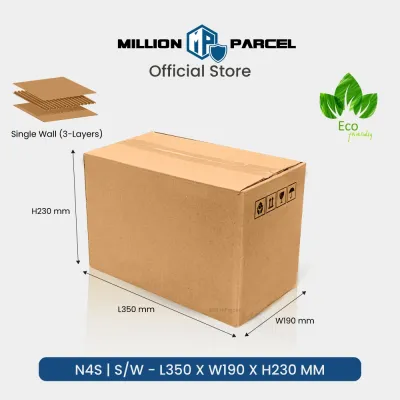

Prices are valid at publication and may change. Please refer to the product page for the latest price.
Terminology can occasionally cause confusion in logistics. In retail, moving, and parcel delivery contexts, the term “shipping container” frequently refers to large, heavy-duty corrugated cartons or double-walled cardboard boxes, rather than the massive steel ocean freight containers used on cargo ships. When sourcing packaging online or from local stationery suppliers, looking for a heavy-duty shipping container typically points you toward these reinforced paperboard options.
Before packing any box, locate the Box Maker’s Certificate (BMC). This is a round stamp usually printed on the bottom flaps of the carton. The BMC provides verified, manufacturer-stated specifications, including the maximum weight capacity, burst strength, and edge crush test (ECT) rating. Checking this stamp ensures you do not exceed the structural limits of the cardboard.
Small Cartons: Dimensions and Best Uses for Dense Items
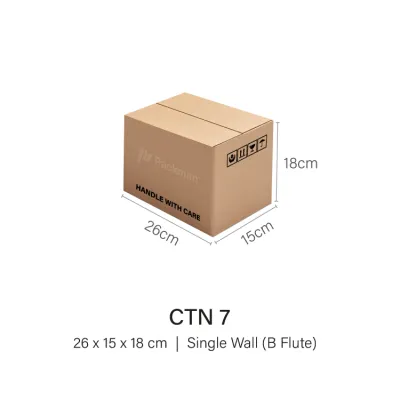
Small shipping cartons typically range from compact mailer boxes to rectangular cartons measuring roughly 30 x 20 x 20 centimetres. These compact sizes are highly valued in logistics for their structural stability and ease of handling. They are designed specifically to carry items that pack a significant amount of weight into a small volume.

Dense items such as books, hardware tools, metal stationery components, and canned goods must always be packed in small boxes. Distributing heavy items across a larger box makes the package incredibly difficult to lift safely and increases the risk of the box bottom blowing out during transit. Keeping the overall weight concentrated in a smaller footprint ensures the package remains manageable for delivery personnel and complies with standard safety lifting limits.
When packing dense items, minimizing void space is critical. If heavy objects are allowed to slide around inside a small box, they act like a battering ram, easily tearing through the corrugated walls when the package is shifted or dropped. Fill any remaining gaps tightly with dense packing materials, such as crumpled kraft paper or heavy-duty bubble wrap, to lock the contents securely in place.
Medium Boxes: Sizing for Kitchenware and Fragile Goods
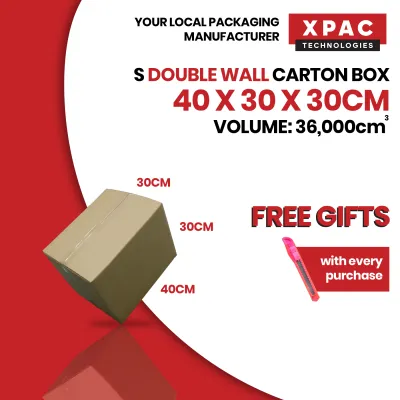
Medium-sized boxes, often measuring around 40 x 30 x 30 centimetres or 50 x 40 x 40 centimetres, serve as the workhorses of the shipping and moving industries. This versatile size is ideal for household items, office electronics, footwear, and mixed stationery supplies that require a balance of volume and weight distribution.
When using a medium box for fragile items like glassware, ceramics, or small electronics, internal organization is key. Simply wrapping items is rarely enough; you should utilize cardboard dividers, molded pulp trays, or thick layers of bubble wrap to prevent items from knocking against one another. Ensure there is a protective buffer of at least five centimetres of cushioning material between the items and the inner walls of the box.
Cardboard is highly susceptible to environmental conditions, particularly in warm, humid climates like Singapore’s. High humidity can soften the corrugated flutes inside the cardboard, significantly reducing its stacking strength and corner rigidity. Always inspect medium boxes for pre-existing creases, soft corners, or signs of moisture absorption before packing fragile goods, as a weakened box can easily collapse under the weight of other packages.
Large Shipping Containers: Packing Bulky and Lightweight Items
Large corrugated cartons—often labeled as large shipping containers by packaging suppliers—typically measure 60 x 50 x 50 centimetres or larger. These high-volume boxes are designed to accommodate items that take up a lot of space but do not weigh very much.
The primary rule for large boxes is to reserve them strictly for lightweight, bulky goods. Ideal candidates include clothing, bedding, pillows, winter coats, linens, and soft plush toys. Packing heavy items like books or kitchenware into a large box is a major mistake that leads to handling injuries, courier rejections due to weight limits, and catastrophic structural failure of the cardboard.
To make the most of the generous volume in a large shipping container, consider utilizing compression techniques. Rolling garments tightly instead of folding them flat can save a significant amount of space. For exceptionally bulky items like pillows or duvets, sealing them in vacuum storage bags before placing them in the carton allows you to pack more efficiently without exceeding the physical weight capacity of the box.
Matching Corrugated Strength to Your Cargo
Cardboard boxes are generally categorized by their wall construction, with single-wall and double-wall being the most common options. Single-wall corrugated board consists of one wavy fluted layer glued between two flat linerboards, offering lightweight and cost-effective protection for standard shipments. Double-wall board adds a second layer of fluting and an extra liner, providing vastly superior crush resistance and stacking strength.
Rather than guessing the strength of a box based on a visual check of its thickness, always rely on the manufacturer’s printed specifications or product labels. These specifications will explicitly state the maximum load limit, often represented as an Edge Crush Test (ECT) value or a maximum gross weight limit.
You should upgrade to heavy-duty double-wall cartons when planning long-distance shipments, preparing items for long-term stacking in storage, or packing moderately heavy mixed items. The added structural integrity prevents the lower boxes in a stack from buckling under pressure, keeping your cargo safe throughout its journey.
In humid or wet tropical conditions, perform a quick water-resistance check on the exterior paperboard; if water droplets soak in immediately rather than pooling, consider wrapping the carton in stretch film or using waterproof labels to prevent moisture from weakening the adhesive and the cardboard structure.
Frequently Asked Questions (FAQ)
How do I measure a shipping carton correctly for courier limits?
Courier services calculate shipping rates using dimensional (or volumetric) weight, which is based on the external dimensions of the fully sealed package. To measure your carton accurately, close and tape the box completely, then use a measuring tape to find the maximum length, width, and height at their widest points, including any bulging sides. Multiplying these external dimensions gives you the total volume used to determine courier pricing and avoid unexpected surcharges.
Can I reuse old shipping containers and cartons for fragile items?
Reusing boxes is an excellent eco-friendly practice for non-fragile items like clothing or plastic goods, but it is highly risky for fragile cargo. Every time a corrugated box is handled, stacked, or exposed to humidity, its structural integrity degrades. Avoid reusing any carton that shows visible creases along the flutes, crushed corners, water stains, or soft spots, as these defects indicate the box can no longer absorb impacts or support stacking loads safely.

Community discussion
Share your experience or ask a question. Comments are reviewed before publication.