
Selecting the right boxes for packing is the single most critical decision in ensuring a smooth, damage-free relocation or storage project. When preparing to move, many people make the mistake of sourcing random cartons, only to find their belongings damaged, boxes collapsed, or loads too heavy to lift. The secret to successful packing lies in matching the physical density of your items to the structural capacity and dimensions of the container. By understanding standard box sizes and their specific weight limits, you can protect your valuables, prevent physical strain, and maximize space inside moving vehicles or storage units.
Why Box Dimensions and Weight Limits Dictate Your Packing Strategy
A fundamental rule governs efficient packing: there is an inverse relationship between an item’s density and the size of the box it requires. Dense, heavy objects must always go into smaller containers, whereas light, bulky items should be reserved for larger boxes. Violating this principle creates severe logistical problems. If you pack a large carton full of heavy items like books or tools, the box will likely suffer a bottom blowout or handle tear, potentially damaging your belongings and causing personal injury.
To prevent these failures, you must look beyond external dimensions and evaluate the structural specifications of the corrugated cardboard. Manufacturers print weight limits and material details directly on the box flaps, often indicating whether the construction is single-wall or double-wall. Single-wall cardboard is ideal for standard, light-to-medium loads, while double-wall construction offers the extra rigidity needed for heavy or fragile items. Because exact millimeter measurements vary slightly among local manufacturers and suppliers, focusing on standardized volume categories—such as liters or cubic feet—and rated weight capacities is the most reliable way to plan your purchase.
Products mentioned in this guide
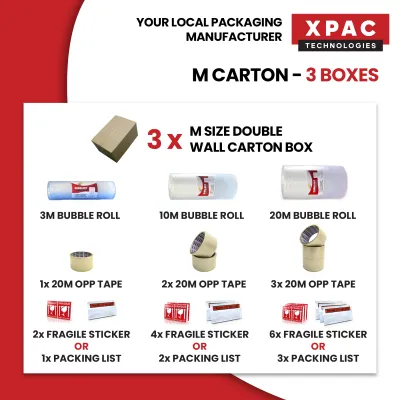
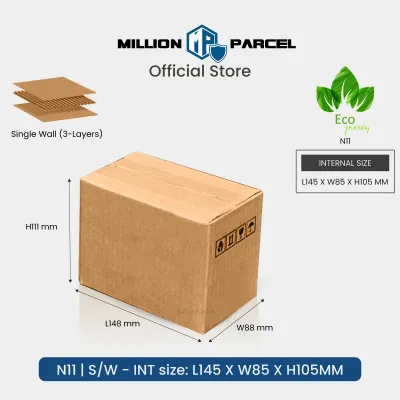
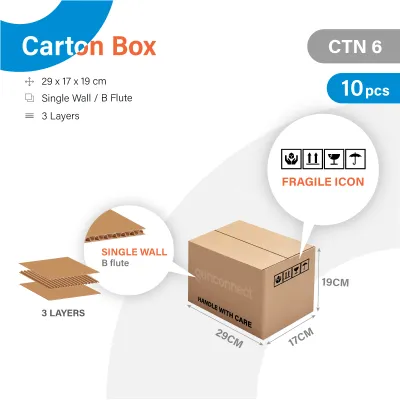
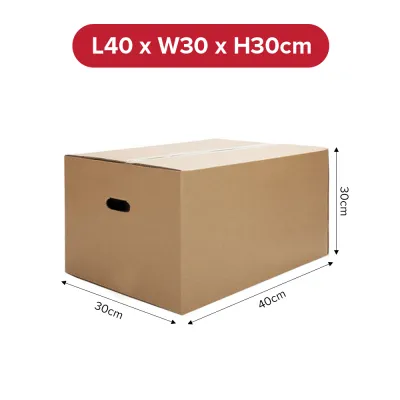
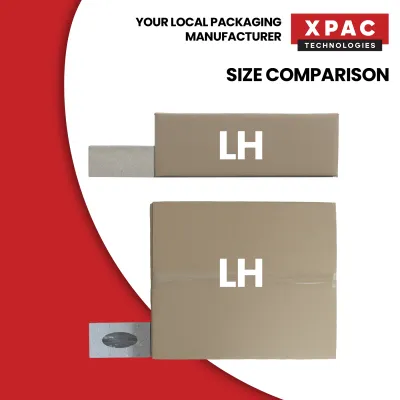
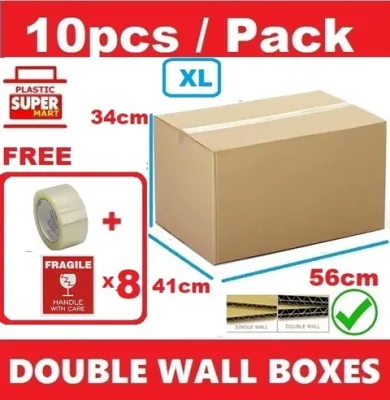
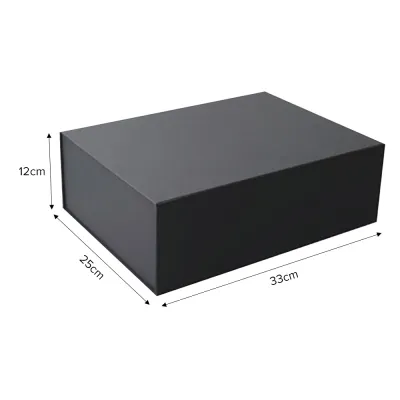
Prices are valid at publication and may change. Please refer to the product page for the latest price.
Small Packing Boxes: Standard Dimensions and Heavy Items
Small packing boxes typically range in volume from 1.5 to 2.0 cubic feet, which translates to dimensions of approximately 16 x 12 x 12 inches (or roughly 40 x 30 x 30 centimeters). Do not let their modest size fool you; these compact containers are the workhorses of any move. They are specifically engineered to carry the heaviest and densest items in your home.

These boxes are the ideal choice for packing books, heavy office files, canned food items, hand tools, small electronics, and dense kitchenware like cast-iron skillets. Placing these objects in a small container keeps the overall weight manageable. A small box packed with books will typically weigh between 15 and 20 kilograms, which is an ergonomic sweet spot that a single person can lift and carry safely without risking back strain.
When preparing small boxes for heavy items, proper reinforcement is essential. Because these containers bear the highest weight-to-surface-area ratio, you should always reinforce the bottom center seams and edges with high-quality packing tape. Applying tape in an “H” pattern across the bottom flaps ensures the box maintains its structural integrity under heavy downward pressure.
Medium Packing Boxes: Standard Dimensions and Versatile Loads
Medium packing boxes are the most versatile containers you will use, typically offering a capacity of 3.0 to 4.0 cubic feet. Their standard dimensions hover around 18 x 18 x 16 inches (approximately 45 x 45 x 40 centimeters). This balanced size makes them suitable for a wide variety of household goods that are neither exceptionally heavy nor excessively bulky.
You should reserve medium boxes for items such as folded clothing, shoes, toys, small kitchen appliances, pots, pans, and bathroom linens. These objects fill out the volume of the box nicely without creating an excessively heavy load. However, maintaining a careful balance between volume and weight remains crucial. You must resist the temptation to fill a medium box entirely with heavy items like textbooks or ceramic plates, as doing so can easily exceed the box’s structural limits and make it too heavy to carry.
An excellent strategy for packing medium boxes is to combine items of varying weights. Place heavier items, such as a small appliance or a heavy pot, at the bottom of the box first. Then, use lighter materials like towels, t-shirts, or bubble wrap as void fill to pack around the heavy items. This technique prevents shifting during transit, protects fragile surfaces, and optimizes the available space without overloading the carton.
Large and Extra-Large Boxes: Dimensions for Bulky, Lightweight Items
Large and extra-large packing boxes are designed to handle high-volume, lightweight items. These boxes typically range from 4.5 to over 6.0 cubic feet, with dimensions starting around 24 x 18 x 18 inches (approximately 60 x 45 x 45 centimeters) and extending even larger for specialty needs.
These spacious containers are perfect for bulky household goods that take up a lot of physical space but weigh very little. Ideal contents include bed sheets, pillows, duvets, comforters, large stuffed animals, lightweight plastic toys, and bulky winter coats. By packing these items in large boxes, you can consolidate massive volumes of soft goods quickly, keeping your moving process organized.
You must strictly avoid packing heavy items in large or extra-large boxes. The wide bottom span of a large carton is highly susceptible to sagging and catastrophic structural failure when subjected to heavy loads. Furthermore, carrying an oversized, heavy box is highly awkward and dangerous. Even if the box holds together, navigating narrow doorways, tight corridors, or standard passenger elevators—such as those found in Singapore HDB estates and condominiums—becomes incredibly difficult with oversized containers, requiring careful route planning before you begin moving day.
Specialty Cartons: Dimensions for Fragile and Odd-Shaped Items
Standard rectangular boxes cannot safely accommodate every household item. To solve unique packing challenges, manufacturers produce specialized cartons designed for specific categories of goods.
- Wardrobe Boxes: These tall, upright boxes feature a built-in metal hanging bar at the top, allowing you to transfer clothing directly from your closet on their hangers. While wardrobe boxes have a large footprint and can be bulky to transport, they save hours of folding and unpacking time while keeping delicate garments wrinkle-free.
- Dish Pack and Glassware Boxes: Engineered with double-walled cardboard for maximum puncture resistance, these boxes are typically smaller and highly reinforced. They are often sold with customizable cardboard cell dividers to isolate and cushion fragile plates, bowls, and delicate stemware.
- Picture and Mirror Boxes: These flat, thin cartons often feature a telescoping design, allowing two pieces to slide together to fit the exact length of large, flat items. They provide essential rigid protection for framed artwork, mirrors, and flat-screen televisions.
When planning your move, verify the availability of these specialty sizes with your chosen packaging supplier early, as local retailers do not always stock them in standard bulk bundles.
A Practical Framework for Selecting the Right Boxes for Packing
To ensure a seamless packing experience, you should approach the process with a structured, step-by-step framework tailored to your specific inventory and living environment.
- Inventory Assessment: Before purchasing any boxes, walk through your home and categorize your belongings by density. A common mistake is buying equal quantities of all sizes. For a typical household, you will need significantly more small and medium boxes than large ones. Count your books, kitchenware, and media files to estimate your small box requirements, then look at your closets and linens to determine your large box needs.
- Material Verification: Always check the manufacturer's stamp on the box flaps. Look for the Edge Crush Test (ECT) rating or burst strength certification. For standard household items, an ECT rating of 32 is generally sufficient, but for heavier items or stacking purposes, look for heavy-duty boxes with an ECT of 44 or higher.
- Environmental Constraints: Measure your physical pathways before purchasing extra-large boxes. In Singapore, navigating narrow corridors, tight stairwells, or standard lifts in HDB flats and private condominiums can restrict your ability to maneuver oversized boxes. Choosing medium boxes over extra-large ones often makes navigating these tight spaces much easier.
- Tape and Closure: To maximize the structural integrity of any box, utilize the "H-tape" method. Seal the center seam of the bottom flaps, and then apply tape along the side edges to form an "H" shape. This technique distributes weight evenly across the seams and prevents the flaps from pulling apart under pressure.
Frequently Asked Questions (FAQ)
Can I use large boxes for books if I don't fill them completely?
You should strongly avoid doing this. Even a partial load of books concentrates immense weight onto a large, unsupported bottom span. This concentration of force significantly increases the risk of the box sagging or breaking during transit. Instead, always pack books in small boxes, and reserve the empty space in your large boxes exclusively for lightweight, bulky items like pillows or blankets.
What is the difference between single-wall and double-wall packing boxes?
Single-wall boxes consist of a single layer of corrugated fluting sandwiched between two flat linerboards, making them lightweight and ideal for standard household items. Double-wall boxes feature two layers of fluting and three linerboards, providing significantly greater puncture resistance and stacking strength. You should use double-wall boxes for heavy, fragile, or high-value items such as electronics, books, and delicate dishware.
How do I measure a packing box correctly?
In the packaging industry, box dimensions are always expressed in the format of Length x Width x Height (L x W x H). Crucially, these measurements are taken from the inside of the box rather than the outside. Measuring the interior dimensions ensures you get an accurate representation of the actual usable packing space available for your items.
Community discussion
Share your experience or ask a question. Comments are reviewed before publication.