
Selecting the correct parcel delivery box is a balancing act between protecting your items and managing shipping costs. Standard box sizes range from compact mailers for documents and accessories to large, heavy-duty cartons designed for household appliances. Choosing the wrong size can lead to damaged goods from insufficient cushioning or unexpected courier surcharges due to excessive package volume.
In Singapore, where e-commerce and international shipping are highly active, local couriers and postal services enforce strict dimensional limits. Understanding how to navigate standard box dimensions, material strengths, and carrier pricing structures ensures your shipments arrive safely without inflating your logistics budget.
Decoding Standard Parcel Box Dimensions and Labels
When purchasing a parcel delivery box, the dimensions printed on the packaging or listed online almost always refer to the internal measurements. Manufacturers use internal dimensions (Length x Width x Height) because they dictate the actual volume of goods the box can hold. However, the external dimensions are what couriers use to calculate shipping space and fees. A heavy-duty, double-walled box can have external dimensions that are 10mm to 15mm larger than its internal space, which is a critical difference when packing tight fits.
Products mentioned in this guide
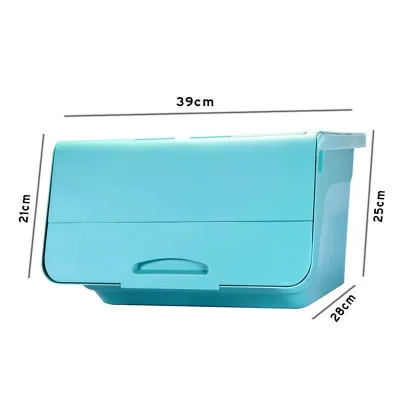
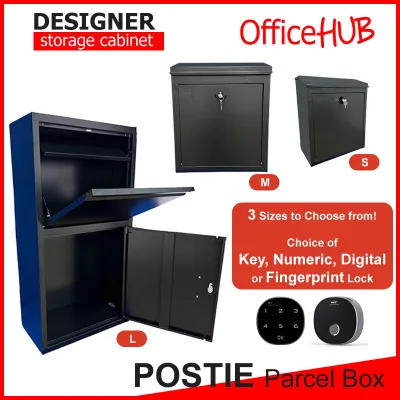
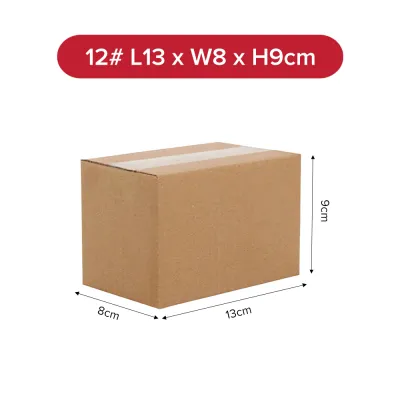
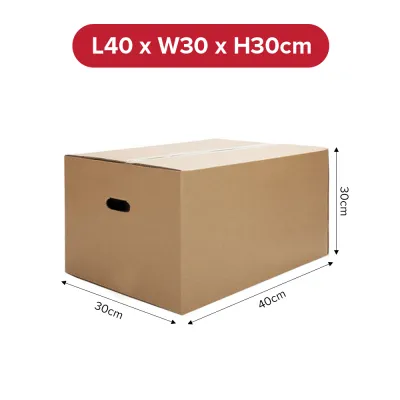
![[SG Stock] Carton Box Packing Box Cardboard Box Moving Storage Delivery Parcel 3 Sizes](https://img.lazcdn.com/g/p/8807c3229ee0f8bf93816e62ddb14f05.jpg_400x400q80.jpg_.webp)
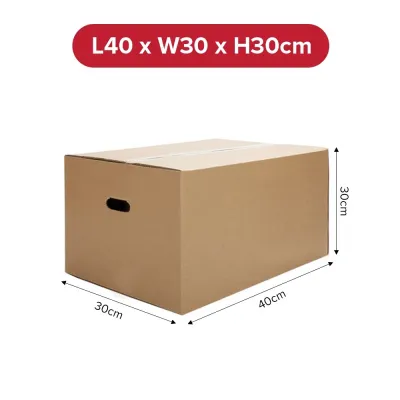
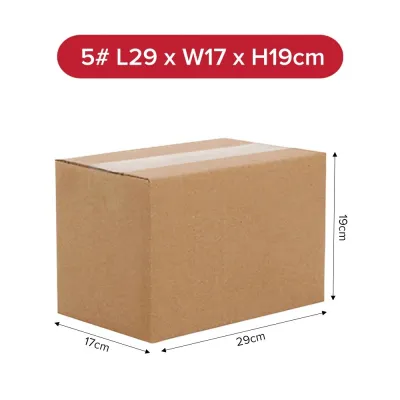
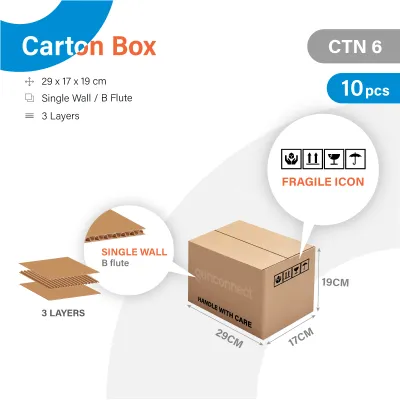
Prices are valid at publication and may change. Please refer to the product page for the latest price.
Standard parcel boxes are generally grouped into four main size categories to simplify selection:
- Small (under 250 x 200 x 150 mm): These compact boxes are ideal for shipping cosmetics, small electronics, books, jewelry, and lightweight accessories.
- Medium (up to 400 x 300 x 250 mm): This versatile category easily accommodates clothing, shoes, larger toys, and bundled household items.
- Large (up to 500 x 400 x 350 mm): These boxes are suited for small kitchen appliances, bedding, and multiple smaller items packed together.
- Extra-Large (600 x 500 x 500 mm and above): Best reserved for bulky but lightweight goods, or items that require exceptionally thick layers of protective cushioning.
Always read manufacturer specification labels carefully to confirm the unit of measurement. While millimeters are the standard in Singapore and most international markets, some imported boxes may use inches. Misinterpreting these units can lead to ordering boxes that are either far too small or unnecessarily bulky.
Measuring Items and Calculating Required Packing Space
To find the ideal box size, you must first measure your items accurately. For rectangular items, measure the maximum length, width, and height. For irregularly shaped items, treat them as if they sit inside an invisible rectangular box, measuring from the outermost protruding points, such as handles, stands, or decorative elements. If you are shipping multiple items in a single parcel, stack them as they will be arranged during transit and measure the overall outer boundary of the entire group.

Never choose a box that matches your item’s dimensions exactly. You must factor in the space required for protective cushioning materials like bubble wrap, packing peanuts, or crumpled paper. For sturdy, non-fragile items, a clearance of 10mm to 20mm on all sides is usually sufficient to prevent the item from rubbing against the cardboard. For fragile items like glassware, ceramics, or sensitive electronics, plan for at least 50mm of protective void fill on all sides, which adds 100mm to your total length, width, and height calculations.
Heavy or high-value items require denser cushioning materials that do not compress easily under pressure. If an item is heavy, it can shift during transit and puncture the box wall if there is too much empty space. Ensure the calculated packing space allows for a snug, movement-free fit once all protective layers are applied.
Key Material and Strength Specifications Beyond Size
Size is only one part of the packaging equation; the structural integrity of the box determines whether it will survive the shipping journey. Corrugated boxes are made of a wavy inner paper layer, known as the flute, sandwiched between flat outer liners. The thickness and spacing of these flutes dictate the box’s performance:
- B-Flute (approx. 3mm thick): Offers excellent puncture resistance and is commonly used for small to medium utility boxes.
- C-Flute (approx. 4mm thick): Provides superior stacking strength, making it the standard choice for medium to large shipping cartons.
- Double-Wall (such as BC-Flute): Combines two layers of fluting to provide maximum protection and crush resistance for heavy or highly fragile goods.
When evaluating box strength, look for standard industry ratings. The Edge Crush Test (ECT) measures the top-to-bottom compression strength of the box, which tells you how much weight the box can support when stacked in a delivery vehicle or warehouse. The Mullen Bursting Test measures the force required to puncture the face of the corrugated board, indicating how well the box will resist bursting open under internal pressure or rough external handling.
Additionally, consider the tare weight of the empty box. Heavy-duty double-walled boxes provide excellent protection but add noticeable weight to your shipment. If your courier charges strictly by weight thresholds, a heavy box might push your parcel into a more expensive pricing tier.
Navigating Carrier Limits and Dimensional Weight Pricing
Most modern courier services use dimensional weight (also known as volumetric weight) to calculate shipping costs. This pricing method reflects the amount of space a package occupies in a delivery vehicle relative to its actual weight. If you pack a lightweight item in an unnecessarily large box, you will be billed based on the box’s volume rather than its actual weight.
To calculate dimensional weight, couriers multiply the external length, width, and height of the box in centimeters and divide the result by a standard volumetric divisor (typically 5000 or 6000, depending on the carrier’s policy). The courier then compares the actual physical weight with this calculated dimensional weight and bills you for whichever value is higher. Choosing a box that fits your item snugly with just enough room for cushioning is the most effective way to avoid paying for shipped air.
Before finalizing your packaging, verify the maximum size, weight, and girth limits of your chosen courier. Girth is generally calculated using the formula: Length + (2 x Width) + (2 x Height). Exceeding these limits, or shipping packages that cannot be stacked easily, often triggers manual handling surcharges or oversize fees that can significantly increase your total shipping cost.
A Practical Checklist for Selecting the Right Box
To ensure a smooth shipping process, follow this step-by-step workflow when preparing your next parcel:
- Measure the item: Record the maximum length, width, and height of the item or grouped items.
- Add cushioning clearance: Add 20mm to each dimension for sturdy items, or 100mm for fragile items to accommodate protective wrap.
- Select the box size: Match these adjusted dimensions to the internal specifications of a standard parcel delivery box.
- Verify material strength: Choose a single-wall box for light, durable items, or a double-wall box for heavy, fragile, or high-value goods.
- Check carrier pricing rules: Calculate the volumetric weight of the selected box to ensure it fits within your target shipping budget.
- Inspect the box: Before packing, perform a quick visual check to ensure the box has no pre-existing tears, soft corners, or moisture damage.
If your item is exceptionally flat or flexible, such as documents, books, or clothing, consider using alternative packaging like padded mailers or poly bags. These options eliminate empty space entirely and weigh significantly less than a rigid cardboard box.
Frequently Asked Questions (FAQ)
Is it safe to reuse old parcel delivery boxes?
Reusing boxes is an excellent way to reduce waste, but it requires careful inspection. Every time a corrugated box is shipped, handled, and stacked, its structural integrity degrades. Check the corners and edges for soft spots, deep creases, or tears, as these can reduce the box’s stacking strength by up to 50%. Additionally, you must completely remove or black out all old shipping labels, addresses, and barcodes to prevent automated sorting machines at courier hubs from misrouting your package. If a box shows signs of moisture damage or structural sagging, it should be recycled rather than reused.
What is the difference between corrugated and standard cardboard boxes?
Standard cardboard, often called paperboard, is a single, dense layer of paper pulp. It is commonly used for retail packaging like cereal boxes or shoe boxes because it is lightweight and easy to print on, but it offers very little structural strength or shock absorption. Corrugated boxes, on the other hand, feature a multi-layer construction consisting of a wavy fluted medium glued between flat inner and outer paper liners. This engineered structure provides excellent puncture resistance, bending stiffness, and cushioning, making corrugated board the only appropriate choice for parcel delivery and transit protection.

Community discussion
Share your experience or ask a question. Comments are reviewed before publication.