
To present a cash gift elegantly in Singapore, choosing the right envelope size is more than just a matter of aesthetics. When selecting a happy birthday red packet, the physical dimensions of the envelope must directly align with the Singapore Dollar (SGD) notes you plan to gift. A packet that is too small forces you to fold crisp new currency, while one that is too tight risks tearing the edges of the note during insertion or removal. To ensure your birthday blessings are presented flawlessly, understanding how standard red packet sizes match up with the unique dimensions of SGD notes is essential.
Understanding Standard Red Packet Dimensions
Standard red packets, commonly referred to as hongbaos or ang pows, are available in a variety of physical formats across Singapore stationery and gift shops. These typically fall into three primary categories: small square packets, standard medium/long packets, and large jumbo packets. Small square packets generally measure around 80 mm by 80 mm or 90 mm by 90 mm. Standard long packets typically measure 165 mm by 85 mm, while jumbo or large packets extend to 170 mm by 90 mm or even 180 mm by 100 mm.
However, the external measurements listed on the packaging do not represent the actual space available for your cash. The manufacturing process of paper envelopes relies on side seams, bottom folds, and top flap overlaps. Side seams are created by folding paper flaps inward and gluing them down, which typically reduces the internal width by 3 mm to 5 mm on each side. Similarly, the bottom fold and the insertion slot for the top flap reduce the usable height. Consequently, a standard long packet with an external length of 165 mm may only offer an actual internal clearance of 155 mm to 157 mm. Recognizing this difference is crucial when matching envelopes to specific currency denominations.
Products mentioned in this guide
![[IN SG STOCK]2026 Happy Birthday Red Packet HongBao AngPao Cash Envelope Chinese Birthday Gift Singapore Ready Stock](https://img.lazcdn.com/g/p/8a61715cfe1b8218a8ff25e05c74f4d8.jpg_400x400q80.jpg_.webp)
![[IN SG STOCK]2026 Happy Birthday Big Size AngPao Red Packet Cute Cash Envelope Pouch](https://img.lazcdn.com/g/p/622cc291ab0bbfbe27caab1271c20f65.jpg_400x400q80.jpg_.webp)
![[IN SG STOCK]2026 Creative Surprise Giant Red Packet Birthday Red Envelope](https://img.lazcdn.com/g/p/7079f3f2e4cd283b5f89ac98fdb10f3f.jpg_400x400q80.jpg_.webp)
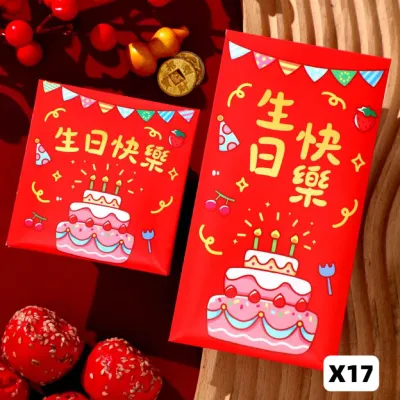
![[Local stocks] Super Ultra Big Red packet](https://img.lazcdn.com/g/ff/kf/S8b8ed04bcd0741db8784b2fedb0f9fd9r.jpg_400x400q80.jpg_.webp)
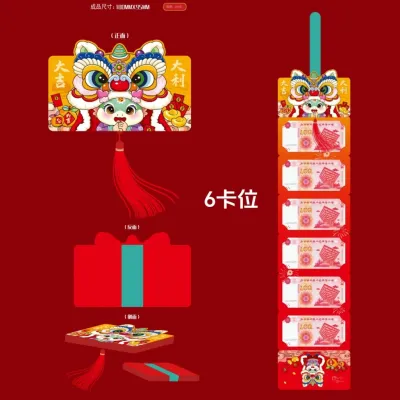
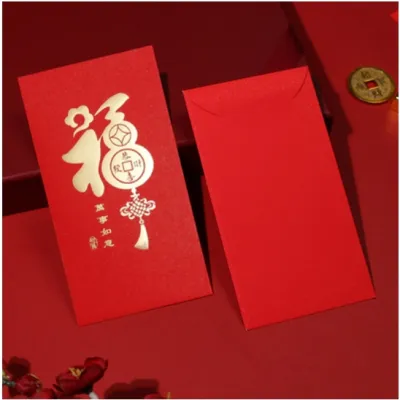
![[IN SG STOCK]2026 Horse Year CNY AngPao HongBao Wedding Birthday Red Packet Money Envelope Custom Print Logo Hot Stamping Xi Fu Red Envelope](https://img.lazcdn.com/g/p/154447c03eb3df4dc5c0f8aadc61f4da.jpg_400x400q80.jpg_.webp)
Prices are valid at publication and may change. Please refer to the product page for the latest price.
Singapore Dollar Note Sizes Explained
To make an accurate selection, you must consider the exact physical dimensions of Singapore Dollar notes. The Monetary Authority of Singapore (MAS) issues currency notes in the Portrait Series, which scale progressively in size according to their value. While older series or commemorative notes may vary slightly, the standard circulating denominations maintain highly consistent footprints whether they are printed on polymer or paper.

The physical dimensions for the most commonly gifted SGD denominations are as follows:
- S$2 note: 126 mm in length by 63 mm in width
- S$5 note: 133 mm in length by 66 mm in width
- S$10 note: 141 mm in length by 69 mm in width
- S$50 note: 156 mm in length by 74 mm in width
- S$100 note: 162 mm in length by 77 mm in width
While polymer and paper notes of the same denomination share identical dimensions, their physical behavior differs. Polymer notes are made of a plastic film that possesses a natural springiness. They resist flat folding and tend to expand or slide inside an envelope, requiring slightly more physical volume and a smoother interior path than traditional paper notes. Furthermore, the size jump between a S$10 note (141 mm) and a S$100 note (162 mm) is over two centimeters, meaning a standard envelope that comfortably houses a ten-dollar note will completely fail to accommodate a hundred-dollar note without folding.
Matching Happy Birthday Red Packets to SGD Denominations
Matching your happy birthday red packet to the specific denomination ensures the cash remains flat, pristine, and easy to retrieve. To achieve a seamless fit, you should aim for a minimum internal clearance of 8 mm to 10 mm beyond the note’s physical dimensions. This extra space prevents the edges of the note from catching on the internal adhesive seams of the packet.
The table below outlines the recommended minimum external packet sizes required to fit each SGD denomination without folding:
| SGD Denomination | Note Dimensions | Recommended Minimum External Packet Size | Expected Fit Type (Unfolded) |
|---|---|---|---|
| S$2 | 126 mm x 63 mm | 140 mm x 75 mm (or standard 165 mm x 85 mm) | Very loose and comfortable |
| S$5 | 133 mm x 66 mm | 150 mm x 80 mm (or standard 165 mm x 85 mm) | Highly comfortable flat fit |
| S$10 | 141 mm x 69 mm | 165 mm x 85 mm (standard long) | Perfect flat fit |
| S$50 | 156 mm x 74 mm | 170 mm x 90 mm (large long) | Snug flat fit; standard long is too tight |
| S$100 | 162 mm x 77 mm | 180 mm x 100 mm (jumbo long) | Mandatory large fit to avoid edge damage |
If you are gifting a S$50 or S$100 note, a jumbo packet measuring 170 mm by 90 mm or larger is mandatory to keep the cash completely unfolded. Standard long packets (165 mm x 85 mm) will tightly pinch a S$50 note and will physically crumple the edges of a S$100 note due to the internal seam restrictions.
In scenarios where only standard square packets are available, folding becomes necessary for lower-value notes. A S$2 or S$5 note can be folded cleanly in half or in thirds to fit into an 80 mm square packet. However, folding high-denomination notes like S$50 or S$100 is generally avoided for formal birthday gifts. Bending polymer notes creates permanent, unsightly white stress lines along the crease, reducing the aesthetic appeal of your presentation.
Beyond Dimensions: Material and Closure Specs That Matter
Beyond basic dimensions, the construction materials of the happy birthday red packet play a significant role in how well the currency fits and is protected. Paper thickness is measured in grams per square meter (GSM). Standard mass-produced red packets typically use 80 GSM to 100 GSM paper, which is highly flexible but can sometimes be slightly translucent under bright light. Premium birthday packets often feature 120 GSM to 150 GSM art paper or textured cardstock. While thicker paper offers a luxurious feel and protects polymer notes from bending, it reduces the envelope’s internal flexibility. If you are gifting multiple notes, a thicker paper stock requires a slightly larger envelope to accommodate the bulk.
The closure design also dictates usable space. Tuck-in flaps require you to fold the top flap down and slide it into a pre-cut horizontal slot on the back of the packet. If the note inside is too tall, the tuck-in flap will press directly against the top edge of the note, causing it to bend. Sticker seals or adhesive strips offer a flatter profile but are less reusable.
Finally, pay attention to decorative finishes. Heavily embossed text, raised cartoon characters, or thick metallic foil stamping can create internal ridges. The sharp, clean edges of polymer notes can easily snag on these interior ridges during insertion. Choosing a packet with a smooth interior lining or opting for a slightly oversized packet ensures a smooth, snag-free experience.
Frequently Asked Questions (FAQ)
Can I fit a $100 SGD note in a standard-sized red packet?
No, a standard-sized red packet (typically 165 mm x 85 mm) cannot accommodate a S$100 note flat. A S$100 note is 162 mm long, and when you subtract the internal space taken up by the side glue seams, the usable interior length of a standard packet falls below 158 mm. Attempting to force a S$100 note into a standard packet will inevitably crumple or tear its edges. To keep a S$100 note pristine and unfolded, you must use a jumbo-sized packet measuring at least 175 mm to 180 mm in length.
Do Singapore polymer notes require different envelope sizes compared to older paper notes?
Singapore polymer notes share the exact same physical dimensions as paper notes of the same denomination, meaning they do not strictly require different envelope sizes. However, polymer material is highly springy and resists staying folded or flat. When stacking multiple polymer notes, they naturally create more bulk than paper notes. To accommodate this springiness without putting stress on the envelope seams, it is highly recommended to select a happy birthday red packet with a slightly wider opening or to opt for a slightly larger size category than you would use for paper notes.

Community discussion
Share your experience or ask a question. Comments are reviewed before publication.