
To find the perfect gift box, you must measure your item’s maximum length, width, and height, add a clearance allowance for padding, and compare these adjusted dimensions against the box’s internal specifications. While gift boxes are broadly categorized into small, medium, and large sizes, selecting the right fit requires understanding the difference between interior and exterior dimensions to ensure your gift is beautifully presented and safely protected.
Understanding Common Gift Box Size Categories and Labels
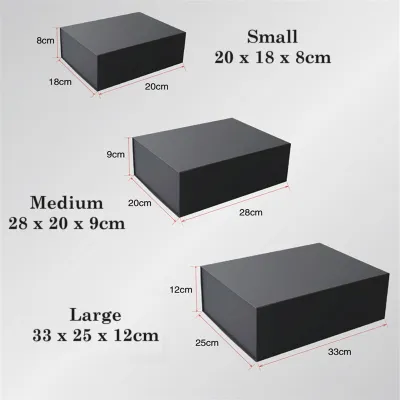
Gift boxes are generally grouped into small, medium, and large categories to help shoppers narrow down their options. Small boxes are typically used for delicate items like jewelry, watches, small cosmetics, or pocket-sized stationery. Medium boxes are highly versatile, commonly accommodating apparel such as folded shirts, scarves, books, medium-sized mugs, or gourmet treat selections. Large boxes are reserved for bulkier items, including handbags, winter wear, multi-item gift hampers, or electronics.
When browsing for packaging, the most critical distinction to understand is the difference between interior and exterior dimensions. Exterior dimensions represent the outer footprint of the box, which is useful for calculating shipping costs or shelf space. Interior dimensions represent the actual usable space inside. Because thick cardboard, folded flaps, and magnetic closures can reduce the internal space by several millimeters or even centimeters, you must always rely on interior measurements to determine if your item will fit.
Products mentioned in this guide
Prices are valid at publication and may change. Please refer to the product page for the latest price.
Manufacturer size labels are standardly written as Length x Width x Height (or Depth). Length is typically the longest side of the opening, Width is the shorter side of the opening, and Height is the distance from the opening to the bottom of the box. Depending on the style—such as a two-piece box with a lid or a folding magnetic box—the way these dimensions are measured can vary slightly, so it is always wise to verify whether the listed dimensions refer to the inner compartment or the outer lid.
How to Accurately Measure Your Items for Packaging
To measure your items accurately, you will need a firm ruler or a metal measuring tape rather than a soft sewing tape, which can easily sag and give inaccurate readings. For irregular or asymmetrical items, such as a ceramic figurine or a round candle, use the “bounding box” method. Place the item on a flat surface and measure the absolute longest, widest, and tallest points as if the item were enclosed in an invisible rectangular box.

Never choose a box that matches your item’s exact dimensions, as this leaves no room for protective packaging or decorative presentation. For lightweight decorative fillers like crinkle paper or shredded tissue, add at least 1 to 2 centimeters of clearance on all sides. If you are packing fragile items that require heavy cushioning like bubble wrap or foam inserts, increase this clearance to 2 to 5 centimeters depending on the item’s weight.
Your measurement strategy should also adapt to the physical nature of the gift. Fragile items require rigid boxes and substantial shock-absorbing padding, meaning you will need a significantly larger box than the item itself. Rigid, non-breakable items like books can fit snugly with just a few millimeters of clearance for easy removal. Compressible items, such as clothing or plush toys, can be gently pressed into a slightly smaller box, allowing you to save space and use less filler.
Matching Item Measurements to Box Specifications
Once you have the raw measurements of your item and have added the necessary clearance for padding, you have your “padded item size.” Compare this final size against the manufacturer’s verified interior dimensions. If your padded item size is even slightly larger than the interior dimensions, the box walls will bow outward, ruining the presentation and potentially causing the seams to split during transit.
Next, evaluate the material thickness and structural rigidity of the box based on the weight of your gift. Heavy items like glass jars, stone coasters, or thick books require sturdy corrugated cardboard mailers or rigid setup boxes to prevent the bottom from sagging. Lightweight items like silk scarves or paper stationery are perfectly suited for thin paperboard or folding gift boxes, which offer a sleek, elegant profile without unnecessary bulk.
Deciding between a snug, form-fitting box and a slightly larger box with extra padding depends on your delivery method. A snug fit looks premium and prevents shifting, making it ideal for hand-delivered gifts. However, if you are sending the package via courier services across Singapore, where parcels undergo mechanical sorting and handling, choosing a slightly larger box with ample shock-absorbing void fill is the safer choice to prevent damage.
Packing Strategies for Different Box Styles
Different box styles require specific handling to ensure a secure and beautiful presentation. For tuck-end boxes, ensure all flaps are folded along their pre-scored lines before inserting the item to avoid creasing the outer face. When using two-piece setup boxes, place the item centrally; if the lid fits tightly, let it slide down slowly to allow trapped air to escape rather than forcing it down and splitting the corners.
Selecting the right void fill is essential for both protection and aesthetics. Crinkle paper is excellent for filling empty space and adding a premium, textured feel to the presentation. Tissue paper is best for wrapping individual items to prevent surface scratches and create a classic opening experience. For highly delicate items, use bubble wrap for primary protection, then conceal it beneath a layer of decorative tissue paper so the presentation remains elegant.
Before sealing the box, perform a quick quality check. Gently shake the packed box; if you hear or feel the contents shifting, add more void fill to secure them. Press down lightly on the top lid to ensure it does not cave in easily. If the lid feels weak, the box needs more internal support, which can be achieved by adding denser packing material or structured cardboard inserts to withstand stacking during handling.
Frequently Asked Questions (FAQ)
What is the standard size for a shirt gift box?
A typical shirt gift box is flat and rectangular, often measuring around 38 cm x 24 cm x 5 cm. However, the required depth can vary significantly depending on fabric thickness, folding style, and whether you are including accessories like belts or ties. Always fold the garment first, measure its folded height, and ensure the box depth is at least 1 centimeter deeper than the folded stack to prevent the lid from bowing upward.
Should I measure the box from the inside or the outside?
You must always measure the box from the inside to determine if your item will fit, as exterior measurements do not account for the thickness of the cardboard or folded flaps. Exterior dimensions are only relevant when you need to calculate shipping costs, fit the box into a courier satchel, or ensure the package complies with local postal size limits.
How much extra space should I leave for padding?
For sturdy, non-breakable items like clothing or books, a clearance of 0.5 to 1 centimeter is sufficient to allow easy insertion and removal. For fragile items like glassware or ceramics, leave at least 2 to 3 centimeters of space on all sides to accommodate protective cushioning. Keep in mind that loose crinkle paper compresses easily under weight, whereas bubble wrap maintains its volume, so adjust your space allowance based on the density of the padding material.

Community discussion
Share your experience or ask a question. Comments are reviewed before publication.