
Selecting the correct packaging box size requires balancing three critical factors: the exact physical dimensions of your item, the thickness of the protective cushioning required, and the shipping carrier’s dimensional weight rules. Choosing a box that is too large leads to excessive shipping fees and wasted void fill, while a box that is too small risks structural failure and product damage. By systematically measuring your items and accounting for protective layers, you can secure your shipments while keeping logistics costs highly efficient.
Assess Your Item's Dimensions and Shape
To find the ideal packaging box, you must first establish the absolute baseline measurements of the item or items you intend to pack. This process begins with a reliable measuring tool, such as a standard tape measure or a rigid ruler. You will need to record three distinct dimensions: length, width, and height. Always measure the item at its widest, longest, and tallest points, including any protruding parts like handles, knobs, or decorative elements.
When dealing with irregularly shaped items, such as mugs, soft toys, or sculpted ornaments, do not measure along the physical contours of the object. Instead, imagine the item sitting inside a tight, invisible rectangular box. Measure the outer boundaries of this imaginary box—often referred to as the bounding box. This ensures that the actual physical limits of the item are fully accommodated by the flat walls of the shipping carton.
Products mentioned in this guide
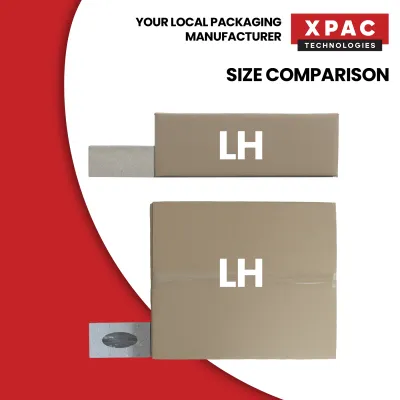
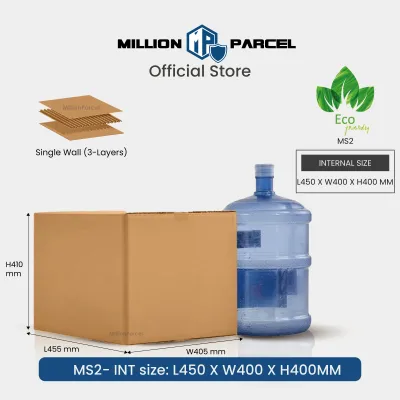
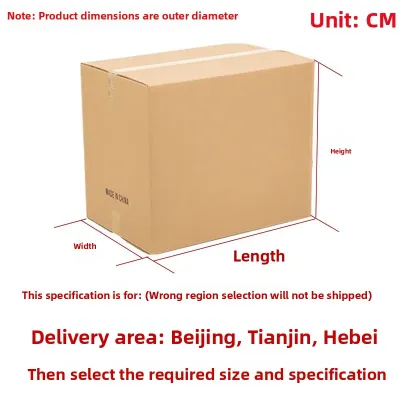
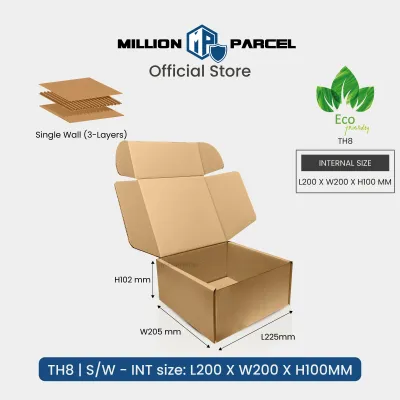
![Casual Liz Wholesales Market Carton Box/Moving Box/Cardboard Box [Local Seller]](https://img.lazcdn.com/g/p/edcb9b91b5af7d246cf0cb44f3ee1b04.jpg_400x400q80.jpg_.webp)

Prices are valid at publication and may change. Please refer to the product page for the latest price.
Consistency in your units of measurement is vital to avoid ordering errors. It is best to record all measurements in millimeters or centimeters, as most local packaging suppliers list their stock sizes using these metric units. If you are shipping internationally, you may also want to note the equivalent dimensions in inches to easily cross-reference with global carrier guidelines. Keep these baseline figures written down clearly before you begin looking at box catalogs.
Factor in Fragility and Cushioning Requirements
The raw dimensions of your item only represent the starting point; you must also calculate the additional internal space required for protective packaging materials. The level of fragility of your item dictates the type and volume of cushioning needed. Highly delicate items like glassware, ceramics, or sensitive electronics require robust shock absorption, whereas durable goods like books or clothing need minimal to no padding.

Common protective materials include bubble wrap, foam inserts, packing peanuts, and crumpled kraft paper. Each of these materials adds a specific thickness to the overall dimensions of your item. For instance, wrapping an item in two layers of standard bubble wrap can easily add several centimeters to its overall length, width, and height. You must add double the thickness of your chosen cushioning material to each dimension, as the padding will surround the item on all sides.
To ensure adequate protection during transit, aim for a consistent clearance zone between the item and the inner walls of the packaging box. For moderately fragile items, a clearance of two to three centimeters on all sides is generally sufficient to absorb typical transit shocks. For extremely delicate items, you may need to increase this clearance to five centimeters or more. This buffer zone ensures that if the outer carton suffers an impact or puncture during handling, the force is dissipated by the cushioning before it reaches your product.
Match Measurements to Standard Packaging Box Sizes
Once you have calculated your total required internal dimensions—combining the item’s baseline measurements with the necessary cushioning thickness—you can begin matching these figures to standard corrugated box sizes. Standard boxes are mass-produced and readily available from local stationery and packaging suppliers, making them far more cost-effective than custom-manufactured alternatives.
When browsing supplier catalogs, it is critical to distinguish between internal and external box dimensions. Suppliers almost always list boxes by their internal dimensions, which represent the actual usable space inside the carton. External dimensions, on the other hand, include the thickness of the corrugated cardboard walls and are used by shipping carriers to calculate shipping volumes. Confusing these two measurements can result in purchasing a box that is slightly too small to fit your padded item.
If your calculated dimensions fall between two standard box sizes, it is generally safer to select the larger size. You can easily fill the minor excess space with lightweight void fill, whereas forcing an item into a box that is too tight can cause the cardboard walls to bulge, weakening the structural integrity of the carton. Custom-manufactured boxes should only be considered when you are shipping high volumes of a single item with highly unique dimensions, where the savings in shipping costs and void fill justify the initial tooling and setup fees of custom production.
Evaluate Shipping and Handling Constraints
Choosing a packaging box is not just about physical fit; it also involves understanding how shipping carriers calculate delivery costs and handle packages. Most modern courier services use a pricing method known as dimensional weight, or volumetric weight, to determine shipping rates. This formula multiplies the length, width, and height of the package and divides the result by a standard shipping factor to calculate a theoretical weight.
If your package is large but very light, the carrier will bill you based on this dimensional weight rather than the actual physical weight on the scale. Consequently, using a box that is unnecessarily large can dramatically increase your shipping expenses, especially for regional or international deliveries. You must carefully balance the cost of a slightly larger box and the extra void fill it requires against the potential premium charged by the carrier for the larger footprint, saving you valuable S$ on every shipment.
Additionally, you must stay mindful of the maximum size and weight limits set by your chosen courier service. Exceeding these limits can result in hefty oversize surcharges or even a refusal to handle the package. When packing multiple items together, it is often more economical to split them into two medium-sized standard boxes rather than using a single, massive carton that triggers heavy-package handling fees or requires specialized delivery vehicles.
Perform a Pre-Shipment Packaging Self-Check
Before sealing your package and handing it over to the courier, performing a quick physical self-check can save you from costly return shipments and damaged goods. The first and most effective test is the shake test. Once your item is packed with its cushioning and the box flaps are folded closed, gently shake the box. If you feel or hear the item shifting, sliding, or knocking against the sides, there is too much empty space, and you must add more void fill to secure it.
Next, inspect the structural integrity of the packaging box itself. Ensure that the corners are sharp and uncrushed, and that the corrugated flutes inside the cardboard walls are intact. A box that shows signs of bowing, moisture damage, or deep creases will have significantly reduced stacking strength, making it highly vulnerable to collapsing when stacked under heavier parcels in a delivery van.
Finally, look for excessive empty space near the top of the box. If there is a large gap between the top of your cushioning and the top flaps of the carton, the box is prone to being crushed downward during transit. Fill this space completely with crumpled paper or air pillows so that the top flaps rest firmly against the packing material when sealed, creating a solid, load-bearing structure that protects your contents from vertical pressure.
Frequently Asked Questions (FAQ)
What is the difference between internal and external box dimensions?
Internal dimensions measure the usable space inside the box from one inner wall to the opposite inner wall, which determines what size item and cushioning will fit inside. External dimensions measure the outer limits of the box, including the thickness of the cardboard flaps and walls. Shipping carriers use external dimensions to calculate volumetric weight and cargo space, while you must use internal dimensions to ensure your product fits safely.
How much extra space should I leave inside the box for fragile items?
For fragile items, you should generally leave a minimum of two to five centimeters of extra space on all sides of the item. This space must be entirely filled with shock-absorbing materials like bubble wrap, foam, or packing peanuts. The exact clearance depends on the weight and fragility of the item; heavier fragile items require denser foam cushioning and wider clearance to prevent them from bottoming out against the box walls during a drop.
Can I reuse an old packaging box for shipping?
You can reuse an old packaging box only if it is structurally sound and free of major wear. Inspect the box for soft corners, deep creases, punctures, or water stains, as these defects can reduce the box’s strength by up to fifty percent. Additionally, you must completely remove or black out all old shipping labels, barcodes, and addresses to prevent automated sorting machines at the courier facility from misrouting your package.
Community discussion
Share your experience or ask a question. Comments are reviewed before publication.