
Selecting the correct envelope size depends entirely on the dimensions of your document and how you plan to fold it. Standard international paper sizes, known as the A-series, correspond directly to the C-series envelope system, allowing you to match your mailers without guesswork. By pairing the right paper size with its designated envelope counterpart, you can ensure your letters, certificates, or invoices arrive in pristine condition while keeping postage costs minimal.
Whether you are searching for a standard business envelope or looking up a common online search term like “emvelope” to restock your office supplies, understanding these dimensions is key to efficient mailing. Choosing the wrong size can lead to damaged documents, unprofessional presentations, or unexpected surcharges at the post office.
Understanding the ISO Envelope Size System
The international standard for envelope dimensions is governed by the ISO 269 system, which defines the C-series. This system is designed to work in perfect harmony with the ISO 216 A-series paper sizes. Each C-series envelope is slightly larger than its corresponding A-series paper sheet, ensuring that the paper fits inside comfortably without needing to be forced.
Products mentioned in this guide
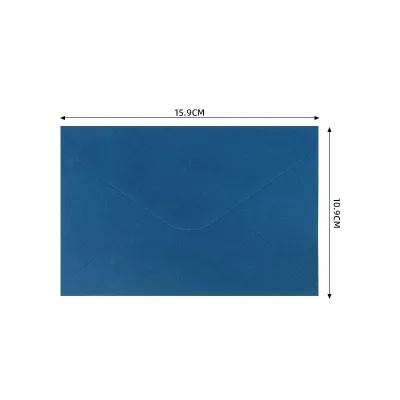

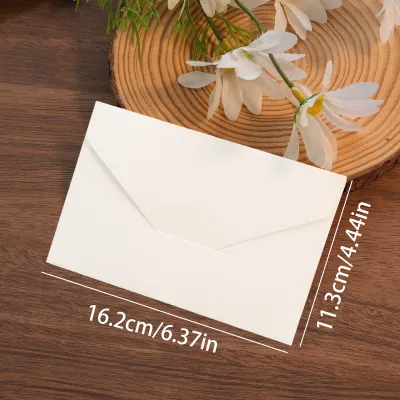
Prices are valid at publication and may change. Please refer to the product page for the latest price.
For example, a C4 envelope is designed to hold an unfolded A4 sheet of paper, while a C5 envelope is sized to hold an A5 sheet. This geometric progression makes it incredibly easy to calculate the correct size. As the paper size number increases, the physical dimensions decrease by half, and the envelope sizes follow the exact same mathematical ratio.
Another widely used format is the DL (Dimension Long) envelope, which measures 110 mm by 220 mm. Unlike the C-series, the DL format is specifically designed to accommodate an A4 sheet that has been folded horizontally into three equal sections. This slim, elongated shape is the standard choice for professional business correspondence, invoices, and marketing letters.
When planning your mailings, it is important to remember that the listed dimensions of an envelope refer to its external measurements. The actual internal capacity is always slightly smaller due to the paper seams, adhesive flaps, and standard manufacturing tolerances. If you are mailing a thick stack of papers rather than a single sheet, you will need to account for this loss of internal space.
Matching Envelope Sizes to Common Document Types
To ensure your mail looks professional and fits securely, you must match the envelope to your specific document type and folding preference. Using an oversized mailer can cause your documents to slide around and get damaged, while an undersized one will force you to fold important papers unnecessarily.

C4 envelopes (229 mm x 324 mm) are the standard choice for flat, unfolded A4 documents. This format is essential for official contracts, certificates, legal agreements, and glossy brochures that must not be creased. Because these envelopes keep the contents completely flat, they present a highly professional image upon arrival.
C5 envelopes (162 mm x 229 mm) are designed to hold flat A5 documents or standard A4 sheets folded exactly in half. This size is highly versatile and commonly used for invitations, corporate newsletters, and multi-page letters that do not require a flat presentation but are too thick for a standard DL mailer.
C6 envelopes (114 mm x 162 mm) are ideal for smaller items, such as A6-sized greeting cards, postcards, and social invitations. They can also accommodate an A4 sheet folded in half and then folded in half again (into quarters), making them a compact and economical option for personal correspondence.
DL envelopes (110 mm x 220 mm) remain the undisputed standard for daily business mail. Because they are designed for A4 paper folded into thirds, they are perfect for single-page letters, monthly statements, utility bills, and standard invoices.
To help you quickly identify the correct format for your next mailing, refer to this quick-reference guide:
| Envelope Size | Dimensions (mm) | Fits Document Type | Folding Required |
|---|---|---|---|
| C4 | 229 x 324 | Flat A4 sheets, catalogs, certificates | None (Keep flat) |
| C5 | 162 x 229 | Flat A5 sheets, A4 folded in half | Fold A4 once |
| C6 | 114 x 162 | Flat A6 sheets, A4 folded in quarters | Fold A4 twice |
| DL | 110 x 220 | A4 folded into three equal sections | Fold A4 twice (thirds) |
Practical Considerations for Mailing and Postage
Beyond matching the length and width, the physical thickness of your document plays a major role in envelope selection. Standard flat envelopes have no depth; as you insert thicker items, the sides of the envelope are pulled inward, reducing the available width and height. For bulky catalogs, books, or thick stacks of paper, you should look for gusset envelopes, which feature expandable V-shaped sides designed to accommodate depth.
Postage rates are heavily influenced by the physical dimensions and weight of your mail. In Singapore, postal services categorize mail into standard letters, large letters, and packages based on strict size and thickness thresholds. A standard DL or C5 envelope that is kept thin and light will qualify for the lowest postage rates, whereas a thick C4 envelope may cross into a higher pricing tier, adding several S$ to your mailing costs if you are sending items in bulk. Always verify the current size and weight limits with your local postal provider before finalizing your mailings.
The type of envelope closure also affects both usability and processing. Gummed envelopes require moisture to seal and are highly compatible with high-speed automated inserting machines used in large offices. Peel-and-seal envelopes feature a protective strip over a self-adhesive band, offering a longer shelf life and maximum convenience for manual packing. Clasp envelopes use a reusable metal prong, which is excellent for internal office storage but can get caught in automated postal sorting machines, sometimes requiring manual sorting surcharges.
Frequently Asked Questions (FAQ)
Can I put an A4 document in a C5 envelope without folding?
No, you cannot fit an unfolded A4 document into a C5 envelope. An A4 sheet measures 210 mm by 297 mm, which is physically larger than the external dimensions of a C5 envelope (162 mm by 229 mm). To use a C5 envelope, you must fold the A4 sheet in half. If your document must remain completely flat and unfolded, you must use a C4 envelope.
What is the difference between C4 and B4 envelopes?
The primary difference lies in their sizing and capacity. While a C4 envelope (229 mm x 324 mm) is designed to hold flat A4 paper sheets, a B4 envelope (250 mm x 353 mm) belongs to the larger B-series. B4 envelopes are designed to hold C4 envelopes or exceptionally thick documents, folders, and catalogs that cannot fit into a standard C4 pocket. For standard mailing of a few flat A4 sheets, C4 is the standard and most cost-effective choice.

Community discussion
Share your experience or ask a question. Comments are reviewed before publication.