
Selecting the correct carton box size is essential for protecting your items, minimizing shipping costs, and streamlining storage. Whether you are running an e-commerce business, preparing for a household move, or organizing office archives, choosing a box that is too large leads to wasted space and excessive packaging costs, while a box that is too small risks damaging your goods. Understanding how manufacturers measure these containers and learning how to calculate the exact dimensions you need will ensure your items remain secure from dispatch to delivery.
Understanding Carton Box Dimensions
When browsing for carton boxes, you will almost always see dimensions listed in a standard three-number format: Length x Width x Height (L x W x H). To identify these sides correctly, look at the open top of the box. The longer of the two sides forming the opening is the length, while the shorter side is the width. The height is the distance measured from the bottom of the box to the top opening. Keeping this orientation in mind prevents confusion when comparing different box styles, especially when ordering online.
It is critical to distinguish between the inner and outer dimensions of a carton box. The inner dimensions represent the actual usable space available inside the box once it is assembled. Because corrugated cardboard has thickness, the inner dimensions are always slightly smaller than the outer dimensions. When you are determining whether an item will fit inside a box, you must always refer to the manufacturer’s specified inner dimensions to avoid a tight or impossible fit.
Products mentioned in this guide
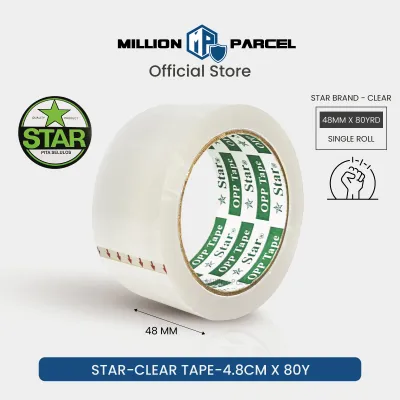
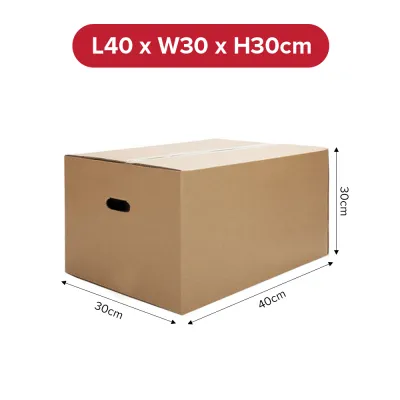
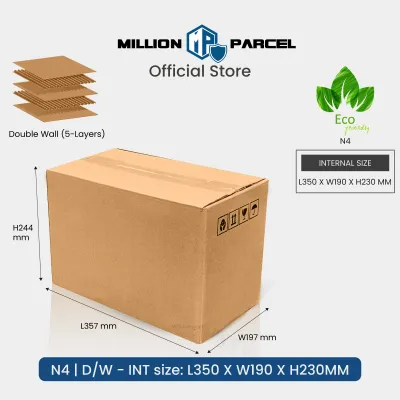
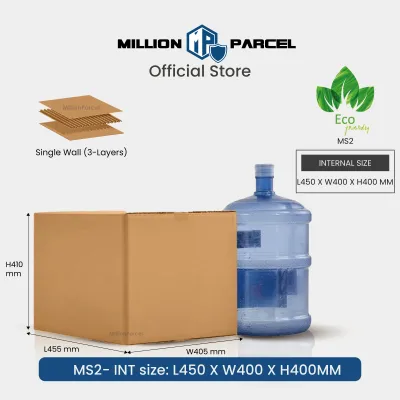
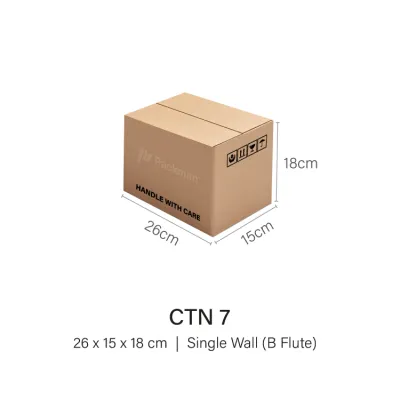
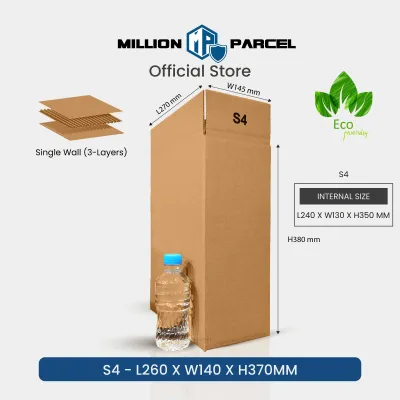
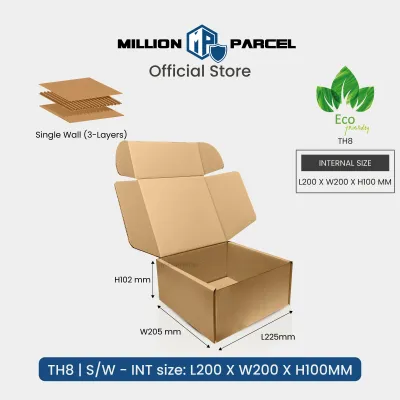
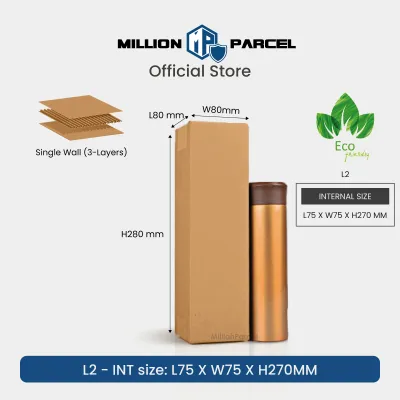
Prices are valid at publication and may change. Please refer to the product page for the latest price.
Conversely, the outer dimensions represent the total footprint the box occupies in the physical world. These measurements are vital for calculating shipping costs, as logistics providers and couriers use them to determine volumetric weight. Outer dimensions also dictate how many boxes can fit onto a warehouse shelf, inside a delivery vehicle, or within a shipping container. Always verify which set of measurements a supplier is listing before finalizing your purchase.
Common Standard Carton Box Categories
Carton boxes are generally grouped into broad size categories to help buyers narrow down their options. Small mailing boxes are ideal for lightweight items such as cosmetics, small electronics, books, or jewelry. These boxes are designed to keep shipping costs low and often fit within standard postal guidelines. Medium multi-purpose boxes are highly versatile, commonly used for shipping clothing, toys, kitchenware, or medium-sized office supplies. Large moving cartons are built to handle bulkier but lighter items, such as bedding, pillows, winter coats, or plastic containers.

While these categories are helpful, standard sizes are not universally identical across all manufacturers or regions. A ‘medium’ box from one supplier might have completely different dimensions than a ‘medium’ box from another. Therefore, you should always consult the supplier’s specific product specification sheet rather than relying on generic category names. In Singapore, local packaging suppliers often provide detailed charts listing the exact millimeter or centimeter measurements for each stock keeping unit (SKU).
Your choice of box category should also align with your primary task. For e-commerce shipping, minimizing empty space is paramount to keep courier fees low, making small, precise mailing boxes or custom-sized cartons the preferred choice. For household relocation or office archiving, uniform medium or large boxes are often better because they stack neatly in moving trucks and storage units, maximizing space efficiency and stability during transit.
How to Measure Your Items for the Right Box
To find the perfect box size, start by measuring the item or group of items you plan to pack. Place the items together exactly as they will be arranged inside the box. Use a reliable measuring tape to find the maximum length, width, and height of the arrangement. Be sure to measure from the outermost points, taking into account any irregular protrusions, handles, or cords, as these can easily puncture a box that is too tight.
Next, you must account for the protective packaging materials needed to cushion your items. Fragile goods require a buffer zone of bubble wrap, packing peanuts, or crumpled paper to absorb shocks during transit. For lightweight or non-fragile items, a buffer of 1 to 2 centimeters on all sides may be sufficient. For fragile, heavy, or high-value items, a buffer of 5 centimeters or more of cushioning material is often recommended to prevent the item from shifting or contacting the outer walls of the box.
To calculate the minimum required inner dimensions of your box, use this simple formula:
- Minimum Inner Length = Item Length + (Required Buffer x 2)
- Minimum Inner Width = Item Width + (Required Buffer x 2)
- Minimum Inner Height = Item Height + (Required Buffer x 2)
For example, if your item measures 20 cm x 15 cm x 10 cm and you require a 2 cm buffer of bubble wrap on all sides, your minimum inner box dimensions should be 24 cm x 19 cm x 14 cm. Always round up to the nearest available standard box size to ensure a comfortable fit.
Matching Box Strength and Flute Type to Your Needs
The structural integrity of a carton box is determined by its corrugated flute profile and wall construction. The ‘flute’ refers to the wavy middle layer of paper sandwiched between the flat outer liners. Common flute profiles, such as A, B, C, and E flutes, vary in thickness and wave frequency. For instance, B-flute is relatively thin and offers excellent puncture resistance, making it popular for small mailing boxes, while C-flute is thicker and provides better stacking strength, making it ideal for shipping heavier goods.
You must also choose between single-wall and double-wall cartons. Single-wall boxes consist of one layer of corrugated medium between two liners and are suitable for lightweight to medium-weight items that are not highly fragile. Double-wall boxes feature two layers of corrugated medium and three liners, offering significantly higher structural support and resistance to crushing. If you are packing heavy books, electronics, or fragile glassware, upgrading to a double-wall carton is highly recommended to prevent the box from collapsing under weight.
To verify if a box can handle your specific load, check the manufacturer’s weight capacity guidelines or look for the Box Maker’s Certificate (BMC) printed on the bottom of the carton. This stamp or label often lists the Edge Crush Test (ECT) rating or bursting test limit, which indicates the box’s structural strength under pressure. If you are unsure of a box’s capacity, perform a manual inspection of the cardboard thickness and consult the supplier’s product specifications before purchasing.
Frequently Asked Questions (FAQ)
Does the box size affect shipping costs?
Yes, box size directly impacts shipping costs through a calculation known as volumetric or dimensional weight. Couriers calculate volumetric weight by multiplying the outer length, width, and height of the package and dividing by a standard divisor. They then charge shipping fees based on whichever is greater: the actual physical weight or the volumetric weight. To avoid paying unnecessary fees for shipping air, select a box that closely matches your item’s dimensions while leaving just enough room for protective padding.
Can I use a standard carton box for international shipping?
Standard corrugated carton boxes are widely accepted for international shipping, but they must meet higher durability standards to survive long transit times, multiple sorting facilities, and varying climate conditions. It is advisable to use heavy-duty double-wall boxes for international shipments to protect against crushing and moisture. Additionally, always verify the maximum size and weight limits allowed by your international courier or freight forwarder, as these restrictions vary significantly by destination country and service level.

Community discussion
Share your experience or ask a question. Comments are reviewed before publication.