
Selecting the right carton box is the foundation of safe shipping, efficient moving, and organized storage. Using a box that is too large can lead to collapsed walls and damaged goods, while a box that is too small forces items against the edges without adequate protection. Understanding standard dimensions and structural limits helps you protect your belongings, control shipping costs, and simplify handling.
Understanding Standard Box Dimensions and Measurements
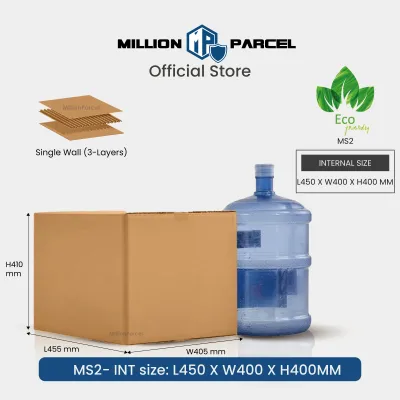
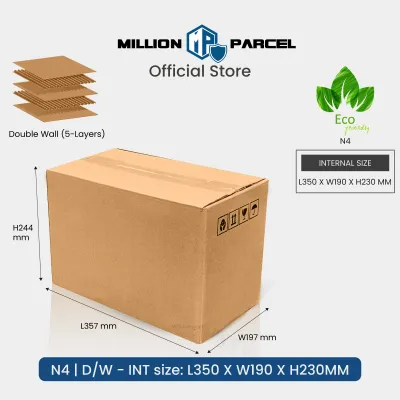
When purchasing carton boxes, the dimensions listed on packaging websites or retail labels almost always refer to the internal dimensions. This is a critical distinction because the thickness of the corrugated cardboard reduces the actual usable space inside. If you measure only the exterior of your items, they may not fit once the box is assembled.
The industry-standard notation for box measurements is always presented in a specific order: Length (L) x Width (W) x Height or Depth (H). Length is the longest side of the opening, width is the shorter side of the opening, and height is the distance from the bottom to the top opening. Always measure your items along these three axes to find the minimum box size required.
Products mentioned in this guide
Prices are valid at publication and may change. Please refer to the product page for the latest price.
Additionally, you must account for the space occupied by protective packaging. Items should not sit directly against the cardboard walls, especially if they are fragile. When calculating the required box size, add a buffer of at least two to three centimeters on all sides to accommodate bubble wrap or crumpled paper. This buffer ensures that external impacts are absorbed by the void fill.
Matching Box Sizes to Common Use Cases
Carton boxes are generally categorized into small, medium, large, and extra-large sizes. Matching your items to the correct box category prevents structural failures and makes handling much easier.

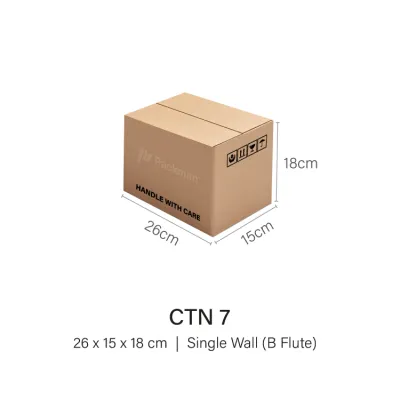
Small boxes typically measure around 30 x 20 x 20 cm. These are well-suited for dense, heavy items like books, tools, or heavy stationery supplies. Packing heavy items in small boxes limits the total weight, preventing the bottom from bursting open during transport. It also ensures the box remains light enough for a single person to lift safely without straining.
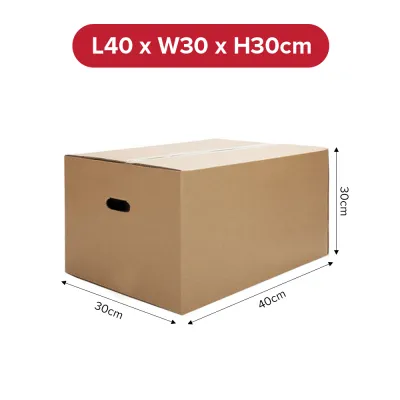
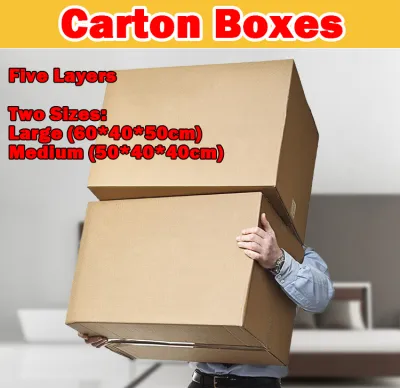
Medium boxes, often measuring around 40 x 30 x 30 cm, offer a balanced capacity for everyday items. They are highly suitable for shoes, clothing, medium electronics, and office files. This size is the standard choice for general moving and storage because it provides ample space while remaining easy to stack and carry, striking an excellent balance between volume and ergonomic handling.
Large boxes, which frequently measure around 50 x 40 x 40 cm, are designed specifically for lightweight, bulky items like bedding, pillows, and winter coats. You should avoid packing heavy items in large boxes. An overloaded large box is highly susceptible to bending, tearing, and bottom failure, and it poses a significant risk of injury during lifting.
Extra-large boxes are reserved for oversized, lightweight goods or for consolidating multiple light items. While they offer maximum volume, they often face strict size and weight restrictions within courier networks. Before purchasing extra-large cartons for shipping, verify the maximum allowable dimensions and volumetric weight limits of your chosen delivery service to avoid unexpected surcharges.
Key Specifications to Check Before Buying Cartons
Selecting the right box size is only half the battle; you must also verify the structural integrity of the cardboard. Cardboard boxes are not all made equal, and checking key specifications before buying will prevent costly shipping disasters.
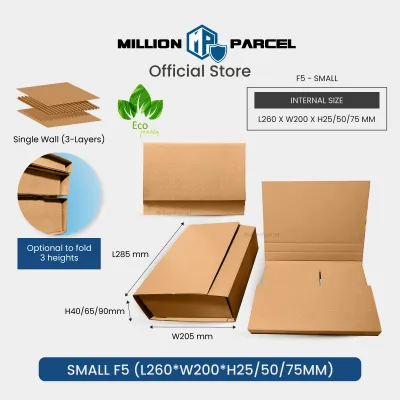
First, examine the corrugated board construction. Single-wall boxes consist of one layer of fluted paper between two flat linerboards, making them lightweight and cost-effective for light loads. Double-wall boxes feature two layers of fluted paper, providing higher puncture resistance and stacking strength. Choose double-wall construction for fragile items, electronics, or long-term storage where boxes will be stacked.
Second, look for strength indicators printed on the bottom flaps of the box, often referred to as the Box Maker’s Certificate. This stamp typically displays either the Edge Crush Test (ECT) rating or the Bursting Test rating. The ECT rating measures the box’s ability to withstand vertical stacking pressure. A higher ECT rating indicates a stronger box that is less likely to collapse under weight.
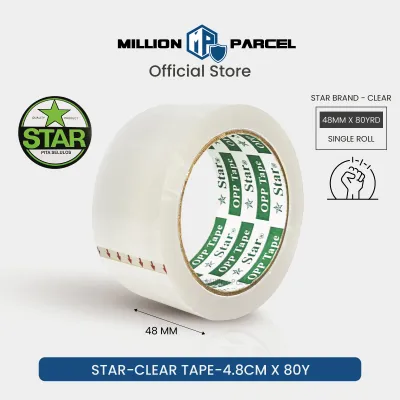
Finally, consider the sealing and reinforcement requirements of your packed cartons. Heavy-duty packing tape is essential for securing seams, but larger or heavier loads may require additional reinforcement. For heavy shipments, apply tape in an “H” pattern across all seams, or consider using reinforced paper tape or plastic strapping to prevent the flaps from splitting under pressure.
Practical Tips for Packing and Optimizing Box Space
Proper packing techniques maximize space inside your carton while minimizing the risk of damage during transit. Even a high-quality box can fail if the contents are packed poorly.
Always distribute weight evenly within the box. Place the heaviest items at the bottom to create a stable base, and place lighter, more delicate items on top. Fill any remaining empty spaces with void fill, such as crumpled paper or air pillows, to eliminate movement. If items shift during transit, they can easily break or puncture the box walls.
If you encounter a size mismatch where an item is slightly too large for a standard box, do not force it in. Instead, source a larger box or use a telescoping design for long items. If you must use a box with significant excess space, cut down the corners to the height of the contents, fold the flaps inward to create a custom-depth carton, and seal it securely. This reduces volumetric weight and prevents collapse.
Lastly, apply clear and visible exterior labeling to guide handlers. Mark boxes containing fragile items with “Fragile” labels, and indicate which side should face up with directional arrows. If a box is exceptionally heavy, write a clear “Heavy” warning on multiple sides. Proper labeling ensures that your cartons are handled with the appropriate level of care throughout their journey.
Frequently Asked Questions (FAQ)
Can I use a large box for heavy items like books?
No, you should avoid using large boxes for heavy items like books. Packing a large box with dense, heavy objects makes the package extremely difficult to lift and carry safely, increasing the risk of personal injury. Furthermore, the sheer weight of the books puts immense pressure on the bottom seams and cardboard walls, which can cause the box to rupture or collapse when lifted. Always pack heavy items in small, sturdy boxes to ensure safe handling and structural integrity.
How do I measure an irregularly shaped item for a carton box?
To measure an irregularly shaped item, imagine it is enclosed in a tight, rectangular box. Measure the absolute maximum length, width, and height of the item at its widest points, including any protruding parts, handles, or cables. These three maximum measurements represent the bounding box of the item. Use these dimensions as your baseline, and then add the necessary buffer space on all sides for protective cushioning materials to determine the correct carton size.

Community discussion
Share your experience or ask a question. Comments are reviewed before publication.