
To pack items efficiently and prevent damage, you must match your goods to the correct carton box sizes. Standard carton boxes range from small, compact sizes of about 30 x 20 x 20 cm for heavy, dense objects, up to large sizes of 60 x 60 x 60 cm or more for lightweight, bulky items. Choosing the wrong dimension or material thickness can lead to structural collapse, damaged goods, or inflated shipping fees.
Understanding Carton Box Measurements: Internal vs. External
When purchasing a carton box for shipping, storage, or moving, the dimensions listed by suppliers can be misleading. Packaging manufacturers standardise measurements using the Length x Width x Height (L x W x H) convention. Length is the longer side of the box opening, width is the shorter side, and height is the vertical depth of the box.
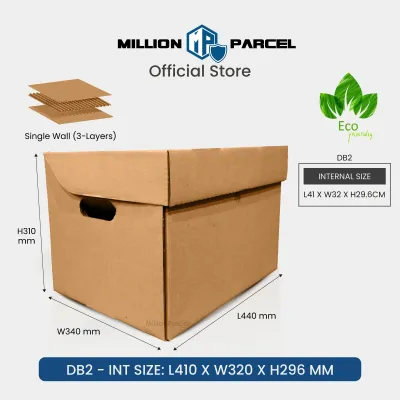
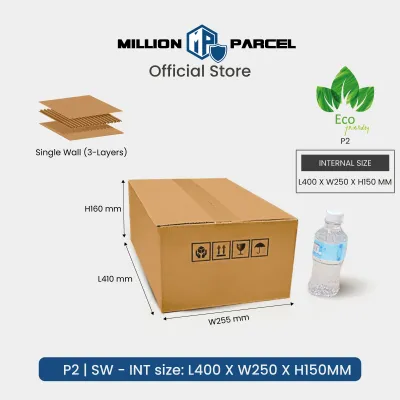
However, you must always distinguish between internal and external dimensions. External dimensions dictate the physical footprint the box occupies in a delivery van or storage unit. Internal dimensions represent the actual usable space available for your items. Because corrugated cardboard has physical thickness, the external dimensions are always larger than the internal space. For heavy-duty double-wall boxes, the thick corrugated walls can reduce usable internal space by up to 10 millimetres or more on each axis. Always verify whether a supplier’s catalogue lists internal or external measurements to avoid purchasing boxes that are too small for your items.
Products mentioned in this guide
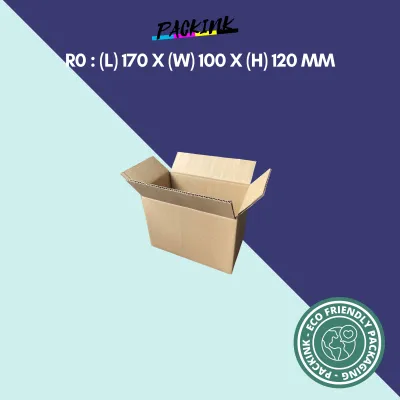
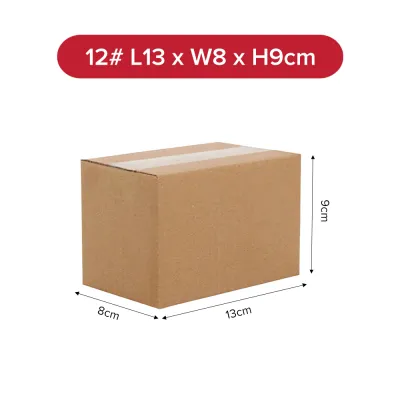
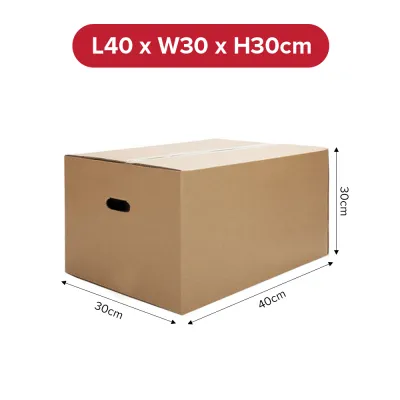
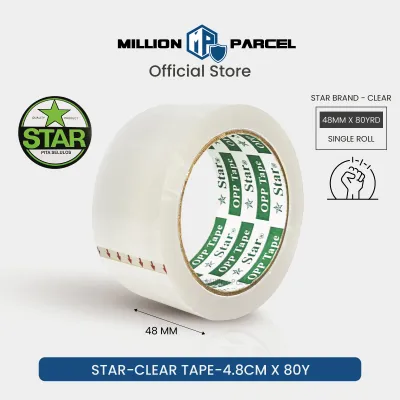
Prices are valid at publication and may change. Please refer to the product page for the latest price.
Common Carton Box Sizes and Ideal Items to Pack
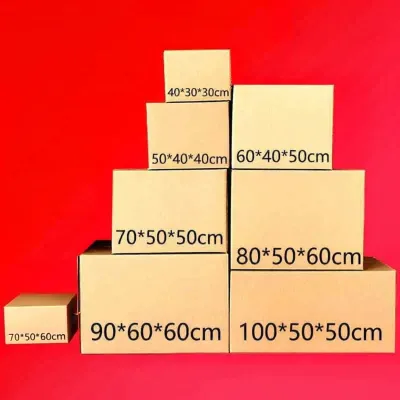
While carton box dimensions vary slightly by manufacturer, the packaging market generally groups boxes into small, medium, and large categories. These categories are designed around volume limits and structural weight capacities to ensure safe handling and prevent box failure during transit.

Small Boxes for Heavy, Dense Items
Small carton boxes typically offer a volume of up to 1.5 cubic feet, with standard dimensions around 30 x 20 x 20 cm or 40 x 30 x 20 cm. These compact containers are engineered specifically to hold dense, heavy items. They are the ideal choice for books, files, financial documents, tools, and canned goods.
The logic behind using small boxes for heavy items is rooted in safety and structural integrity. Packing heavy items into a large box makes the parcel incredibly difficult to lift safely and increases the risk of back injuries. Furthermore, concentrated heavy loads in a large box put excessive stress on the bottom flaps, which can cause the tape to fail and the bottom to blow out. Keeping heavy items in small boxes ensures the weight remains manageable and structurally supported.
Medium Boxes for Everyday Household Goods
Medium carton boxes generally span a volume range of 1.5 to 3.0 cubic feet, with common dimensions such as 45 x 45 x 40 cm or 50 x 40 x 35 cm. This size category is the most versatile and widely used option for general residential moving and standard e-commerce shipping.
These boxes are perfect for moderately weighted items like shoes, kitchenware, small home appliances, toys, and folded clothing. They offer a balanced volume that allows you to pack multiple items together without exceeding safe lifting limits. For standard parcel shipping, the medium box is often the cost-effective sweet spot, helping you avoid high volumetric weight surcharges while providing ample room for protective wrapping.
Large Boxes for Bulky, Lightweight Items
Large and extra-large carton boxes offer volumes ranging from 3.0 to over 4.5 cubic feet, often measuring 60 x 40 x 40 cm or 60 x 60 x 60 cm. These large containers are designed exclusively for bulky, lightweight items that occupy significant space but carry very little weight.
You should use large boxes for bedding, pillows, winter coats, linen, and plush toys. Packing these items in smaller boxes would require excessive compression, which can damage the fabrics. However, you must never pack heavy items in large boxes. Doing so leads to structural collapse when boxes are stacked in transit, as the lower boxes will buckle under the weight, resulting in damaged goods and potential lifting injuries.
Crucial Specifications: Wall Thickness and Flute Types
To select the right carton box, you must look beyond physical dimensions and understand the material specifications that determine a box’s strength. The structural integrity of corrugated cardboard relies on its ply count and flute profile.
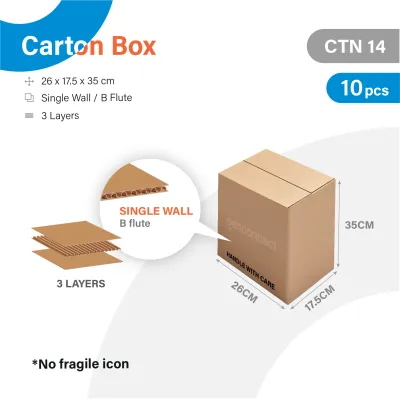
Cardboard boxes are generally categorised as single-wall (typically 3-ply) or double-wall (typically 5-ply). A 3-ply box consists of a single wavy fluting medium sandwiched between two flat linerboards. This construction is lightweight and cost-effective, making it ideal for standard, lightweight household moves and general e-commerce shipping. A 5-ply box features two layers of fluting separated by an additional linerboard, providing exceptional stacking strength and puncture resistance.
The ‘flute’ refers to the wave-like middle layer of the cardboard. Common flute profiles include B-flute (around 3 mm thick), which offers excellent puncture resistance and a smooth surface for writing or printing, and C-flute (around 4 mm thick), which provides superior stacking strength. Many heavy-duty 5-ply boxes combine these into a BC-flute configuration to offer maximum protection.
When shipping heavy or fragile goods, do not rely solely on the box’s physical size. Check the manufacturer’s weight limit labels, Edge Crush Test (ECT) ratings, or burst test ratings. In humid climates like Singapore, cardboard naturally absorbs ambient moisture, which can weaken paper fibres over time. While 3-ply is usually sufficient and economical for standard, lightweight moves, upgrading to a 5-ply box is a necessary safeguard for heavy items or long-term storage in non-air-conditioned spaces.
Step-by-Step Guide to Measuring and Selecting Your Box
Choosing the correct box size requires a systematic approach to ensure your items remain secure without incurring unnecessary shipping costs.
- Step 1: Measure the item's maximum dimensions. Use a tape measure to find the absolute longest, widest, and tallest points of your item (L x W x H) at its widest boundaries. If packing multiple items, stack them together and measure the entire group.
- Step 2: Add clearance for protective packaging. Never pack items flush against the cardboard walls. Add 2 to 3 inches (approximately 5 to 8 cm) of clearance on all sides to accommodate protective void fill, such as bubble wrap, packing paper, or packing peanuts.
- Step 3: Match your final calculations to internal box dimensions. Compare your adjusted measurements against the internal dimensions provided by the supplier. Select the closest standard box size that is equal to or slightly larger than your calculated target.
Avoid selecting boxes that are excessively large for your items. Oversized boxes require more filler material to prevent items from shifting, which increases packaging costs. Furthermore, most couriers calculate shipping rates based on volumetric weight rather than actual weight. A box that is unnecessarily large will inflate your shipping fees while offering poorer protection, as excessive empty space increases the risk of the box collapsing when stacked under heavier parcels.
Frequently Asked Questions (FAQ)
How do I calculate the right box size for an irregularly shaped item?
To pack an awkwardly shaped item, measure it at its absolute furthest points to create a virtual rectangular ‘bounding box.’ Measure the maximum length, width, and height of the item. Treat these maximum dimensions as the item’s physical size, then add 5 to 8 cm of clearance on all sides to allow for thick protective wrapping around any protruding or fragile edges before selecting a standard carton box.
When should I upgrade from a 3-ply to a 5-ply carton box?
You should upgrade to a 5-ply (double-wall) carton box when packing unusually heavy items, highly fragile goods requiring extra rigidity, or when boxes will be stacked high in long-term storage or freight transit. The double-wall construction prevents lower boxes from buckling under prolonged pressure. Always verify the specific weight limit on the box manufacturer’s label rather than assuming all 5-ply boxes share identical strength.

Community discussion
Share your experience or ask a question. Comments are reviewed before publication.