
Finding the most suitable spiral notebook in Singapore requires looking beyond the cover design to examine how the paper interacts with your favorite writing tools. The paper you choose should prevent ink from bleeding through to the next page, resist feathering, and allow your pen to glide effortlessly. In Singapore’s tropical, high-humidity climate, paper fibers naturally absorb ambient moisture over time, which can accelerate ink absorption and worsen feathering or smudging. Understanding how paper weight, texture, and sizing interact with different inks is the key to choosing a notebook that keeps your notes clean, legible, and professional.
Understanding Paper Specs That Affect Writing Performance
To make an informed choice when browsing stationery aisles, you must understand the technical specifications that dictate paper behavior. The most common metric you will encounter is GSM, or grams per square meter, which measures paper weight and density. While higher GSM generally indicates thicker paper that resists ink bleed-through, it is not the sole indicator of quality. Thin paper (around 50 to 70 GSM) is highly prone to ghosting—where writing is visible on the reverse side—making it unsuitable for double-sided note-taking with wet inks.
Surface sizing is another critical factor that is rarely printed on labels but heavily influences performance. Sizing refers to chemical additives applied during manufacturing to reduce the paper’s absorbency. Highly sized paper resists water, forcing ink to sit on top of the page and dry via evaporation rather than soaking into the fibers. This prevents feathering, which is the spiderweb-like spreading of ink along paper fibers. However, highly sized paper also extends drying times, which can lead to smudging if you write quickly or are left-handed.
Products mentioned in this guide
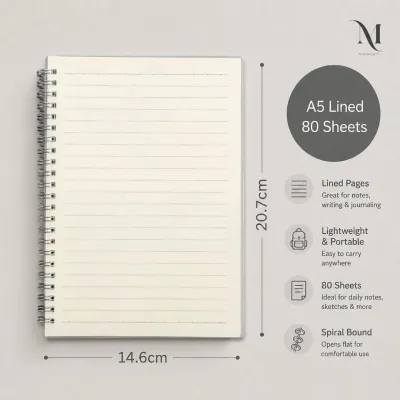
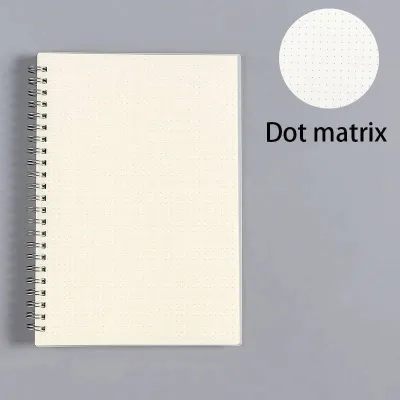
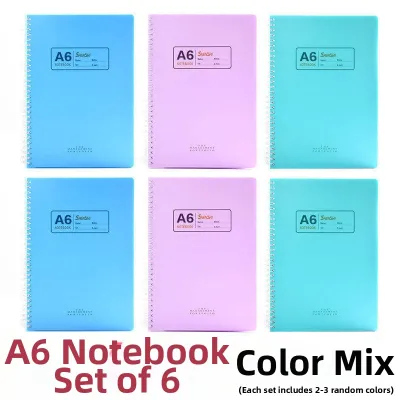
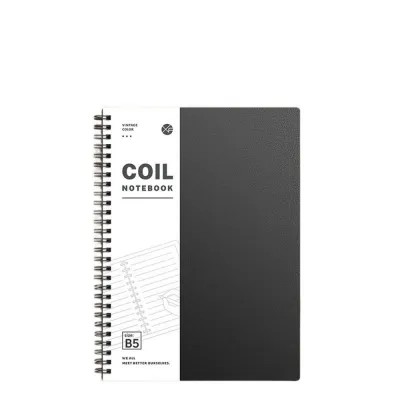
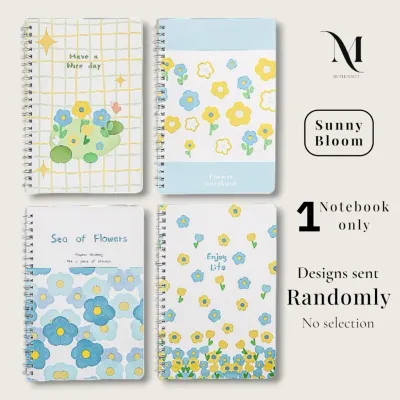
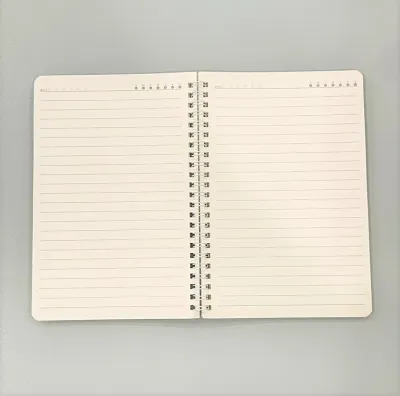
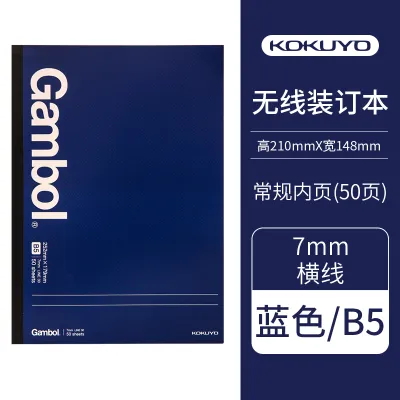
Prices are valid at publication and may change. Please refer to the product page for the latest price.
The texture of the paper, often described as its tooth, determines the tactile feedback you feel while writing. Smooth paper minimizes friction, allowing gel pens and fountain pens to glide effortlessly without skipping. Conversely, paper with more tooth or texture provides a satisfying resistance that is excellent for pencils and ballpoint pens, preventing the tip from sliding out of control. However, highly textured paper can cause fine felt-tip liners to fray prematurely and may lead to uneven ink distribution.
Finally, opacity determines how much light passes through the sheet, which directly impacts whether you can comfortably use both sides of a page. Low-opacity paper forces you to write on only one side, effectively cutting your notebook’s usable capacity in half. This is particularly problematic under the bright fluorescent lighting common in Singapore’s offices, libraries, and study hubs, where high contrast makes ghosted text on the reverse side highly distracting.
Matching Paper Characteristics to Your Writing Instruments
Different writing instruments require specific paper characteristics to perform at their best. Ballpoint pens, which use thick, oil-based inks, are the most forgiving tools and perform reliably on almost any paper surface. Because ballpoint ink does not readily saturate paper fibers, standard utility notebooks with a weight of 70 to 80 GSM and a slightly toothy texture are fully adequate. The slight texture actually helps the ball bearing roll smoothly, ensuring consistent ink transfer without slipping.

Rollerball and gel pens use water-based or gel-based inks that flow much more freely than ballpoint ink. These pens require paper with a medium to high weight—ideally 80 to 100 GSM—and moderate surface sizing. Without adequate sizing, the wet ink from a gel pen will quickly soak into the paper, causing the lines to spread and look fuzzy. If you prefer fine-point gel pens, a smooth surface is essential to prevent the fine metal tip from catching on loose paper fibers.
Fountain pens demand premium-grade paper due to their highly liquid, water-based inks. To write with a fountain pen without experiencing bleed-through or feathering, you need paper that features excellent surface sizing and a weight of at least 80 GSM, though 90 to 120 GSM is preferred. High-quality fountain pen paper allows the ink to dry slowly on the surface, preserving the ink’s true color, shading, and sheen. In Singapore’s humid environment, storing these notebooks in closed drawers or using protective sleeves can prevent the paper from absorbing moisture, which would otherwise compromise its fountain-pen-friendly properties.
Markers present the greatest challenge for spiral notebooks. Alcohol-based markers are designed to penetrate paper fibers deeply to blend smoothly, which almost always results in severe bleed-through on standard notebook paper. If you use alcohol markers for color-coding or sketching, you must look for specialized marker notebooks that feature a protective barrier coating on the back of each page, or opt for ultra-thick cardstock-weight paper exceeding 150 GSM. Water-based markers and brush pens are slightly more forgiving but still require thick, sturdy paper to prevent the surface from pilling or tearing under repeated strokes.
How to Evaluate and Test Spiral Notebooks Before Buying
When shopping for a spiral notebook in Singapore’s retail stores, you can use several practical strategies to evaluate paper quality before making a purchase. Start by carefully reading the product packaging and labels. Look for specific details such as the GSM rating, acid-free certifications, and any mentions of ink compatibility, such as “fountain pen friendly” or “bleed-resistant.” Reputable manufacturers often print these specifications clearly on the cover or the introductory page.
If the store provides sample notebooks or testers, perform a quick swipe test on a back page using your preferred writing instrument. Write a few characters and immediately run your finger across the ink to gauge the drying speed. Observe whether the ink pools on the surface, skips, or spreads outward into the paper fibers. This test is particularly important in air-conditioned retail spaces, as the ambient dryness of the store may slightly improve drying times compared to the natural humidity of your home or outdoor environments.
Next, turn the page over to inspect the reverse side under direct light. Check for ghosting, which is the shadow of your writing showing through, and actual bleed-through, where wet ink has physically penetrated to the other side. If you can clearly read what you wrote from the back of the page, the paper’s opacity or weight is likely too low for comfortable double-sided writing.
Finally, do not overlook the physical construction of the spiral binding itself. Examine the clearance between the wire coil and the paper edge; there should be enough space for the pages to turn smoothly without catching or tearing. Ensure the margin lines or grid patterns leave comfortable clearance from the spiral binding, allowing your hand to rest naturally without bumping into the metal or plastic coil when writing near the inner edge of the page.
Decision Framework: Choosing the Right Spiral Notebook
To select the appropriate spiral notebook, you must balance your primary writing tool with your daily usage scenarios. If your daily routine involves rapid, high-volume note-taking using standard ballpoint pens or quick-drying gel pens, a lightweight notebook with 70 to 80 GSM uncoated paper is the most practical choice. These notebooks are lighter to carry in your bag, dry almost instantly, and offer a cost-effective solution for lectures, meetings, and temporary drafts.
If you prefer the smooth writing experience of fountain pens, wet gel pens, or liquid ink rollerballs, prioritize notebooks with 90 to 120 GSM highly sized paper. While these notebooks are heavier and require a few extra seconds of drying time, they preserve line crispness and prevent distracting bleed-through. This category is well-suited for journaling, archival records, and structured study notes where you intend to write on both sides of every page.
For creative tasks that involve color-coding, sketching, or heavy marker use, look for specialized heavy-duty spiral notebooks with paper weights exceeding 120 GSM or those featuring coated, bleed-proof sheets. Always verify the paper specifications against your most demanding writing tool first, as a notebook that handles markers well will easily accommodate your everyday pens, whereas a standard utility notebook will quickly fail under wet, heavy inks.
Frequently Asked Questions (FAQ)
Does higher GSM always mean better paper for every pen?
Not necessarily. While a higher GSM indicates thicker paper that is excellent at preventing ink bleed-through, it does not guarantee a smoother writing experience for every pen type. Some heavy papers are highly absorbent and lack proper surface sizing, which can still cause wet fountain pen inks to feather. Additionally, very thick, heavily coated papers can slow down ink absorption so much that standard gel pens and ballpoints smudge easily, making them frustrating for fast-paced note-taking.
How can I prevent gel pen smudging in standard spiral notebooks?
To minimize smudging on standard paper, you can place a clean sheet of blotting paper or a simple index card under your hand to absorb excess moisture and prevent your palm from dragging ink across the page. Choosing fast-drying gel pen formulations with finer tip sizes (such as 0.4mm or 0.5mm) also reduces the volume of ink deposited on the page, significantly cutting down dry times. Finally, storing your notebooks in dry, air-conditioned rooms helps keep the paper fibers crisp and receptive to ink, mitigating the effects of Singapore’s natural humidity.

Community discussion
Share your experience or ask a question. Comments are reviewed before publication.