
Quick Answer: Matching Exercise Books to Your Writing Tools
Finding the most suitable exercise book for your daily writing tasks is not about choosing the most expensive brand on the shelf. Instead, the optimal writing experience depends on matching your specific pen type to the paper specifications printed on the book’s packaging. While brand names often promise premium performance, the physical reality of writing comes down to paper weight, surface treatment, and ink compatibility.
Generally, thicker paper with a higher weight rating reduces ink bleed-through, making it suitable for wet inks. Conversely, the surface sizing and coating determine how smoothly your pen glides and how quickly the ink dries. Before purchasing exercise books in bulk for school or office use, always check the product labels for specific paper weights and opacity claims to ensure they align with your preferred writing tools.
Decoding Paper Specifications on Exercise Book Packaging
When browsing the stationery aisle or shopping on online marketplaces, the packaging of an exercise book provides essential clues about its performance. The most critical metric to look for is the paper weight, measured in Grams per Square Meter (GSM). This number indicates the density of the paper sheets inside the book.
Products mentioned in this guide
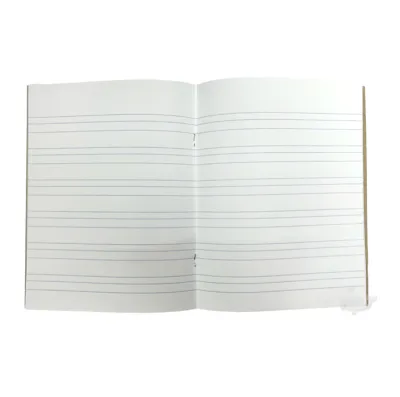
![[Bundle of 4/10] Pentex F5 Soft Cover Exercise Book School Note Book 120B 8mm Single Line](https://img.lazcdn.com/g/p/a2ee27e77c686bf35facf26bd068826b.png_400x400q80.png_.webp)
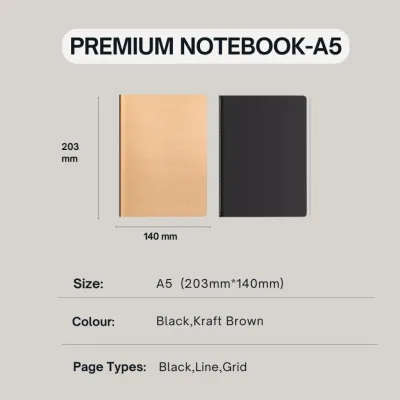
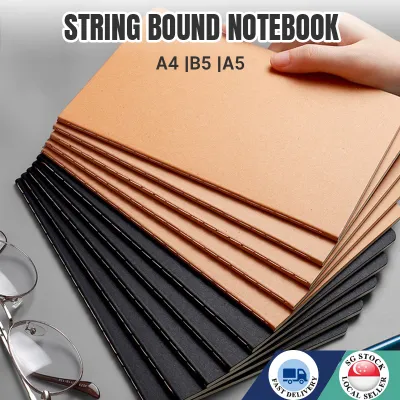
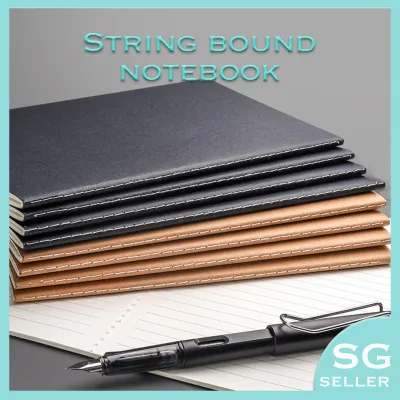
Prices are valid at publication and may change. Please refer to the product page for the latest price.

Standard exercise books typically range from 60 GSM to 80 GSM. Paper at the lower end of this scale, such as 60 GSM, is lightweight and highly flexible, making it common in budget-friendly utility books. However, it is more prone to ink ghosting. Mid-range paper around 70 GSM to 80 GSM offers a balanced thickness suitable for everyday writing with standard pens. Premium exercise books may feature 90 GSM to 120 GSM paper, providing a sturdy, substantial feel that resists ink penetration.
Beyond weight, the fiber composition of the paper plays a significant role in its longevity and texture. Standard wood-pulp paper is common and cost-effective, but it contains natural acids that can cause the pages to yellow and degrade over several years. If you are archiving your notes or journals, look for labels indicating “acid-free” or “archival-quality” paper. These specialty papers undergo chemical processing to neutralize acids, ensuring the pages remain white and intact for decades. High-opacity paper is another specialized option, treated with fillers like clay or titanium dioxide to block light transmission and minimize reverse-side shadowing.
It is also important to distinguish between paper quality and ruling formats. Whether an exercise book features feint ruling, a square grid, or a dotted layout, these patterns are printed onto the paper surface after manufacturing. While ruling formats dictate your writing alignment and layout structure, they do not inherently alter the underlying paper weight, fiber density, or ink absorption characteristics. A poorly sized 60 GSM dotted notebook will bleed just as easily as a 60 GSM ruled notebook of the same paper stock.
How Paper Surfaces Interact With Different Pen Inks
The writing experience is a chemical and physical interaction between the liquid ink of your pen and the solid fibers of the paper. Different pen types require specific paper surface characteristics to perform optimally without smudging, feathering, or skipping.
In Singapore’s humid climate, paper fibers naturally absorb ambient moisture from the air. This moisture absorption can soften the paper and cause standard inks to feather or bleed more easily than they would in dry environments. Choosing an exercise book with robust surface sizing is therefore essential for local writers who want to maintain sharp, clean lines.
Ballpoint and Standard Gel Pens
Ballpoint pens use a thick, oil-based ink that requires a moderate amount of friction to roll the ball tip smoothly. Standard gel pens use water-based gel inks that flow more freely. Both pen types perform well on standard paper surfaces with moderate smoothness. However, if the paper surface is excessively smooth or heavily coated, oil-based and gel inks may struggle to adhere immediately. This can lead to ink pooling on the surface, resulting in smudging when your hand brushes across the page, or skipping as the ball tip slides without rolling.
Fountain Pens and Liquid Ink Rollers
Fountain pens and liquid ink rollerballs deposit a high volume of water-based ink onto the page. To handle this liquid load without turning your writing into a blurry mess, the paper must have a higher weight (typically 80 GSM or above) and proper surface sizing. Sizing is a chemical treatment applied during paper manufacturing to control water absorption. Without adequate sizing, the liquid ink spreads rapidly along the paper fibers—a phenomenon known as feathering—and quickly bleeds through to the reverse side of the sheet.
Pencils and Mechanical Pencils
Graphite-based writing tools rely on the physical texture, or “tooth,” of the paper to shave off microscopic particles of graphite as you write. If you primarily use traditional or mechanical pencils, look for paper with a slightly matte, uncoated texture. Overly smooth, satin, or heavily coated papers lack the necessary tooth to grip the graphite. This results in faint, barely visible lines and forces you to apply excessive pressure, which can indent the paper or break delicate mechanical pencil leads. Furthermore, graphite on highly smooth paper smudges easily under the friction of a hand.
In-Store and At-Home Tests to Verify Paper Performance
Because you cannot always rely on brand names to guarantee compatibility with your specific writing style, performing simple, non-destructive tests is the most reliable way to verify paper quality. If you are shopping at a local stationery store that provides sample books, or if you have purchased a single book to test before buying a bulk pack, use these three practical evaluation methods.
The Light Test
To assess the opacity of the paper without writing on it, hold a single page up to a bright light source or window. Observe how much light passes through the sheet. If you can clearly see the silhouette of your hand or the text from the page behind it, the paper has low opacity. This indicates that any writing on one side will likely cause significant ghosting, making double-sided writing visually distracting and difficult to read.
The Swipe Test
To evaluate ink drying times and surface smoothness, write a single line or draw a small shape using your favorite daily pen. Immediately after drawing, swipe your finger across the ink. If the ink smudges across the page, the paper surface is highly coated or non-absorbent, meaning you will need to use quick-drying pens or allow extra drying time. If the ink dries instantly but the edges of the line appear fuzzy or branch-like, the paper lacks proper sizing, causing the ink to feather.
The Bleed Check
To test the ultimate limits of the paper’s absorption and weight, write heavily on one side of a page. Draw a solid block of ink, write with a wet fountain pen, or press firmly with a gel pen. Turn the page over to inspect the reverse side. Look for two distinct issues: ghosting (where you can see the shadow of the ink through the paper) and bleeding (where the ink has physically penetrated the fibers and spotted the back of the page). True bleed-through indicates that the paper weight is too low or the sizing is insufficient for your writing tools, rendering the reverse side unusable.
Final Selection: Choosing Based on Your Daily Writing Habits
Selecting the right exercise book requires balancing your primary writing tools, your budget, and how you plan to use the pages. By matching your daily habits to the correct paper specifications, you can avoid the frustration of ruined notes and wasted pages.
Whether you are purchasing a basic S$1.20 utility book for quick calculations or investing in a S$6.00 premium notebook for journaling, matching your tools to the paper specifications is the key to a frustration-free writing experience.
If your daily writing consists of quick notes, general schoolwork, or single-sided drafting using standard ballpoint pens or fine-tip gel pens, standard-weight exercise books (60 GSM to 70 GSM) are highly practical. These books are lightweight, easy to carry in a backpack, and cost-effective for high-volume writing. Because ballpoint ink is dry and stable, it rarely bleeds through even thin paper, making these budget-friendly options perfectly adequate.
If you prefer writing with fountain pens, broad gel pens, liquid ink rollerballs, or colorful felt-tip markers, you should prioritize higher-GSM or specialty paper exercise books. Look for books explicitly labeled with 80 GSM to 100 GSM paper that feature a smooth, sized finish. This ensures that the heavy flow of liquid ink is absorbed evenly without spreading across the page or soaking through to the sheets underneath, preserving the legibility of your work.
Finally, always verify your writing layout before making a purchase. If you intend to write on both sides of every page to maximize the book’s capacity, high-opacity paper is non-negotiable. Even if a paper resists physical ink bleeding, severe ghosting can make reading your notes incredibly straining. Investing in a slightly thicker, high-opacity exercise book ensures a clean, distraction-free writing surface on every single page.
Frequently Asked Questions (FAQ)
Does a higher page count always mean better paper quality?
No, a higher page count does not correlate with superior paper quality. The page count simply indicates the physical capacity of the exercise book and the thickness of its binding. A book with 200 pages can easily be made from thin, low-grade 60 GSM paper that bleeds and tears easily. Conversely, a slim 40-page exercise book might feature premium 100 GSM acid-free paper designed for excellent writing comfort. When evaluating quality, always look at the paper weight (GSM) and surface treatment specifications rather than the thickness of the book itself.
How can I prevent ink from smudging on smooth exercise book paper?
If you are using an exercise book with highly smooth or coated paper, you can minimize smudging by adjusting your writing tools and habits. Consider switching to quick-dry gel pen refills or fine-point ballpoint pens, which deposit less liquid ink onto the page. Additionally, you can place a clean sheet of blotting paper or a simple index card under your writing hand. This acts as a physical barrier, preventing your palm from dragging across freshly written lines and absorbing any excess wet ink before it can smear.
Community discussion
Share your experience or ask a question. Comments are reviewed before publication.