
Finding a Snoopy notebook that combines delightful Peanuts illustrations with high-performing paper is a common challenge for stationery lovers in Singapore. Because Snoopy is a licensed intellectual property rather than a single stationery manufacturer, these notebooks are produced by a wide variety of brands worldwide. Consequently, the paper quality can range from thin, absorbent sheets that bleed easily to premium, fountain-pen-friendly paper that offers a luxurious writing experience. To find a notebook that handles your daily writing without ink bleeding or feathering, you must focus on key paper specifications, match the paper type to your pen of choice, and verify the manufacturer’s details before purchasing.
Understanding Paper Specifications in Licensed Notebooks
When evaluating any licensed notebook, understanding the technical specifications of the paper is the most reliable way to predict how it will perform under your pen. The most common metric you will encounter is GSM, which stands for grams per square meter. This measurement indicates the weight and density of the paper, which directly correlates with its thickness. Standard, budget-friendly notebooks often feature paper ranging from 60 GSM to 70 GSM, which is lightweight and suitable for basic note-taking but highly prone to ink penetration. For a more robust writing surface, look for notebooks offering 80 GSM to 100 GSM, which provide a sturdier feel and better resistance to ink saturation.
Beyond weight, the finish of the paper plays a crucial role in how ink behaves on the page. Coated papers have a microscopic sealant layer that prevents ink from soaking too deeply into the fibers, resulting in crisp lines and vibrant colors, though this can slightly extend drying times. Uncoated papers, on the other hand, are more porous and absorb ink quickly, which is excellent for preventing smudges but can lead to feathering if the ink is highly liquid. Some notebooks feature textured or toothy finishes that provide a pleasant tactile feedback when writing with pencils or ballpoint pens, while others offer ultra-smooth surfaces designed for effortless gliding.
Products mentioned in this guide
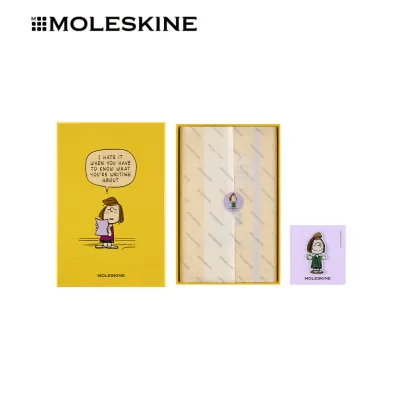
Prices are valid at publication and may change. Please refer to the product page for the latest price.
Another critical factor is paper opacity, which determines how much of your writing is visible from the opposite side of the page. Low-opacity paper leads to “ghosting,” where the shadow of your writing shows through, making it difficult to use both sides of a sheet comfortably. High-opacity paper, often achieved through greater thickness or specific manufacturing treatments, ensures that your notes remain clean and legible on every page. When browsing Snoopy notebooks, checking these specifications on the packaging or product listings will help you avoid the disappointment of thin, low-quality paper.
Matching Paper Quality to Your Preferred Pen Type
The interaction between your pen’s ink and the notebook’s paper surface determines the overall quality of your writing experience. Ballpoint pens are the most forgiving writing instruments, utilizing thick, oil-based inks that dry almost instantly upon contact with the page. Because ballpoint ink does not deeply penetrate paper fibers, these pens perform exceptionally well on standard, lightweight paper, including entry-level 60 GSM to 70 GSM sheets. If you primarily use ballpoint pens for quick notes or journaling, you can safely choose almost any Snoopy notebook without worrying about bleed-through or feathering.

Gel and rollerball pens, which are highly popular for their smooth flow and vibrant colors, require more careful paper selection. These pens use water-based or gel-based inks that are significantly wetter than ballpoint ink, meaning they require a denser paper structure to prevent the ink from spreading. When using gel pens on thin or highly absorbent paper, you may notice feathering, where the edges of your letters become fuzzy and distorted. To maintain clean, sharp lines, pair your gel pens with Snoopy notebooks that feature at least 80 GSM paper with a smooth, non-porous finish.
Fountain pens demand the highest standard of paper quality due to the volume of liquid ink they deposit onto the page. Standard notebook paper will often suffer from severe bleed-through, where the ink leaks completely through to the next page, as well as feathering and ghosting. If you enjoy writing with fountain pens, you should seek out Snoopy notebooks produced by specialized stationery brands known for fountain-pen-friendly paper. These notebooks typically feature high-density paper, often 90 GSM to 100 GSM, or specialized coatings that allow the ink to sit on top of the page and dry beautifully without soaking through.
How to Evaluate Snoopy Notebooks Before Buying
Evaluating the paper quality of a Snoopy notebook before making a purchase requires a systematic approach, whether you are shopping in a physical store or browsing online marketplaces. When shopping in person, start by examining the manufacturer’s label or the back cover of the notebook. Reputable stationery brands that license the Snoopy character will clearly print the paper weight, page count, and country of origin. If the packaging lists a well-known paper manufacturer or specifies a high GSM rating, you can proceed with greater confidence in the product’s performance.
If you are shopping in a physical retail store in Singapore, take advantage of any open display samples. Gently run your fingers over the pages to assess the texture; a high-quality sheet should feel uniform and smooth, without rough patches or excessive flimsiness. Hold a single page up to the store lighting to check its opacity; if you can easily see the outline of your hand through the page, the paper is likely thin and prone to ghosting. You can also gently flex the notebook to feel the stiffness of the paper block, which gives a physical indication of the paper’s density.
When shopping on e-commerce platforms, where physical inspection is impossible, user reviews are your most valuable resource. Look past generic reviews that only mention the cute cover design or fast shipping, and instead search for specific keywords related to paper performance. Search the product reviews for terms like “bleed,” “ghost,” “feathering,” or “ink” to see how the paper handled various pens for other buyers. Additionally, pay close attention to the detailed specification tabs provided by the seller, looking for explicit mentions of paper weight and material composition rather than relying solely on promotional images.
Navigating Retail Channels in Singapore
Finding authentic Snoopy writing books with reliable paper quality in Singapore involves knowing where to shop and how to verify product details. Visiting established local stationery chains, major bookstores, and Japanese lifestyle department stores is an excellent starting point. These physical retail spaces frequently stock licensed Peanuts stationery from reputable Japanese and local brands, allowing you to inspect the notebooks in person before buying. Shopping at these brick-and-mortar locations reduces the risk of accidentally purchasing counterfeit items with inferior paper quality.
For online shopping, focus on official brand flagship stores and authorized distributors on major e-commerce platforms. These official channels are much more likely to provide accurate, detailed product specifications, including the exact GSM and paper type used in the notebooks. When purchasing online, always verify that the product listing displays official licensing marks or copyright information, such as “Peanuts Worldwide LLC,” which indicates that the product meets the quality standards required by the licensor.
Additionally, always review the seller’s return and exchange policies before finalizing your purchase, especially if you plan to buy notebooks in bulk for school or office use. Reliable sellers often offer straightforward return options for unused items, giving you peace of mind if you find that the paper does not suit your specific writing instruments. By combining careful channel selection with a thorough check of product authenticity, you can confidently acquire high-quality Snoopy notebooks that are a joy to write in.
Decision Framework: Choosing the Right Notebook
To simplify your selection process, you can use a straightforward decision framework based on your primary writing tools and portability needs. If your daily writing routine relies heavily on gel pens, rollerballs, or fountain pens, make high paper density your non-negotiable priority. Seek out Snoopy notebooks that explicitly specify 80 GSM to 100 GSM paper with a smooth, coated finish to ensure your writing remains crisp and free from bleed-through.
Conversely, if you prefer using standard ballpoint pens, mechanical pencils, or colored pencils, you can prioritize portability and page count over high paper weight. Standard 60 GSM to 70 GSM Snoopy notebooks will serve your needs perfectly, offering a lighter weight that is easy to carry in your bag while commuting around Singapore. These lighter notebooks often provide more pages per book, making them highly practical for daily jotting and casual sketching.
Finally, always verify the manufacturer’s specifications and test a single notebook before committing to a larger purchase. If you are buying online, take the time to read through customer feedback regarding paper performance, and ensure the seller has a clear return policy. By matching the paper specifications to your specific writing habits, you can enjoy the whimsical charm of Snoopy without compromising on the quality of your writing experience.
Frequently Asked Questions (FAQ)
Do all Snoopy notebooks use the same paper quality?
No, Snoopy notebooks do not use a single standard of paper quality because Snoopy is a licensed character used by many different stationery manufacturers. The paper quality is determined entirely by the specific brand that produces the notebook, ranging from budget-friendly, lightweight paper to premium, fountain-pen-friendly sheets. To ensure you get the quality you need, always check the manufacturer’s specifications and paper weight rather than relying on the character branding alone.
What is the minimum GSM to prevent gel pen bleed-through?
To prevent gel pen ink from bleeding through the page, look for Snoopy notebooks with a minimum paper weight of 80 GSM. While some high-quality 70 GSM papers can handle gel ink if they have a specialized coating, 80 GSM or higher provides a safer baseline that minimizes both feathering and ghosting. If you use particularly wet gel pens or bold line widths, opting for 90 GSM to 100 GSM paper will offer the most effective protection for double-sided writing.

Community discussion
Share your experience or ask a question. Comments are reviewed before publication.