
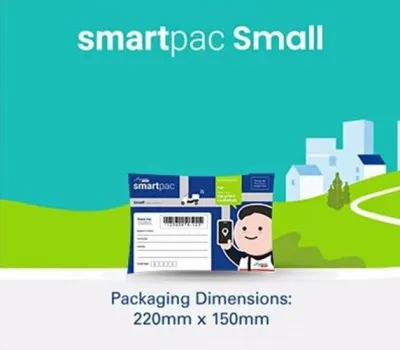
Finding the right packaging size is essential to ensure your items arrive safely without incurring unexpected postage fees. To determine if your items will fit into a small SmartPac, you must compare the physical dimensions of your shipment against the official specifications printed directly on the packaging or listed on the postal provider’s website. This prepaid packaging option is designed primarily for lightweight, flat, and semi-flexible items, making it a popular choice for sending documents, small cosmetics, and compact lifestyle accessories. By understanding how flat dimensions translate to three-dimensional capacity, you can pack your items securely and avoid delivery delays.
Decoding the Exact Dimensions of SmartPac Small
When purchasing prepaid postal packaging, the dimensions listed on the product page or printed on the envelope itself represent the flat, empty state of the container. To ensure your shipment complies with local postal standards, your first step should always be to verify the current official length, width, and thickness limits directly on the postal provider’s official website or by reading the fine print on the packaging label. Postal services periodically update their product specifications, weight allowances, and dimensional thresholds, so checking the latest guidelines is crucial, especially if you are planning to purchase these envelopes in bulk for business use.
Understanding the difference between external flat dimensions and internal usable space is key to successful packing. When an envelope is completely flat, it has a set length and width, but as soon as you insert a three-dimensional object, the sides of the packaging pull inward to accommodate the depth. This physical expansion naturally reduces the effective length and width available for your item. Additionally, you must account for the space required by the sealing flap and any side folds or seams, which restrict how close to the edge your item can safely sit.
Products mentioned in this guide
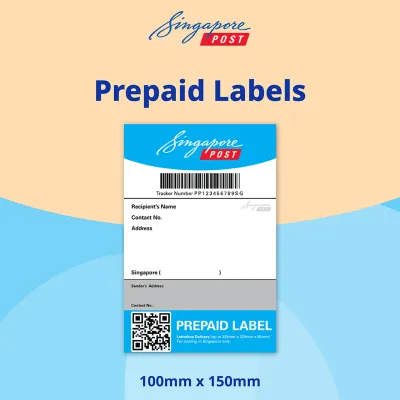
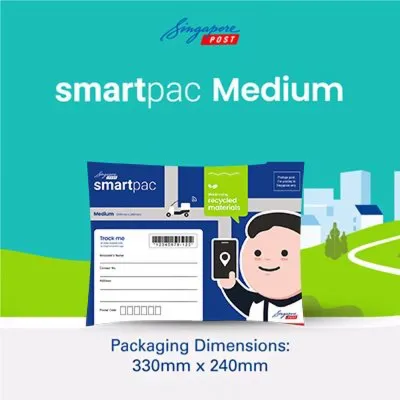
![[SINGPOST] SMALL W/ BUBBLEWRAP smartpac - A postage-paid packaging for local delivery. Trackable via the SingPost mobile app.](https://img.lazcdn.com/g/p/3360d819ebee92c4900de5d10f98c2e8.png_400x400q80.png_.webp)
Prices are valid at publication and may change. Please refer to the product page for the latest price.
To visualize this, think of the envelope as a pocket that curves outward when filled. A thick item will pull the edges of the envelope closer together, meaning a product that seems to fit within the flat length and width measurements might actually prevent the envelope from sealing properly. Always allow a safety margin of at least a few centimeters on all sides to accommodate this dimensional shift, ensuring the packaging material is not stretched to its breaking point.
Evaluating What Items Fit Inside a SmartPac Small
The suitability of an item for a small SmartPac depends heavily on its shape, rigidity, and overall thickness. Ideal items for this packaging size include flat documents, folded brochures, soft apparel like a single t-shirt, and small, non-fragile accessories such as keychains, stickers, or compact stationery. Because these items can easily conform to the shape of the envelope, they maximize the available internal volume without putting excessive stress on the seams or the adhesive seal.

Conversely, rigid or highly structured items present a much greater packing challenge. Items like hardback books, thick plastic cases, or rigid electronic devices do not flex, which forces the envelope to stretch entirely around their sharp corners and flat faces. This rigidity significantly reduces the effective width and length of the envelope, often making it impossible to seal even if the item’s nominal dimensions seem smaller than the envelope’s flat measurements. Furthermore, fragile items like glassware or delicate electronics are generally unsuitable for standard paper or thin plastic envelopes unless they are thoroughly wrapped in protective cushioning, which further increases their bulk.
Weight is another critical factor that you must cross-reference before sealing your package. Every prepaid postal tier has a strict maximum weight allowance that must not be exceeded, regardless of whether the item physically fits inside the envelope. You can easily verify this limit by checking the printed text on the front or back of the SmartPac. Use a reliable digital kitchen scale to weigh your fully packed envelope, including all protective wrapping, to ensure it remains within the approved weight threshold for domestic delivery.
Step-by-Step Guide to Measuring and Packing for a Secure Shipment
To ensure a smooth shipping process, start by measuring your item’s longest, widest, and thickest points using a standard ruler or measuring tape. If your item is irregular in shape, always measure the maximum distance across each axis to find the true bounding box of the object. If you plan to use protective materials like bubble wrap, tissue paper, or a plastic sleeve, wrap the item first and then take your measurements over the wrapped product, as cushioning can add significant bulk to the overall thickness.
Once you have confirmed that the wrapped item falls safely within the envelope’s usable limits, gently slide it into the packaging. Position the item centrally to distribute the weight evenly and prevent the envelope from tilting or bending awkwardly during transit. When sealing the package, peel off the protective strip from the adhesive flap and fold it down firmly along the designated fold line. The flap must close completely flat against the body of the envelope without any bulging, stretching, or gaps along the edges, as an incomplete seal can expose your items to moisture or cause the package to burst open in transit.
When writing the recipient’s address on the outer surface, the ink’s drying speed and water resistance will depend on the packaging material. To prevent smudging during transit, perform a quick trial write on a scrap piece of similar material or use a permanent waterproof marker, allowing it to dry completely before handling.
If you find that you have to force the item into the envelope, or if the adhesive flap is under tension and threatens to pop open, you should stop immediately. Forcing a tight fit can lead to the packaging tearing during automated sorting, potentially damaging your items or causing them to fall out. In these cases, it is best to upgrade to a larger packaging size, such as a medium envelope or a rigid shipping box, which will provide the necessary structural support and protection for your shipment.
Frequently Asked Questions (FAQ)
Can I use a SmartPac Small for international shipping?
Prepaid SmartPac envelopes are generally designed and priced exclusively for domestic delivery within the local postal network. Before attempting to send one overseas, you must verify the specific terms of service printed on the packaging or consult the postal provider’s official guidelines. Sending a domestic prepaid envelope internationally without the correct additional postage or customs documentation can result in the package being returned to you or held at the sorting facility. If international shipping is supported for your specific tier, ensure you fill out any required customs declarations accurately and verify the international weight limits, which may differ from domestic allowances.
What happens if my packed SmartPac Small exceeds the thickness limit?
If your packed envelope exceeds the maximum thickness limit, it may be rejected at the drop-off point or subjected to additional postage surcharges before it can be delivered. Postal services use automated sorting machines with precise physical clearance slots to process mail efficiently. A bulging or oversized package can easily get caught in these machines, leading to severe delays, torn packaging, or damage to the contents inside. To prevent these issues, always perform a simple pass-fail test by ensuring your package can slide easily through a standard mail slot or the thickness gauge available at your local post office.

Community discussion
Share your experience or ask a question. Comments are reviewed before publication.