
Choosing the right SmartPac bag size requires matching your item’s maximum length, width, and thickness against the usable internal dimensions of the packaging while staying strictly within the designated weight limit. Because these are prepaid postage items, selecting the correct size prevents delivery failures, over-packaging costs, or damage to your goods during transit. Whether you are an e-commerce merchant shipping merchandise or an individual sending documents, understanding how to measure your items accurately and accounting for protective padding will streamline your shipping process and ensure your parcels arrive safely at their destinations across Singapore.
Understanding SmartPac Dimensions and Capacity Limits
External vs. Internal Dimensions
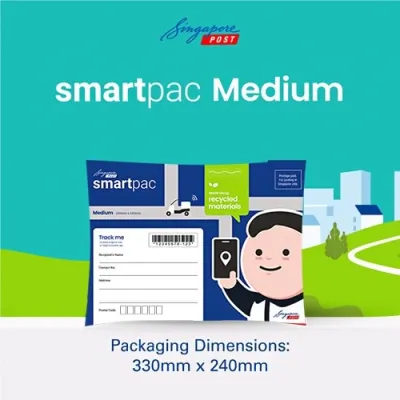
When you purchase a smartpac envelope or box, the dimensions displayed on the packaging or listed online represent the flat, external measurements. This is a critical distinction because the usable internal space is always smaller than the outer footprint. The heat-sealed edges of the poly-mailer, the thickness of the material itself, and the natural curvature that occurs when the bag is filled all subtract several millimeters from the actual width and length. Shippers who overlook this difference often find that an item with the exact dimensions listed on the packaging will not fit inside the actual compartment.
The Sealing Flap Factor
Every mailer bag features an adhesive closure flap at the opening that is protected by a peel-off release liner. This flap must fold over completely and seal against the exterior plastic of the bag to ensure a secure, tamper-evident closure. If your item is too long and extends into this flap area, you will not be able to fold the flap down properly. This leaves the adhesive exposed to dust or causes it to stick directly to your item, compromising the waterproof seal and risking open packages during transit through the postal network.
Products mentioned in this guide
![[SINGPOST] MEDIUM smartpac - A postage-paid packaging for local delivery. Trackable via the SingPost mobile app.](https://img.lazcdn.com/g/p/3360d819ebee92c4900de5d10f98c2e8.png_400x400q80.png_.webp)
Prices are valid at publication and may change. Please refer to the product page for the latest price.
Weight and Thickness Constraints
SmartPac services operate under strict structural and postal limits that govern both the maximum thickness and the total weight of the parcel. Even if an item physically slides into a flat bag, its thickness might stretch the plastic to its physical limit, creating high tension along the seams. If the parcel exceeds the maximum thickness allowed for letterbox delivery or surpasses the weight limit of its specific tier, it may be rejected by the postal service or require additional postage fees before delivery can proceed. Treat these limits as hard boundaries to protect your items and ensure seamless delivery to the recipient’s letterbox.
How to Measure Your Item for Shipping
Measuring Rigid Items
For rigid, non-yielding items such as books, cosmetics, small electronics, or pre-boxed goods, you must measure the three absolute maximum dimensions: length, width, and height. Use a reliable ruler or measuring tape, and always round up to the nearest millimeter. Do not measure along a curved surface; instead, place the item flat on a table and measure the straight-line distance from edge to edge to capture the true physical footprint. This ensures that any protruding corners or decorative elements are fully accounted for in your final calculations.

Measuring Soft or Flexible Items
Soft goods like t-shirts, dresses, plush toys, or fabric pouches can be compressed, but they also bulge when placed inside a tight bag. To get an accurate measurement, fold the item as flatly and compactly as possible, then gently press down on it to simulate the compression it will experience inside a mailer. Measure the length, width, and the compressed height, keeping in mind that the item will naturally expand outward and pull the sides of the bag inward once packaged. This expansion reduces the overall width and length available inside the bag.
Accounting for Protective Packaging
Never measure the bare item if you plan to wrap it for transit. If you are wrapping a delicate item in bubble wrap, placing it inside a cardboard sleeve, or wrapping it in tissue paper, apply these protective layers first before taking your final measurements. A single layer of standard bubble wrap can add 5 to 10 millimeters to every dimension, which can easily push an item from a smaller smartpac size into the next larger tier. Neglecting this extra volume is one of the most common reasons packages fail to seal.
Step-by-Step: Matching Your Item to the Right Size
The Internal Fit Test
To verify if your item will fit, compare its fully wrapped dimensions against the internal usable space of the smartpac. As a general rule of thumb, the internal length and width of the flat bag should be at least 20 to 30 millimeters larger than the corresponding dimensions of your flat item. This margin ensures the item slides in smoothly without friction that could tear the bag’s inner lining or damage your item’s edges. If the item is tight to slide in during a test, it is too large for that specific bag size.
Allowing for the Seal
Calculate the necessary clearance at the top of the bag to allow the adhesive strip to close flat against the opposite side of the mailer. For flat items, you need a minimum of 30 millimeters of empty space at the opening. If your item has significant thickness, you must allow even more clearance, as the thickness of the item pulls the front and back panels of the bag together, reducing the available length even further. The flap must never be forced to stretch over the item’s corner.
Handling Bulky or Thick Items
Flat poly-mailers are designed primarily for flat or low-profile items. When you insert a thick item into a flat bag, the bag must expand in depth, which dramatically reduces its available width and length. If your item is thicker than 10 or 20 millimeters, you must account for this dimensional loss; if the item is highly bulky, a gusseted option or a dedicated smartpac box is a much safer choice to prevent seam failure. Standard flat bags simply cannot accommodate boxy items without risking structural compromise.
Cost-Efficiency Check
Postage costs in Singapore are tied directly to the specific smartpac tier you purchase. To optimize your shipping expenses, always select the smallest packaging tier that safely accommodates your wrapped item, its protective padding, and the necessary sealing clearance. Choosing an oversized bag not only wastes money on a higher postage rate but also allows the item to slide around excessively inside, increasing the risk of damage during handling. Secure, compact packaging is always the most economical strategy.
Common Sizing Mistakes and How to Avoid Them
Ignoring the Thickness Factor
The most frequent error shippers make is assuming a flat item and a thick item of the same length and width will fit into the same bag. Forcing a thick, boxy item into a flat mailer puts immense pressure on the side heat-seals. During transit, as mailbags are stacked and sorted, this internal pressure can cause the seams to burst open, exposing your contents to dust, moisture, or loss. Always opt for a larger size or a box format if your item has significant depth.
Overstuffing and Stretching
While poly-mailers possess some natural elasticity, stretching a smartpac to its absolute limit is highly risky. A severely stretched bag becomes thin and vulnerable to punctures from external sharp objects or the corners of your own item. Furthermore, stretching distorts the opening, making it nearly impossible to lay the adhesive strip flat, which compromises the waterproof integrity of the package. If the plastic looks white or strained at the corners, the package is overstuffed.
Forgetting the Buffer and Flap Clearance
When you rush the packaging process, it is easy to overlook the space required for the sealing flap. If the adhesive strip is forced to stick to a curved surface or directly onto the shipping item itself, the seal will not hold under the stress of transit. This can result in the bag popping open in the sorting facility or during delivery to the recipient’s letterbox. Ensure the adhesive lands on a clean, flat plastic surface on the back of the bag.
Exceeding Weight Limits
It is a common misconception that if an item fits physically inside a larger bag, it is automatically safe to mail. Each smartpac tier has a strict weight limit set by the postal service to protect sorting machinery and delivery personnel. Exceeding this weight limit can lead to your parcel being returned to sender, held for self-collection, or subjected to additional surcharge fees at the post office. Always weigh your fully packaged parcel on a digital scale before dispatching it.
Verifying Current Specifications and Postage Rules
Why Specifications Change
Postal networks continuously optimize their logistics, sorting technologies, and delivery vehicles to improve efficiency across Singapore. Consequently, packaging dimensions, weight allowances, and pricing structures for prepaid services are subject to periodic updates. Relying on old packaging or outdated online guides can lead to unexpected delivery delays or payment discrepancies. Keeping abreast of these changes ensures your shipping workflow remains uninterrupted and cost-effective.
Where to Check Official Data
To ensure you are using the correct dimensions and paying the accurate rate, always verify the latest specifications directly on the official Singapore Post (SingPost) website. Alternatively, you can visit any local post office counter or check the informational displays at SingPost SAM kiosks. These platforms provide the most current size charts, weight limits, and pricing tiers for all smartpac products, helping you make informed decisions before making bulk purchases.
Checking for Restricted Items
Before purchasing your packaging, always review the current list of prohibited and restricted items for domestic mail services. Certain items, such as liquids, fragile glassware, valuable jewelry, or hazardous materials, may be restricted from prepaid mailers or require specific alternative shipping methods. Verifying these rules beforehand ensures your package complies with local postal regulations and arrives safely at its destination without being confiscated or delayed.

Community discussion
Share your experience or ask a question. Comments are reviewed before publication.