
Selecting the right Smart PAC courier bag size depends on matching the physical dimensions and weight of your items to the official specifications of the packaging. By measuring your products accurately—including any protective wrapping—and verifying the current weight limits set by the postal service, you can ensure your shipments fit securely and comply with local delivery standards.
Understanding Available Smart PAC Sizes and Specifications
Smart PAC bags come in several standard size categories designed to accommodate different types of documents and merchandise. Because postal services and authorized retailers may update their product lineups, it is always best to check the official store page or product packaging for the most current size variants.
When reviewing these options, pay close attention to how the dimensions are labeled. A standard listing typically provides the length and width of the flat bag, along with any gusset or thickness measurements. The gusset is particularly important because it expands to accommodate three-dimensional items, directly affecting the usable internal volume.
Products mentioned in this guide
![*FREE SHIPPING* [CHOOSE OPTION] Singapore Post Smartpac Small Smartpac Medium Mini Lite 600g 1kg Singpost Smart pac Sing Post PolyM Poly M](https://img.lazcdn.com/g/p/ca35df7d5aaeef118422794879cc317a.jpg_400x400q80.jpg_.webp)
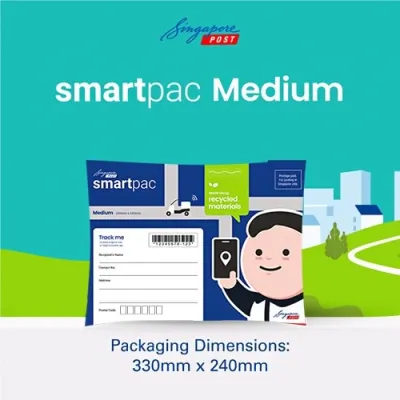
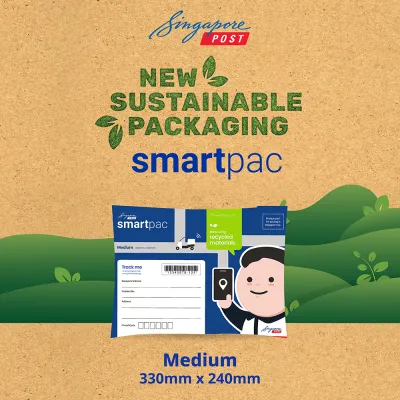
![[1/2/3/4 pcs] SingPost Smartpac Medium size - for using within Singapore only - Prepaid Packaging with Tracking](https://img.lazcdn.com/g/p/8f2c3c3994c2d6fb1e87feebed85f10b.jpg_400x400q80.jpg_.webp)
![[2pcs] SingPost Smartpac Medium size - for using within Singapore only - Prepaid Packaging with Tracking](https://img.lazcdn.com/g/p/3723bb51383d082fe8de03c34ecc0c93.jpg_400x400q80.jpg_.webp)
Prices are valid at publication and may change. Please refer to the product page for the latest price.
In addition to physical dimensions, each size category is associated with a specific maximum weight limit. Even if an item physically fits inside a smaller bag, exceeding the weight threshold can lead to delivery failures or damaged packaging.
Before placing a bulk order for your business, always confirm the exact dimensions and weight limits on the official product label. This step prevents costly mismatches and ensures your fulfillment process remains efficient.
How to Measure Your Items for a Secure Fit
To choose the correct bag size, you must measure your items when they are fully prepared for transit. Start by measuring the maximum length, width, and height of the product. Be sure to include the thickness of any protective bubble wrap, inner mailer boxes, or tissue paper you plan to use.

Calculating the required bag dimensions involves more than just matching the flat measurements of the item. You must account for the sealing flap, which requires a few centimeters of clearance to fold over and adhere securely. Additionally, as a flat bag fills up, its sides pull inward, reducing the effective width and length available for your item.
A good rule of thumb is to add the height of your item to both its length and width measurements when comparing them to a flat bag’s dimensions. For example, a thick book will require a significantly wider bag than a flat stack of papers of the same length and width.
If you frequently ship fragile, rigid, or unusually shaped items to customers on an ecommerce platform, consider testing the fit with a mock package. Using a piece of paper or a spare bag to simulate the packing process helps you visualize how the material stretches and seals without wasting shipping supplies.
Matching Bag Sizes to Your Typical Shipping Volume
For online sellers and small businesses, optimizing your packaging inventory can save both money and storage space. Begin by analyzing your past order data to identify your most frequently shipped item sizes. Grouping your products into common shipping profiles helps you determine which bag sizes you will use most often.
There is a classic trade-off between stocking multiple specialized bag sizes and relying on a single larger size. While stocking multiple sizes minimizes waste and reduces the need for extra void fill, it requires a higher upfront investment and more storage space. Conversely, using a larger bag for smaller items is convenient but may require additional bubble wrap or paper stuffing to keep the item from shifting during transit.
If you operate from a home office or a small fulfillment space in Singapore, organizing your inventory is key to maintaining efficiency. Store your courier bags in clearly labeled bins or vertical organizers sorted by size. Keeping your packing station tidy ensures you can quickly grab the correct bag during busy shipping periods.
Checking Weight Limits and Courier Compliance in Singapore
In Singapore, prepaid courier bags like Smart PAC are designed to fit directly into standard residential letterboxes for convenient delivery. This means your packed bag must comply with strict thickness and weight restrictions set by the local postal service. If a package is too thick or heavy, it may be redirected for counter collection or returned to the sender.
Before sealing your package, always review the local postal service’s guidelines regarding prohibited items and weight thresholds. Items such as liquids, fragile glassware, or excessively heavy metal parts may require alternative shipping methods to ensure safety and compliance.
If your item exceeds the maximum dimensions or weight limits of the largest available Smart PAC bag, do not attempt to force it in. Instead, switch to a sturdy corrugated box and a standard parcel delivery service. This ensures your product remains protected and arrives safely at its destination without violating courier policies.
Frequently Asked Questions (FAQ)
Can I reuse a Smart PAC courier bag for a return shipment?
Reusing a prepaid courier bag for a new shipment is generally not permitted under official postal guidelines, as the postage is typically valid for a single journey. However, if you are using the bag strictly as a protective outer layer for a return and plan to apply a new shipping label, you must inspect the bag carefully. Check for any tears, punctures, or weakened adhesive along the seams. If the structural integrity is compromised, it is safer to use a fresh mailer to protect your return item.
What should I do if my item is slightly larger than the bag dimensions?
If your item is slightly too large, avoid the temptation to overstuff the bag. Forcing an item into a bag that is too small puts excessive tension on the seams and the self-adhesive seal, greatly increasing the risk of the bag bursting open during transit. Instead, upgrade to the next larger bag size or transition to a rigid cardboard box. This ensures your item has adequate breathing room and remains fully protected throughout the delivery process.

Community discussion
Share your experience or ask a question. Comments are reviewed before publication.