
Selecting the right protective packaging is a critical decision that directly impacts whether your items arrive at their destination intact or damaged. When deciding between small bubble wrap and large bubble wrap, there is no single superior option. Instead, the optimal choice depends entirely on the physical characteristics of the item you are shipping—specifically its weight, fragility, and surface sensitivity.
As a general rule of thumb, small bubble wrap is the ideal choice for lightweight, delicate items that require precise surface protection and scratch prevention. Its small, densely packed bubbles conform easily to irregular shapes. Conversely, large bubble wrap is designed for heavy, bulky, or robust items that need deep shock absorption and impact cushioning to survive drops and rough handling. For highly complex, fragile, or high-value shipments, combining both types often provides the most comprehensive defense.
Understanding the Structural Differences
To make an informed decision, it is essential to understand the physical and structural differences between these two packaging materials. Small bubble wrap typically features bubbles with a diameter of approximately 9.5mm to 10mm and a height of about 4mm. These smaller air pockets are densely packed across the plastic sheet, creating a highly flexible, low-profile material. This flexibility allows the wrap to bend easily around tight corners and intricate geometries without tearing or creating excessive bulk.
Products mentioned in this guide
![91m/20m/10m BubbLest™ [FREE PENKNIFE] Bubble Packaging Material Direct Singapore Manufacturer | Clingwrap | Plasticwrap | Cling Wrap | Plastic Wrap | Bubble Roll |](https://img.lazcdn.com/g/p/118908581c7285d2410f3d4422311ca0.png_400x400q80.png_.webp)
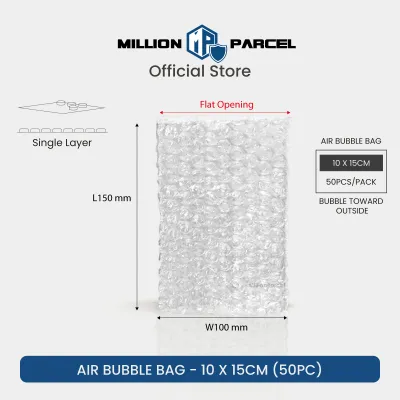
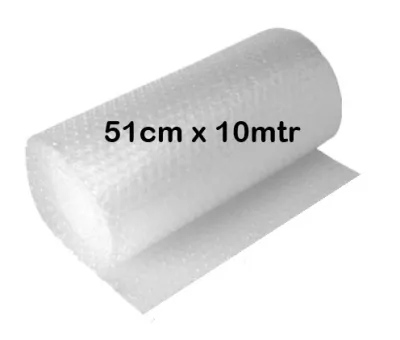
Prices are valid at publication and may change. Please refer to the product page for the latest price.
In contrast, large bubble wrap features bubbles that are generally 25mm to 32mm in diameter and roughly 10mm to 12.7mm in height. These larger bubbles contain a significantly higher volume of air per pocket, which provides a stiffer, more rigid structure. While this rigidity makes the material highly resistant to heavy compression, it also makes it less pliable, meaning it cannot be wrapped tightly around small or highly irregular objects without leaving large gaps.
Beyond bubble size, the overall durability of the wrap is heavily influenced by the thickness of the polyethylene film, measured in microns or mils, and the quality of its air retention. High-quality bubble wraps utilize co-extruded barrier layers—often incorporating a nylon co-polymer—to prevent air from slowly diffusing out of the bubbles over time. When evaluating options, always check the manufacturer’s specifications for film thickness and barrier technology rather than assuming a larger bubble size automatically equates to stronger protection. A thin-gauge large bubble wrap can pop easily under moderate pressure, whereas a heavy-duty, high-micron small bubble wrap can withstand substantial weight.
Matching Protection Levels to Your Items
Small Bubble Wrap: Surface Defense and Lightweight Items
The dense arrangement of small bubble wrap creates a relatively smooth, uniform contact surface. This even distribution of contact points is crucial because it minimizes localized pressure on the wrapped object, significantly reducing the risk of leaving circular bubble impressions or micro-scratches on sensitive finishes. If you are packaging items with highly polished, painted, or glossy surfaces—such as glass screens, mirrors, lacquered wood, or delicate electronics—small bubble wrap provides an excellent primary line of defense.

Its superior pliability is another major advantage. It can be wrapped tightly and securely around complex shapes, such as ceramic figurines, glassware, and small stationery items, ensuring no part of the object is left exposed. However, small bubble wrap has distinct limitations. Because the air volume in each bubble is low, the material compresses quickly under heavy weight. If a heavy package is dropped, small bubble wrap may bottom out completely, failing to provide the deep cushioning required to prevent the kinetic energy from transferring directly to the item.
Large Bubble Wrap: Shock Absorption and Heavy or Bulky Items
Large bubble wrap excels where small bubble wrap fails: absorbing severe impacts and dissipating kinetic energy. The substantial air volume within each large bubble acts as a heavy-duty shock absorber. When a package experiences a drop or sudden deceleration during transit, these large air pockets compress gradually, extending the deceleration time of the item inside and significantly reducing the G-forces transmitted to it. This makes large bubble wrap indispensable for heavy, dense, or bulky items such as kitchen appliances, large ceramic pots, and heavy metal components.
Additionally, large bubble wrap is highly effective at filling large empty spaces (voids) inside shipping cartons. By placing layers of large bubble wrap around a heavy item, you prevent it from shifting or sliding during transit, which is a primary cause of packaging failure. The main limitation of large bubble wrap is its rigidity. It is difficult to wrap tightly around small, delicate objects, and if wrapped too tightly against soft, flexible, or heat-sensitive surfaces, the concentrated pressure of the large bubbles can leave temporary or permanent circular marks on the item.
Evaluating Storage, Weight, and Cost Efficiency
Storage Space In space-constrained urban environments like Singapore, where warehouse and residential storage space is at a premium, the physical footprint of your packaging materials is a major operational consideration. A roll of large bubble wrap is incredibly bulky compared to a roll of small bubble wrap of equivalent square footage. For home-based businesses or small packing stations, storing multiple rolls of large bubble wrap can quickly overwhelm the workspace. Small bubble wrap rolls are much more compact and easier to handle, store, and dispense in tight areas.
Shipping Weight and Volumetric Calculations While bubble wrap itself is lightweight, the physical volume it adds to a package can significantly impact your shipping costs. Most local and international courier services in Singapore calculate shipping fees based on volumetric (dimensional) weight rather than actual weight if the volumetric weight is higher. The standard formula used is Length (cm) x Width (cm) x Height (cm) / 5000. Because large bubble wrap adds substantial thickness (often adding 2cm to 3cm per layer), wrapping an item in multiple layers of large bubble wrap can easily push your package into a higher volumetric weight bracket, leading to unexpectedly high shipping charges. Small bubble wrap, with its low profile, adds minimal bulk, helping you keep package dimensions and shipping costs as low as possible.
Coverage and Cost When comparing purchasing costs, small bubble wrap rolls typically offer more square meters of coverage per dollar spent. Because large bubble wrap requires more plastic material and specialized manufacturing to create the larger, reinforced air pockets, it is generally more expensive per square meter. To ensure cost efficiency, always calculate the price per square meter (S$ per m²) of the material rather than comparing flat roll prices. Reserve large bubble wrap for heavy-duty cushioning where its shock-absorbing properties are strictly necessary, and use small bubble wrap for general-purpose wrapping.
Quick Comparison: Small vs. Large Bubble Wrap
| Feature | Small Bubble Wrap | Large Bubble Wrap |
|---|---|---|
| Primary Protection Type | Surface protection and scratch defense | Impact absorption and shock cushioning |
| Best For | Lightweight, delicate, and intricately shaped items | Heavy, bulky, and robust items |
| Flexibility | High (conforms easily to tight curves) | Moderate to Low (stiffer, harder to wrap tightly) |
| Surface Impression Risk | Low (distributes pressure evenly) | Moderate (can leave circular bubble marks) |
| Storage Footprint | Compact (tightly wound, space-saving rolls) | Bulky (occupies significant physical space) |
| Void Fill Suitability | Low (requires many layers to fill space) | High (fills large empty spaces quickly) |
It is important to remember that while this table provides a clear general comparison, the ultimate performance of either wrap depends heavily on the film’s micron thickness and the quality of the raw polyethylene used.
Decision Framework: Choose the Right Wrap for Your Needs
Choose Small Bubble Wrap if:
- You are shipping lightweight items (typically under 1.5 kg to 2 kg) that are highly fragile but do not exert extreme downward force.
- The item has a highly sensitive, polished, or easily scratched surface finish, such as glass screens, mirrors, gloss-painted plastics, or polished metalware.
- The item features complex, irregular, or delicate geometries (e.g., jewelry, small porcelain figurines, or intricate stationery sets) that require a highly flexible wrap to ensure complete coverage.
Choose Large Bubble Wrap if:
- You are packing heavy, dense, or bulky items (typically over 2 kg) that require substantial deceleration distance to survive drops, such as small home appliances, heavy books, or industrial parts.
- You need to fill significant empty spaces inside a shipping box to prevent the item from shifting or sliding during transit.
- The item has a simple, blocky shape with robust surfaces that are not prone to scratching or pressure-induced marking.
Verify First if:
- You are shipping extremely high-value, antique, or temperature-sensitive items. Standard polyethylene bubble wrap can trap ambient moisture—a common issue in Singapore’s humid climate—which can lead to condensation, mold, or chemical reactions with certain antique varnishes and finishes. In these specialized scenarios, verify the manufacturer's packaging guidelines, consider using specialized anti-static or acid-free materials, or consult a professional crating service.
Consider Combining Both if:
- You are shipping a heavy item with a highly sensitive surface (for example, a heavy, polished brass sculpture or a high-end laptop). In this scenario, wrap the item first in a layer of small bubble wrap (or a protective layer of acid-free tissue paper) to safeguard the surface finish. Then, apply an outer layer of large bubble wrap to provide the heavy-duty shock absorption needed to protect the internal components from drop impacts.
Best Practices for Wrapping and Securing Items
Bubble Orientation For optimal protection, always wrap your items with the bubble side facing inward, toward the object. This orientation allows the individual air pockets to cradle the item directly, conforming to its unique contours and absorbing localized shocks. It also protects the bubbles from being easily popped by friction against the outer cardboard box. However, if the item has an extremely delicate or soft finish that could be marked by the plastic bubbles, place a protective barrier—such as plain kraft paper or soft acid-free tissue paper—directly against the item before wrapping it with the bubbles facing inward.
Layering and Taping A single layer of bubble wrap is rarely sufficient to guarantee safe transit. For fragile items, always apply at least two to three complete layers of wrap. Secure all seams firmly using high-quality packing tape. Ensure you do not apply tape directly to the surface of the item itself, as the adhesive can leave difficult-to-remove residues or damage delicate finishes; instead, tape the bubble wrap only to itself.
Box Sizing and Void Fill Even the best bubble wrap cannot protect an item if the outer box is poorly sized. Choose a sturdy shipping box that leaves approximately 5 cm of clearance on all sides of the wrapped item. Once the item is placed inside, fill this clearance completely with appropriate void fill, such as crumpled paper or extra bubble wrap. In Singapore’s humid climate, cardboard boxes can absorb environmental moisture and lose some of their structural rigidity over time. Ensuring the interior is tightly packed with void fill helps maintain the box’s structural integrity, preventing it from collapsing under the weight of other packages during transit.
Frequently Asked Questions (FAQ)
Can I use both small and large bubble wrap together?
Yes, combining both types of bubble wrap is an industry-standard best practice for maximum protection. This dual-layer approach is highly recommended for heavy items with delicate surfaces. By wrapping the item first in small bubble wrap, you create a flexible, surface-protecting inner layer that conforms to the item’s shape and prevents scratches. Applying an outer layer of large bubble wrap then adds a thick, shock-absorbing shield that dampens heavy impacts, providing the ultimate defense during transit.
Does the bubble side face in or out when wrapping?
The bubble side should almost always face inward, directly against the item being wrapped. This allows the individual air pockets to cushion the item’s contours and prevents the bubbles from popping due to friction against the outer shipping box. If you are concerned about the bubbles leaving circular impressions on highly sensitive, polished, or soft surfaces, place a protective layer of acid-free tissue paper or plain kraft paper between the item and the bubble wrap.

Community discussion
Share your experience or ask a question. Comments are reviewed before publication.